Hearty Low-GI Vegetarian Chili with Bulgur
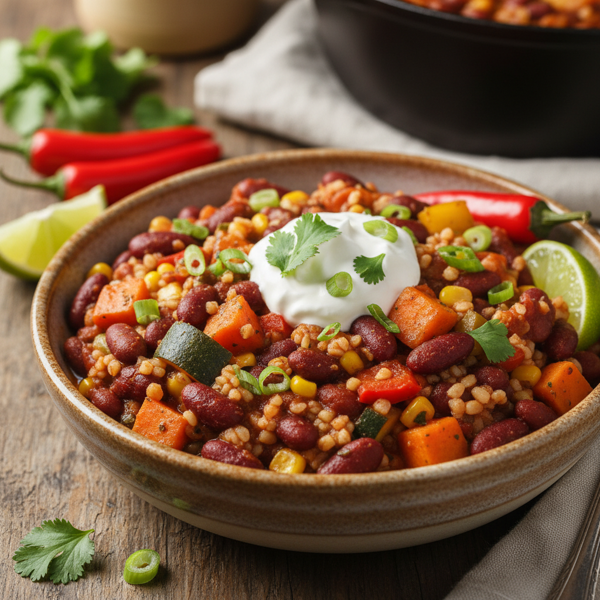
Enjoy a wholesome and nutritious meal with this Hearty Low-GI Vegetarian Chili. This recipe substitutes rice with burghul, offering a unique texture and a lower glycemic index compared to traditional chili dishes. Packed with protein-rich beans, chickpeas, and vibrant spices, this chili ensures a satisfying and flavorful experience. Perfect for a cozy meal, it's not only filling but also heart-healthy and full of complex flavors. Australian measurements are used throughout this recipe for authenticity.
4
Servings
375
Calories
15
Ingredients
Ingredients
burghul (bulgur)
125 g (soak in hot water for 10 minutes)
olive oil
2 teaspoons
large onion
1 (chopped finely)
garlic cloves
2 (crushed)
chili powder
1 teaspoon
ground cumin
2 teaspoons
cayenne pepper
1 teaspoon
ground cinnamon
1/2 teaspoon
canned chopped tomatoes
2 (400 g) cans (undrained)
reduced-sodium vegetable stock
750 ml
canned red kidney beans
2 (400 g) cans (drained & rinsed)
canned chickpeas
2 (300 g) cans (drained & rinsed)
canned corn kernels
1 (310 g) can (drained)
tomato paste
2 tablespoons
parsley
3 tablespoons (chopped)
Instructions
1
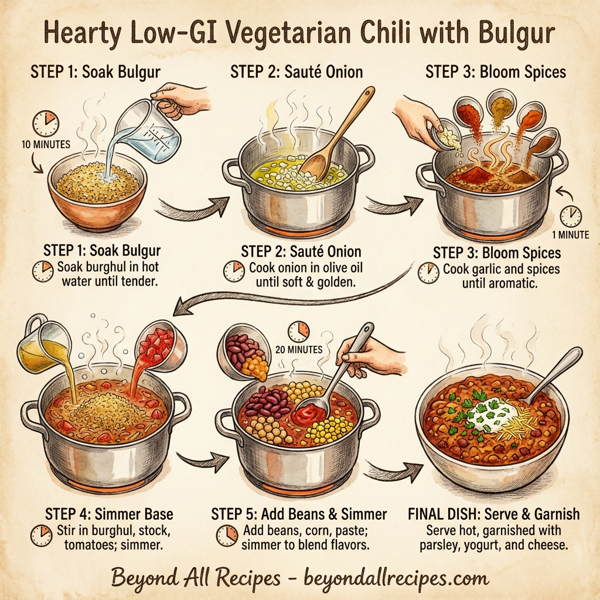
Start by placing the burghul in a small-medium bowl. Add 250ml of hot water to it and allow it to soak for 10 minutes until it becomes tender and fluffy.
2
Meanwhile, heat olive oil in a large saucepan over medium-low heat. Add the finely chopped onion and sauté for about 10 minutes until the onion softens and turns golden, stirring occasionally to prevent it from burning.
3
Add the crushed garlic cloves, followed by chili powder, ground cumin, cayenne pepper, and ground cinnamon. Cook for about 1 minute to allow the spices to release their aromas.
4
Stir in the soaked burghul, vegetable stock, and chopped tomatoes. Increase the heat to bring the mixture to a gentle boil, then reduce the heat to simmer for 10 minutes.
5
Add the drained kidney beans, chickpeas, corn kernels, and tomato paste. Mix everything well and let it simmer for an additional 20 minutes, stirring often to enhance the blend of flavors.
6
Taste and adjust the seasoning if necessary. Serve the chili hot, garnished with freshly chopped parsley. Consider adding a dollop of low-fat natural yogurt and a sprinkle of grated low-fat cheese for extra creaminess if desired.
Nutrition Information
5g
Fat
62.5g
Carbs
18.75g
Protein
18.75g
Fiber
875mg
Sodium
Frequently Asked Questions
Frequently Asked Questions
What makes this Hearty Vegetarian Chili low-GI?
This recipe is low-GI because it substitutes traditional white rice with burghul (bulgur), which has a lower glycemic index and offers a unique, hearty texture.
Is this chili recipe suitable for vegetarians?
Yes, this is a 100% vegetarian chili that uses vegetable stock, beans, chickpeas, and various vegetables.
How many servings does this recipe yield?
This recipe is designed to make 4 generous servings.
What is the calorie count per serving?
Each serving contains approximately 375 calories.
How long should I soak the burghul?
The burghul should be soaked in 250ml of hot water for 10 minutes until it becomes tender and fluffy.
How much protein is in one serving of this chili?
Each serving provides about 18.75g of protein, primarily from the beans and chickpeas.
What spices are used in this vegetarian chili?
The spice blend includes chili powder, ground cumin, cayenne pepper, and ground cinnamon.
How long do I need to sauté the onions?
The onion should be sautéed over medium-low heat for about 10 minutes until it softens and turns golden.
What types of beans are included in this recipe?
The recipe calls for canned red kidney beans and canned chickpeas, both drained and rinsed.
Is this recipe high in fiber?
Yes, it is very high in fiber, containing 18.75g per serving.
What can I use as a garnish?
Freshly chopped parsley is the primary garnish, but you can also add low-fat natural yogurt or grated low-fat cheese.
How much fat is in this dish?
This is a low-fat meal, containing only 5g of fat per serving.
Does this recipe use Australian measurements?
Yes, the recipe uses Australian measurements for authenticity.
How many grams of carbohydrates are in a serving?
There are 62.5g of carbohydrates per serving.
What is the sodium content of this chili?
The chili contains 875mg of sodium per serving; using reduced-sodium stock helps manage this level.
How much garlic does the recipe require?
The recipe requires 2 crushed garlic cloves.
What is the final simmering time for the chili?
After adding the beans and corn, the chili should simmer for an additional 20 minutes.
Can I add corn to this chili?
Yes, the recipe includes one 310g can of drained corn kernels.
What type of tomatoes should I use?
The recipe calls for two 400g cans of undrained chopped tomatoes.
Is there any oil used in this recipe?
Yes, 2 teaspoons of olive oil are used to sauté the onions.
How much vegetable stock is needed?
You will need 750ml of reduced-sodium vegetable stock.
Why is cinnamon added to the chili?
Ground cinnamon is added to create a complex flavor profile and enhance the aromatic qualities of the spices.
What is the purpose of adding tomato paste?
Two tablespoons of tomato paste are added to thicken the chili and intensify the tomato flavor.
Is this recipe considered a 'one-dish meal'?
Yes, it is tagged as a one-dish meal as it contains grains, protein, and vegetables all in one pot.
How many ingredients are in this recipe?
There are 15 ingredients in total, including the spices and garnishes.
What is the first step of the preparation?
The first step is placing the burghul in a bowl with hot water to soak.
What should I do after adding the stock and tomatoes?
Increase the heat to bring the mixture to a boil, then reduce and simmer for 10 minutes before adding the beans.
Is this chili heart-healthy?
Yes, it is described as a heart-healthy meal due to its high fiber and low fat content.
Does the recipe use fresh or canned chickpeas?
The recipe uses canned chickpeas (two 300g cans) for convenience.
What is the recommended heat setting for sautéing?
The onions and garlic should be sautéed over a medium-low heat to prevent burning.