Zesty Marinated Chicken (Pollo En Escabeche)
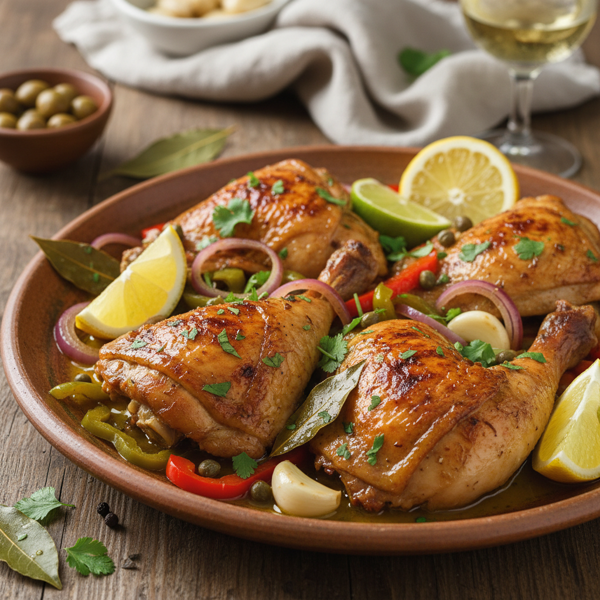
This delightful Zesty Marinated Chicken recipe, originally published in 'THE SPANISH COOKBOOK' by Barbara Norman in 1969, captures the essence of summertime dining. Originating from the cherished Restaurant Gayango in Madrid, this dish presents an effortless and refreshing option for those warm days when the thought of hot meals feels overwhelming. Adapted from traditional hunter methods used to preserve partridge, this recipe not only highlights the beauty of marinating but also serves as a convenient pre-prepared dish, perfect for enjoying over the course of days or even weeks. The vibrant flavors of citrus combined with aromatic spices create a light yet satisfying meal, ideal for picnics, gatherings, or a simple dinner at home. Serve it straight from the fridge, chilled and nestled among fluted slices of fresh oranges and lemons for a beautiful presentation.
N/A
Servings
N/A
Calories
10
Ingredients
Ingredients
Whole Chicken
1 (3 lb) (Cleaned and dried)
Olive Oil
1/4 cup (For browning)
Garlic Cloves
2 whole (Peeled)
Lemon
1 (Sliced with peel)
Orange
1/2 (Sliced with peel)
Whole Black Peppercorns
10 grains (Whole)
Bay Leaves
2 (Whole)
Vinegar
1/2 cup (White or cider vinegar)
Dry White Wine
2 cups (For marinade)
Salt
To taste (For seasoning)
Instructions
1
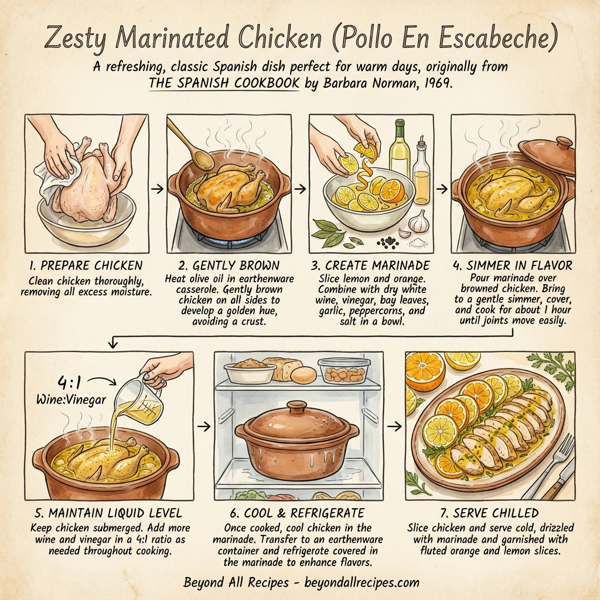
Begin by thoroughly cleaning the chicken, ensuring any excess moisture is removed.
2
In a deep earthenware casserole, heat the olive oil over medium heat. Once hot, carefully add the chicken and brown it gently on all sides until it develops a golden hue. Avoid creating a crust; the goal is just to impart flavor.
3
Prepare the marinade by slicing the lemon and orange, keeping the peels intact. In a bowl, combine the dry white wine, vinegar, bay leaves, garlic cloves, peppercorns, sliced citrus, and salt to taste.
4
Pour the marinade over the browned chicken, ensuring it is evenly coated. Bring the mixture to a gentle simmer, cover, and let cook for about 1 hour, or until the chicken joints move easily.
5
Throughout the cooking process, ensure that the chicken remains submerged in the marinade, adding more wine and vinegar in a 4:1 ratio as necessary to maintain liquid levels.
6
Once fully cooked, remove from heat and let the chicken cool in the marinade. Transfer it to an earthenware container and refrigerate covered in the marinade. This will enhance the flavors even further.
7
To serve, slice the chicken and plate it cold, drizzled with the marinade and garnished with freshly fluted slices of orange and lemon.
Nutrition Information
Frequently Asked Questions
Frequently Asked Questions
What is Zesty Marinated Chicken (Pollo En Escabeche)?
It is a refreshing Spanish dish consisting of chicken browned and then simmered in a citrus-and-vinegar-based marinade, traditionally served cold.
What is the origin of this specific recipe?
This recipe was originally published in 'THE SPANISH COOKBOOK' by Barbara Norman in 1969 and originates from Restaurant Gayango in Madrid.
How should the chicken be served?
The chicken should be served cold, straight from the fridge, drizzled with marinade and garnished with citrus slices.
What is the historical significance of the escabeche method?
It is adapted from traditional hunter methods used to preserve game like partridge, allowing the dish to be stored for days or weeks.
How long does the chicken need to cook?
The chicken should simmer for about 1 hour, or until the joints move easily.
What are the primary citrus ingredients in the marinade?
The marinade uses one sliced lemon and half a sliced orange, both with their peels intact.
What type of wine is recommended for this recipe?
The recipe calls for 2 cups of dry white wine.
What kind of vinegar should be used?
You can use either white vinegar or cider vinegar.
What is the recommended cooking vessel?
A deep earthenware casserole is recommended for both browning and simmering the chicken.
How should the chicken be prepared before cooking?
The chicken should be thoroughly cleaned and dried to remove any excess moisture.
What is the goal when browning the chicken?
The goal is to brown it gently on all sides to impart flavor without creating a hard crust.
What should I do if the liquid level drops while simmering?
You should add more wine and vinegar in a 4:1 ratio as necessary to keep the chicken submerged.
How should the chicken be stored after cooking?
Transfer it to an earthenware container and refrigerate it while completely covered in the marinade.
Does refrigeration improve the dish?
Yes, letting the chicken cool and rest in the marinade in the refrigerator enhances the flavors further.
How many garlic cloves are used?
The recipe requires 2 whole, peeled garlic cloves.
What herbs and spices are included in the marinade?
The marinade includes 2 bay leaves, 10 whole black peppercorns, and salt to taste.
Is this recipe suitable for meal prep?
Yes, it is an excellent pre-prepared dish that can be enjoyed over the course of days or even weeks.
What type of oil is used for browning the chicken?
The recipe uses 1/4 cup of olive oil.
What size chicken is needed?
The recipe specifies 1 whole chicken weighing approximately 3 pounds.
How is the dish presented for serving?
It should be served on a plate with fluted slices of fresh oranges and lemons for a beautiful presentation.
Can this dish be served at picnics?
Yes, its cold serving temperature and preservation qualities make it ideal for picnics and gatherings.
Why is this dish recommended for summer?
It is a light, refreshing meal that avoids the need for a hot dinner on overwhelming warm days.
Should the garlic be minced or whole?
The garlic cloves should be kept whole and peeled.
What is the ratio for adding extra marinade liquid?
The ratio is four parts wine to one part vinegar (4:1).
Is the chicken sliced before or after cooking?
The chicken is cooked whole (or in large joints) and then sliced cold just before serving.
How are the citrus fruits prepared for the marinade?
They are sliced with the peel remaining on the fruit.
What happens to the marinade after cooking?
The marinade is kept and used to store the chicken, then drizzled over the meat when serving.
Does the recipe contain any sugar?
No, the recipe does not list sugar as an ingredient.
Is it necessary to remove the bay leaves before serving?
While not explicitly stated, bay leaves are typically removed before plating as they are used for infusion.
What flavor profile can be expected from this dish?
It features vibrant citrus flavors combined with aromatic spices and a tangy vinegar finish.