Zarangollo: Spanish Scrambled Eggs with Zucchini and Onion
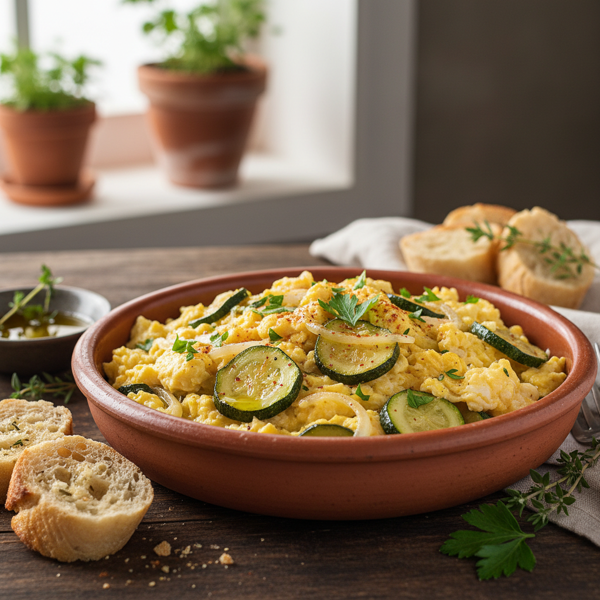
Zarangollo is a cherished culinary gem from the sun-kissed region of Murcia, Spain. This delightful dish combines the freshness of zucchini and the aromatic essence of onions and garlic, all enveloped in fluffy scrambled eggs. Typically served as a tantalizing tapa, Zarangollo is perfect for sharing with friends over a glass of robust Spanish wine. It's a superb option for breakfast or brunch, embodying the heart of Mediterranean flavors while being simple to prepare. Every bite offers a taste of tradition and comfort, showcasing the beauty of Spanish home cooking.
N/A
Servings
N/A
Calories
10
Ingredients
Ingredients
zucchini
1 (large, peeled, cut into small cubes)
onion
1 (large, finely chopped)
garlic cloves
2 (finely chopped)
eggs
4 (medium, beaten)
lemon juice
1 teaspoon
dry oregano
1/2 teaspoon
olive oil
4 tablespoons
parsley
1/2 tablespoon (fresh, finely chopped)
salt
1/2 teaspoon
black pepper
1/4 teaspoon (or to taste)
Instructions
1
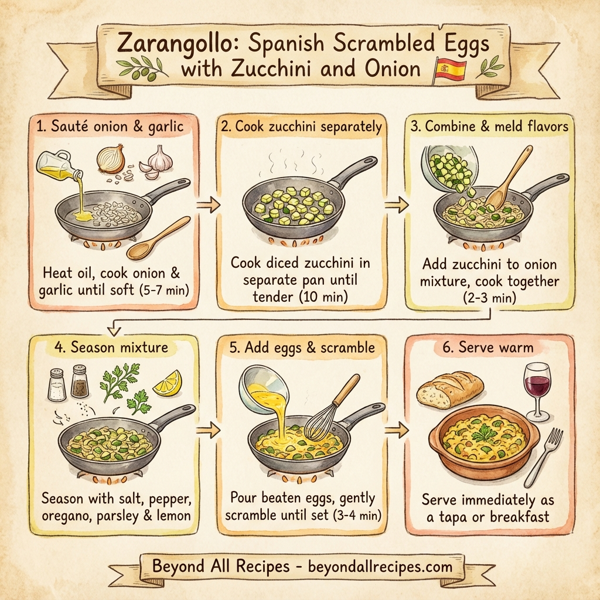
In a large frying pan, heat 2 tablespoons of olive oil over medium-high heat. Add the finely chopped onion and garlic, then lower the heat to medium. Sauté until the onion is soft and translucent, about 5-7 minutes.
2
While the onion is cooking, heat another 2 tablespoons of olive oil in a separate pan on medium-high. Add the diced zucchini and cook for approximately 10 minutes, stirring occasionally, until the zucchini is tender and slightly caramelized.
3
Once the zucchini is cooked, strain off any excess liquid and add it to the sautéed onion and garlic. Cook together for an additional 2-3 minutes, allowing the flavors to meld.
4
Season the vegetable mixture with salt, pepper, oregano, fresh parsley, and a squeeze of lemon juice. Stir well to combine.
5
In a bowl, whisk the eggs with a pinch of salt. Pour the beaten eggs into the pan with the vegetables, cooking over medium heat. Gently stir and toss the mixture until the eggs are softly scrambled and fully incorporated with the vegetables, about 3-4 minutes.
6
Once cooked to your preference, remove from heat and serve immediately. Enjoy it warm as a tapa or on its own for a delicious breakfast.
Nutrition Information
Frequently Asked Questions
Frequently Asked Questions
What is Zarangollo?
Zarangollo is a traditional Spanish dish from the Murcia region, consisting of scrambled eggs with zucchini and onion.
Where does Zarangollo originate?
This dish is a cherished culinary gem from the sun-kissed region of Murcia, Spain.
What are the main ingredients in Zarangollo?
The main ingredients include zucchini, onion, garlic, and eggs, seasoned with olive oil, lemon, and herbs.
Is Zarangollo served as a main dish?
While it can be a main dish for breakfast or brunch, it is typically served as a tantalizing tapa.
Can I eat Zarangollo for breakfast?
Yes, it is a superb option for breakfast or brunch, showcasing the beauty of Spanish home cooking.
How many eggs are required for this recipe?
This recipe calls for 4 medium eggs, beaten before being added to the vegetables.
How should the zucchini be prepared?
The zucchini should be peeled and cut into small cubes for this recipe.
What type of onion should I use?
The recipe specifies one large onion, finely chopped.
How much olive oil is used?
A total of 4 tablespoons of olive oil is used, split between sautéing the onions and the zucchini.
How long does it take to sauté the onions?
The onions and garlic should be sautéed over medium heat for about 5-7 minutes until soft and translucent.
Why do you cook the zucchini separately?
Cooking the zucchini separately allows it to tenderize and slightly caramelize without being crowded by the onions.
Should I drain the zucchini?
Yes, once the zucchini is cooked, you should strain off any excess liquid before combining it with the onions.
What herbs are used in Zarangollo?
The dish is seasoned with 1/2 teaspoon of dry oregano and 1/2 tablespoon of fresh, finely chopped parsley.
Is there lemon juice in Zarangollo?
Yes, a teaspoon of lemon juice is added to the vegetable mixture to enhance the flavors.
How long do you cook the eggs?
The eggs should be gently stirred and tossed with the vegetables for about 3-4 minutes until softly scrambled.
What is the texture of Zarangollo?
It features fluffy scrambled eggs that are fully incorporated with soft, tender zucchini and onions.
Can I serve Zarangollo with wine?
Yes, it is perfect for sharing with friends over a glass of robust Spanish wine.
Is Zarangollo a healthy recipe?
Yes, it is considered a healthy recipe that embodies the heart of Mediterranean flavors.
How many garlic cloves are in the recipe?
The recipe uses 2 finely chopped garlic cloves for aromatic essence.
What heat setting is used for scrambling the eggs?
The beaten eggs should be poured into the pan and cooked over medium heat.
Can I add pepper to Zarangollo?
Yes, the recipe suggests 1/4 teaspoon of black pepper, or you can add it to taste.
Does Zarangollo contain gluten?
Based on the ingredients list, Zarangollo is naturally gluten-free as it consists of vegetables, eggs, and oil.
How much salt is recommended?
The recipe calls for 1/2 teaspoon of salt for the vegetables and a pinch for the eggs.
Should the zucchini be caramelized?
Yes, you should cook the zucchini for approximately 10 minutes until it is tender and slightly caramelized.
Is this recipe difficult to make?
No, it is described as simple to prepare and a staple of Spanish home cooking.
Can Zarangollo be served cold?
The recipe suggests serving it immediately while warm for the best experience as a tapa or breakfast.
What category of cuisine does this belong to?
Zarangollo belongs to Spanish cuisine, specifically from the Mediterranean region.
Is the parsley fresh or dried?
The recipe specifically calls for fresh, finely chopped parsley.
How do I know when the eggs are done?
The eggs are done when they are softly scrambled and fully incorporated with the vegetables.
Can I use this as a side dish?
Yes, its versatility allows it to be served as a tapa, breakfast, or even a side dish for larger meals.