Tropical Mango Crème Brûlée
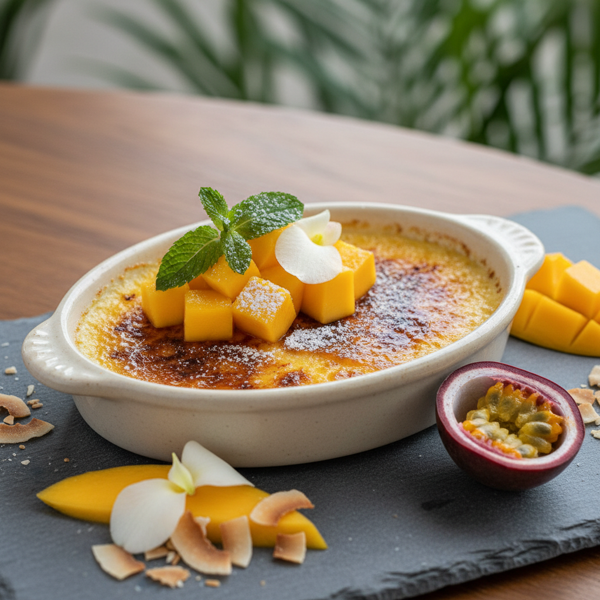
Indulge in the rich, creamy delight of Tropical Mango Crème Brûlée, a luscious dessert that elegantly combines the tropical flavor of ripe mango with classic custard. Inspired by a Gourmet Magazine recipe, this version elevates the traditional crème brûlée with sweet, diced mango nestled at the bottom, providing a beautiful contrast to the velvety vanilla-infused custard. Topped with a crisp, caramelized layer of turbinado sugar, this dessert is perfect for impressing guests or treating yourself to a gourmet experience. With a simple yet sophisticated preparation, each spoonful offers a delightful balance between creamy and crunchy textures, transporting your taste buds straight to a tropical paradise.
N/A
Servings
N/A
Calories
7
Ingredients
Ingredients
Egg yolks
5 large
Granulated sugar
1/3 cup
Salt
1/8 teaspoon
Vanilla bean
1 (halved lengthwise)
Heavy cream
2 cups
Firm-ripe mango
1/2 cup (diced (from 1 1/2 lb mango))
Turbinado sugar
3 tablespoons
Instructions
1
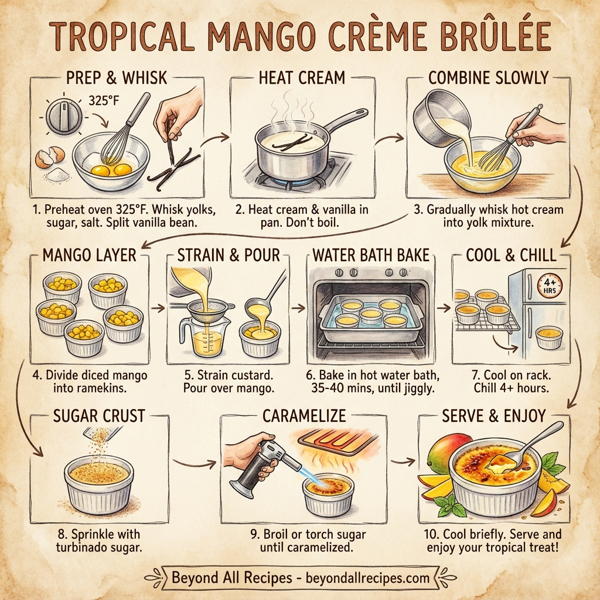
Preheat your oven to 325°F (165°C).
2
In a medium bowl, whisk together the egg yolks, granulated sugar, and salt until the mixture is smooth and combined.
3
Transfer the egg yolk mixture into a 2-quart saucepan.
4
Using a sharp knife, split the vanilla bean in half lengthwise and scrape the seeds into the saucepan with the cream, adding the whole pod as well.
5
Heat the cream mixture over medium heat until it is hot but not boiling, stirring occasionally to avoid scorching.
6
Once hot, remove the saucepan from heat and discard the vanilla pod. Gradually whisk the hot cream into the egg mixture in a slow, steady stream until fully combined.
7
Evenly distribute the diced mango (approximately 1/4 cup per ramekin) into six flameproof ramekins.
8
Strain the custard mixture through a fine mesh sieve into a bowl to remove any lumps.
9
Ladle the smooth custard over the mango in each ramekin, filling them to about three-quarters full.
10
Place the ramekins in a roasting pan. Carefully pour hot water into the roasting pan until it reaches halfway up the sides of the ramekins to create a water bath.
11
Bake in the preheated oven for 35 to 40 minutes or until the custards are just set (the centers should still have a slight jiggle).
12
Once baked, remove the ramekins from the water bath and allow them to cool on a wire rack for a few minutes before chilling in the refrigerator, uncovered, for at least 4 hours or overnight.
13
When ready to serve, preheat the broiler.
14
Sprinkle an even layer of turbinado sugar over the top of each custard.
15
Place the ramekins in a shallow baking pan, and broil for 2 to 3 minutes, watching closely until the sugar is caramelized and bubbly. Alternatively, use a kitchen torch for a more controlled caramelization.
16
Let the top cool for a minute before serving. Enjoy your tropical treat!
Nutrition Information
Frequently Asked Questions
Frequently Asked Questions
What is Tropical Mango Crème Brûlée?
It is a rich and creamy dessert that combines the tropical flavor of ripe mango with a classic vanilla custard and a caramelized sugar topping.
How many egg yolks are required for this recipe?
This recipe calls for 5 large egg yolks.
What type of sugar is used for the custard base?
One-third cup of granulated sugar is whisked into the egg yolks for the custard.
How much salt should be added to the mixture?
The recipe requires 1/8 teaspoon of salt.
How is the vanilla bean prepared?
The vanilla bean should be split in half lengthwise, and the seeds should be scraped into the saucepan with the cream.
What kind of cream is used in this crème brûlée?
The recipe uses 2 cups of heavy cream.
What is the recommended mango preparation?
Use 1/2 cup of diced firm-ripe mango, which typically comes from a 1.5 lb mango.
What type of sugar is used for the caramelized top?
Three tablespoons of turbinado sugar are used to create the crisp, caramelized layer.
At what temperature should the oven be preheated?
The oven should be preheated to 325°F (165°C).
Should the cream be boiled?
No, the cream mixture should be heated until it is hot but not boiling.
How is the hot cream added to the egg mixture?
The hot cream should be gradually whisked into the egg mixture in a slow, steady stream.
Where is the mango placed in the ramekins?
The diced mango is distributed evenly at the bottom of the six flameproof ramekins before adding the custard.
Why is the custard mixture strained?
Straining the mixture through a fine mesh sieve ensures the custard is smooth and free of any lumps.
How high should the ramekins be filled?
Ladle the custard over the mango until the ramekins are about three-quarters full.
How do you set up the water bath for baking?
Place the ramekins in a roasting pan and pour hot water into the pan until it reaches halfway up the sides of the ramekins.
How long does the crème brûlée need to bake?
The custards should bake for 35 to 40 minutes.
How can you tell if the custard is done?
The custards are done when they are just set, meaning the centers should still have a slight jiggle.
How long must the dessert chill before serving?
The custards need to chill in the refrigerator for at least 4 hours or overnight.
How is the sugar topping caramelized?
You can use a broiler for 2 to 3 minutes or a kitchen torch for more controlled caramelization.
What should you do after caramelizing the sugar?
Let the caramelized top cool for one minute before serving to allow it to harden.
What is the inspiration for this recipe?
This version is inspired by a recipe from Gourmet Magazine.
How many servings does this recipe provide?
This recipe yields enough custard and mango for six flameproof ramekins.
What tags describe this recipe?
Tags include dessert, mango, tropical, gourmet, vanilla, custard, and French cuisine.
Is the vanilla pod left in the custard?
No, the vanilla pod should be discarded after heating the cream and before whisking it into the eggs.
Should the ramekins be covered while chilling?
The recipe specifies chilling them uncovered in the refrigerator.
What kind of dish is used for the water bath?
A standard roasting pan is used to hold the ramekins and the hot water.
How much mango goes into each ramekin?
Each ramekin should contain approximately 1/4 cup of diced mango.
Can I use a kitchen torch for this recipe?
Yes, a kitchen torch is recommended for more controlled caramelization of the turbinado sugar.
What is the primary texture of this dessert?
The dessert features a velvety, creamy custard contrast against a crisp, crunchy caramelized sugar top.
What should I watch for when broiling the sugar?
Watch closely for the sugar to become caramelized and bubbly, which usually takes about 2 to 3 minutes.