Swiss Chard and Gruyère Bread Casserole
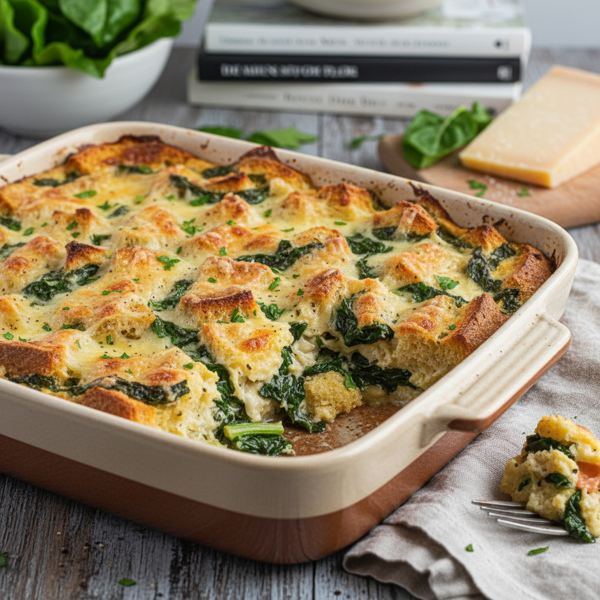
Indulge in the rich, comforting flavors of this Swiss Chard and Gruyère Bread Casserole, a refined French dish inspired by the cherished recipes from 'The Zuni Café Cookbook'. This delectable casserole transforms stale bread into a luxurious meal while embracing the earthiness of sweet onions and the creamy delight of Gruyère cheese. With its forgiving nature, feel free to experiment with your favorite greens and cheeses. Its slow-baked method allows for deep flavors to develop, and you'll cherish the texture as the bread absorbs the savory stock. Perfect for a cozy gathering or a delightful weeknight dinner, this panade is sure to become a cherished staple in your kitchen. Plus, enjoy the simple tips for reheating leftovers to maintain its delightful crunch and warmth.
N/A
Servings
N/A
Calories
9
Ingredients
Ingredients
yellow onions, thickly sliced
1.5 lbs (about 6 cups)
mild-tasting olive oil
1/2 cup
garlic cloves, thinly sliced
6
salt
(to taste)
green Swiss chard, thick ribs removed, cut into ribbons
1 lb
water
(as needed)
day-old chewy peasant-style bread, cut into cubes
10 ounces ((about 8-10 cups))
chicken stock (or vegetable stock)
3-4 cups (or as needed)
Gruyère cheese, coarsely grated
6 ounces (or another melting cheese)
Instructions
1
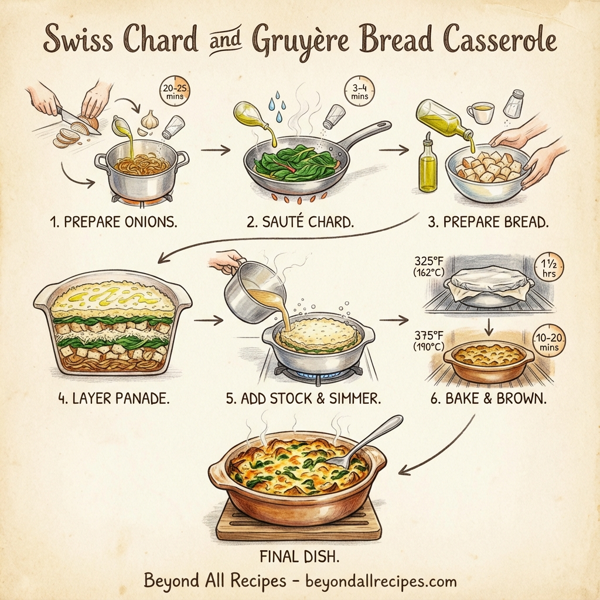
Prepare the Onions: In a deep saucepan or Dutch oven, combine the sliced onions with about 1/4 cup of olive oil. Cook over medium-high heat, gently shaking the pan occasionally until the onions begin to caramelize, about 3 minutes. Stir the onions, allowing the second layer to color before reducing the heat to low. Add garlic and a pinch of salt, stirring occasionally until the onions are a soft, pale amber hue and tender, approximately 20 minutes. If they dry out, cover to retain moisture.
2
Preheat your oven to 325°F (162°C).
3
Sauté the Chard: In a large sauté pan, add a handful of chard leaves, drizzling with olive oil and sprinkling with a dash of water and salt. Heat until steam begins to rise, then reduce heat. Stir and fold until the chard is wilted and bright green, about 3-4 minutes.
4
Prepare the Bread: Toss the cubed stale bread with a few tablespoons of olive oil, a generous 1/4 cup of stock, and a few pinches of salt. Massage to coat the bread thoroughly.
5
Layer the Panade: In a 3-quart flameproof soufflé dish or Dutch oven, assemble the casserole in layers. Start with a generous layer of caramelized onions, followed by a mosaic of bread cubes, more onions, a layer of wilted chard, and a handful of grated cheese. Repeat these layers until the dish is full, ensuring the top layer includes a little of everything. Drizzle any leftover olive oil on top.
6
Add Stock: Heat the remaining stock to a simmer and taste for seasoning. Slowly pour stock around the edge of the dish: for a soupy texture, fill to the rim; for a firmer dish, fill about an inch below the rim. Allow a minute for the stock to be absorbed, adding more if necessary.
7
Simmer on the Stovetop: Place the panade on low heat and watch for bubbles around the edges—this helps reduce baking time by about 30 minutes.
8
Cover for Baking: Cover the panade with parchment paper and loosely wrap foil around it. Place a sheet of foil beneath to catch drips.
9
Bake: Bake until bubbly and hot, with a pale golden center and darker edges, approximately 1 1/2 hours. Keep an eye on it as baking times may vary depending on your dish.
10
Final Browning and Check: Uncover the panade and increase the oven temperature to 375°F (190°C). Allow to bake until golden brown on top (10-20 minutes). Check with a knife; it should be silky underneath and ooze liquid when pressed. If dry, add simmering stock and bake for an additional 10 minutes.
Nutrition Information
Frequently Asked Questions
Frequently Asked Questions
What is Swiss Chard and Gruyère Bread Casserole?
It is a refined savory French-style bread pudding, also known as a panade, made with caramelized onions, greens, bread, and cheese.
What cookbook inspired this recipe?
This recipe is inspired by the cherished recipes found in 'The Zuni Café Cookbook'.
What is a panade?
A panade is a slow-baked savory casserole that uses stale bread to absorb stock and flavors from layered vegetables and cheese.
What kind of bread should I use?
The recipe calls for day-old chewy peasant-style bread cut into cubes.
Can I use fresh bread instead of stale bread?
Stale bread is preferred as it absorbs liquid better, but you can use fresh bread if you toast the cubes slightly to dry them out.
What type of cheese is used in this recipe?
Gruyère cheese is recommended, though you can use any other good melting cheese as a substitute.
How do I prepare the onions?
Slice yellow onions thickly and cook them slowly in olive oil with garlic until they reach a soft, pale amber hue.
How long does it take to cook the onions?
The onions take about 20 minutes on low heat to become tender and caramelized.
How is the Swiss chard prepared?
Remove the thick ribs, cut the leaves into ribbons, and sauté them with olive oil, water, and salt until wilted.
What is the primary baking temperature?
The casserole is initially baked at 325°F (162°C).
How do I prep the bread cubes before layering?
Toss the cubes with olive oil, a 1/4 cup of stock, and salt, then massage them to ensure they are well coated.
What type of dish is best for this casserole?
A 3-quart flameproof soufflé dish or a Dutch oven is recommended.
How should the layers be assembled?
Start with caramelized onions, then add bread cubes, more onions, wilted chard, and grated cheese, repeating until the dish is full.
Should the stock be cold or hot when added?
The stock should be heated to a simmer before being poured into the casserole dish.
How much stock should I use for a firmer dish?
For a firmer texture, fill the stock to about an inch below the rim of the dish.
How much stock should I use for a soupy texture?
For a soupy texture, pour the simmering stock until it reaches the rim of the dish.
Why simmer the dish on the stovetop before baking?
Placing the dish on low heat on the stove until bubbles appear helps reduce the total baking time by about 30 minutes.
How do I cover the dish for baking?
Cover the top with parchment paper and then loosely wrap the dish with aluminum foil.
How long does the casserole bake in total?
It typically bakes for 1 1/2 hours covered, followed by 10 to 20 minutes uncovered for browning.
What temperature is used for final browning?
Increase the oven temperature to 375°F (190°C) for the final browning stage.
How can I tell if the panade is cooked correctly?
The top should be golden brown, while the inside should be silky and ooze liquid when pressed with a knife.
What should I do if the dish looks dry after baking?
Add more simmering stock and bake for an additional 10 minutes.
Is this recipe vegetarian?
It can be made vegetarian if you use vegetable stock instead of chicken stock.
Can I use different greens besides Swiss chard?
Yes, the recipe is very forgiving and allows you to experiment with various types of greens.
How many garlic cloves are in this recipe?
The recipe calls for 6 thinly sliced garlic cloves.
What is the serving size for this recipe?
While specific serving counts aren't provided, it uses 1.5 lbs of onions and 10 ounces of bread, making it a hearty meal.
Can I use red onions instead of yellow onions?
Yellow onions are recommended for their sweetness, but you can experiment with other varieties if desired.
What is the texture of the finished dish?
It features a crunchy golden top with a soft, silky, and savory bread interior.
Can I prepare parts of this ahead of time?
Yes, you can caramelize the onions and sauté the chard in advance to save time.
What should I look for when sautéing chard?
Look for the leaves to become bright green and wilted, which usually takes about 3 to 4 minutes.