Spicy Hunan Hot and Sour Soup
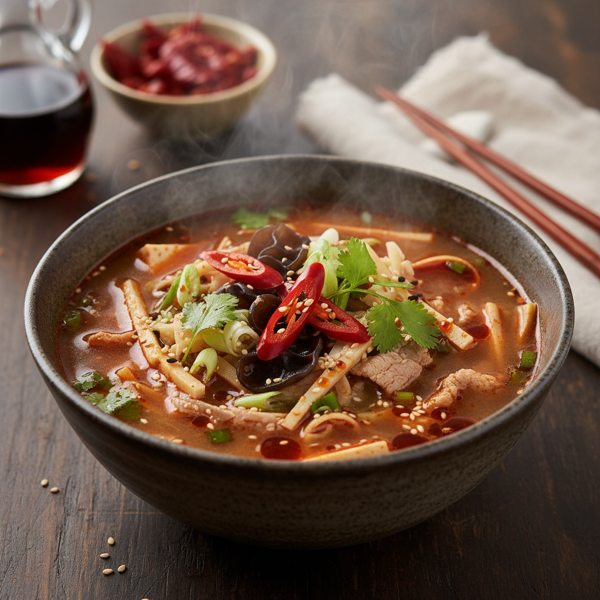
This Spicy Hunan Hot and Sour Soup is a tantalizing blend of flavors that pays homage to traditional Chinese cuisine while offering a contemporary twist. Perfect for those chilly evenings or as a comforting starter, this soup features a delightful mix of fresh vegetables, savory mushrooms, and protein-rich tofu. The addition of tamari and mirin brings a deep umami flavor, while a touch of chili paste adds that signature heat. Whether enjoyed as a meal on its own or as part of a larger spread, it’s sure to impress your family and friends. Prepare to take your taste buds on an exciting journey with each hearty spoonful!
N/A
Servings
N/A
Calories
18
Ingredients
Ingredients
Vegetable or Chicken Stock
6 cups (brought to a boil)
Garlic cloves
2 (minced)
Gingerroot
1 teaspoon (minced)
Black pepper
1/2 teaspoon (ground)
Tamari
2 tablespoons (for seasoning)
Shiitake or Button mushrooms
4 or 8 (stems removed and thinly sliced)
Firm Tofu
1/2 lb (sliced into 1/4 x 1 inch strips)
Napa Cabbage
1 cup (shredded)
Carrot
1 (thinly sliced)
Frozen Peas
1/3 cup (no preparation needed)
Rice Vinegar
2 tablespoons (for seasoning)
Mirin (Chinese Cooking Wine)
1 tablespoon (for flavor)
Cornstarch
1 tablespoon (dissolved in 3 tablespoons cold water)
Egg
1-2 (well-beaten (optional))
Green Onion
1/2 cup (chopped)
Cilantro
1/4 cup (chopped)
Cooked Chicken or Pork
1/2 lb (cubed)
Hot Chili Paste or Chili Sauce
1 teaspoon (optional, to taste)
Instructions
1
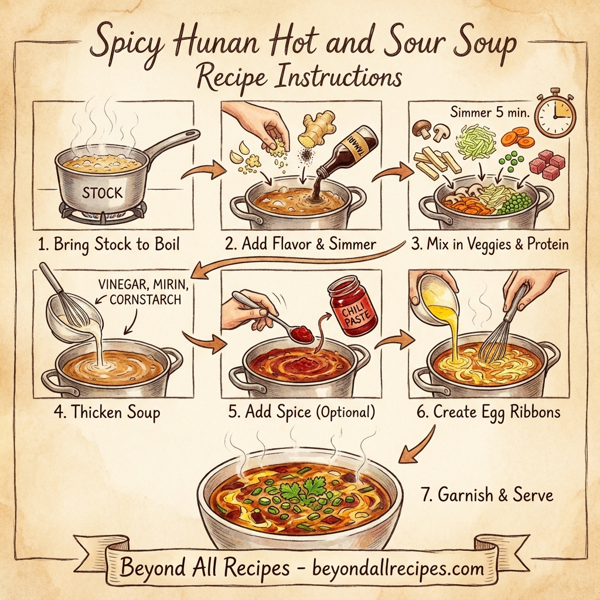
In a 2 1/2 to 3-quart saucepan, bring the vegetable or chicken stock to a rolling boil over medium-high heat.
2
Reduce the heat to medium, then add the minced garlic, ginger, black pepper, and tamari. Allow the mixture to simmer for 1 minute to let the flavors meld.
3
Carefully add the sliced mushrooms, tofu strips, shredded napa cabbage, sliced carrot, frozen peas, and cubed cooked meat (chicken or pork) to the pot. Stir well and let it simmer for an additional 5 minutes, or until the vegetables are tender.
4
In a separate bowl, mix rice vinegar, mirin, and dissolved cornstarch in cold water. Stir this mixture into the soup and continue to cook for 1 minute, or until the soup thickens slightly.
5
For an optional step, add the hot chili paste or chili sauce according to your heat preference, stirring well to combine.
6
Remove the saucepan from the heat and slowly pour the well-beaten egg into the hot soup while stirring continuously to create lovely egg ribbons.
7
Garnish the soup with chopped green onions and cilantro before serving. Ladle into bowls and enjoy this delightful and comforting dish immediately.
Nutrition Information
Frequently Asked Questions
Frequently Asked Questions
What is Spicy Hunan Hot and Sour Soup?
It is a flavorful Chinese soup featuring a blend of savory mushrooms, tofu, vegetables, and a signature spicy-tangy broth.
What stock is recommended for this recipe?
You can use either 6 cups of vegetable stock or chicken stock as the base for the soup.
How do I achieve the signature spicy flavor?
The heat comes from adding hot chili paste or chili sauce, which you can adjust according to your preference.
Can this recipe be made vegetarian?
Yes, simply use vegetable stock and omit the meat or replace it with extra tofu or mushrooms.
Which types of mushrooms are best to use?
The recipe suggests using 4 to 8 shiitake or button mushrooms with stems removed and thinly sliced.
How should the tofu be prepared?
Use 1/2 lb of firm tofu and slice it into small strips approximately 1/4 x 1 inch in size.
Why is cornstarch used in the soup?
Cornstarch is dissolved in cold water and added to the broth to help the soup thicken slightly.
How do I create the egg ribbons in the soup?
Slowly pour a well-beaten egg into the hot soup while stirring continuously to create delicate ribbons.
What meat can I add to the soup?
You can add 1/2 lb of cubed cooked chicken or cooked pork to make the soup heartier.
What provides the sour taste in this recipe?
Two tablespoons of rice vinegar provide the classic tangy and sour flavor profile.
What is Tamari and can I substitute it?
Tamari is a gluten-free soy sauce used for seasoning; you can substitute it with regular soy sauce if preferred.
How much garlic is required?
The recipe calls for 2 minced garlic cloves to be simmered in the stock.
Is fresh ginger necessary?
Yes, 1 teaspoon of minced gingerroot is essential for the authentic Hunan flavor.
What is the purpose of Mirin in this recipe?
Mirin, or Chinese cooking wine, is used to add a layer of depth and umami flavor.
How do I prepare the napa cabbage?
The recipe requires 1 cup of napa cabbage that has been shredded before adding it to the pot.
Are the peas used in the soup fresh?
The recipe specifically calls for 1/3 cup of frozen peas, which require no prior preparation.
What garnishes should I use before serving?
Garnish the soup with 1/2 cup of chopped green onions and 1/4 cup of fresh chopped cilantro.
How long should the vegetables simmer?
After adding the vegetables, tofu, and meat, let the soup simmer for about 5 minutes until tender.
Is the egg addition mandatory?
No, adding the beaten egg is an optional step for those who prefer an egg-drop style texture.
What size saucepan is needed for this soup?
A 2 1/2 to 3-quart saucepan is the ideal size for preparing this recipe.
When should I add the chili paste?
Add the chili paste or sauce after the soup has thickened slightly, adjusting it to your preferred heat level.
How much black pepper is used?
The recipe uses 1/2 teaspoon of ground black pepper to add a mild, earthy heat.
Can I add other vegetables to this soup?
While the recipe specifies cabbage, carrots, and peas, you can adapt it by adding other greens or bamboo shoots.
How do I prepare the cornstarch mixture?
Dissolve 1 tablespoon of cornstarch into 3 tablespoons of cold water before stirring it into the soup.
Does the meat need to be pre-cooked?
Yes, the recipe requires 1/2 lb of meat that is already cooked and cubed.
What is the first step in making this soup?
The first step is bringing your choice of stock to a rolling boil over medium-high heat.
Can I store leftovers of this soup?
Yes, it can be refrigerated in an airtight container, though the texture of the tofu and vegetables is best when fresh.
How long does it take for the soup to thicken?
Once the cornstarch mixture is added, the soup should thicken in about 1 minute.
Can I adjust the amount of vinegar?
Yes, the 2 tablespoons of rice vinegar can be adjusted up or down to suit your taste for sourness.
What makes this soup part of Hunan cuisine?
Its bold combination of spicy chili and vinegar-driven tartness is a hallmark of the Hunan culinary tradition.