Sichuan-Style Spicy Mapo Tofu with Black Beans
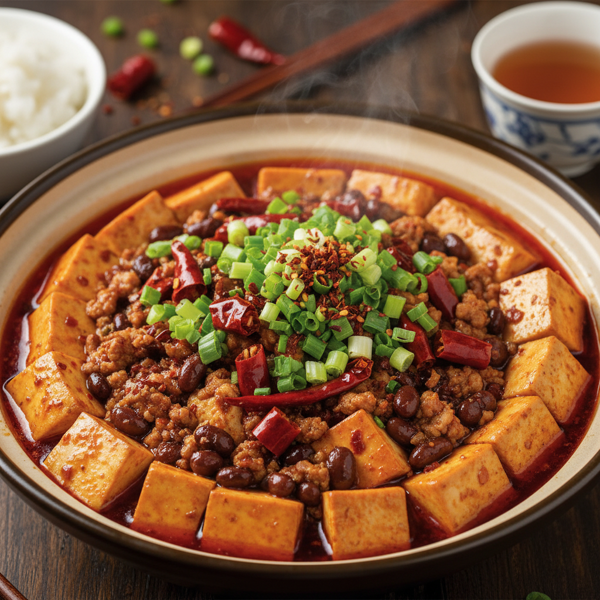
Experience the fiery flavors of Sichuan cuisine with this delightful Mapo Tofu dish, featuring firm tofu and a blend of savory ingredients. This recipe marries high-protein tofu with ground pork, salty black beans, and a mix of fragrant sauces to create a robust flavor profile that can be tailored to your spice preference. Serve over steamed rice for a satisfying meal that is both quick to prepare and packed with nutrition. Perfect for a weeknight dinner or impressing guests, this dish brings warmth and culture to your table.
N/A
Servings
N/A
Calories
17
Ingredients

Ingredients
Tofu
14 ounces (medium or firm, cut into bite-sized cubes)
Ground Pork
2 ounces (can substitute ground beef, turkey, or chicken)
Peanut Oil
2 tablespoons (for frying)
Chicken Soup Base
1 cup (or use Won Ton powder)
Oyster Sauce
1 tablespoon (non-sweetened brand)
Light Soy Sauce
1 tablespoon
Chinese Salted Black Beans
2 tablespoons (rinsed and soaked)
Rice Wine
3 tablespoons
Grated Ginger
1 tablespoon
Bean Sauce (Amoy Sichuan Spicy Noodle Sauce)
1 tablespoon (optional)
Garlic
1/2 tablespoon (chopped, optional)
Chili Paste with Garlic
1/2 tablespoon (optional)
Sugar
1/8 teaspoon
Chili Pepper
1 tablespoon (optional, chopped)
Tapioca Starch
3 tablespoons (or use cornstarch)
Sesame Oil
1/2 tablespoon
Scallions
2 (cut into small diagonal lengths)
Instructions
1
Begin by rinsing the salted black beans under cold water to reduce excess salt. Soak the rinsed beans in 2 tablespoons of rice wine for 15 minutes. Then, mix in the grated ginger and set aside.
2
In a mixing bowl, combine the ground pork with 1 tablespoon of soy sauce, ensuring it is well coated. Set aside to marinate.
3
In a measuring cup, whisk together 1/2 to 3/4 cup of chicken stock, oyster sauce, Amoy Sichuan Spicy Noodle Sauce, minced garlic, chili paste with garlic, sugar, and chopped chili peppers to create a flavorful sauce, then set aside.
4
Cut the tofu into bite-sized cubes gently to maintain its shape and set aside.
5
In a small bowl, mix 3 tablespoons of tapioca starch with 4 tablespoons of stock to create a slurry and set aside.
6
Heat the peanut oil in a wok or large skillet over medium-high heat. Add the black bean mixture and stir-fry for about 1 minute until fragrant.
7
Add the marinated ground pork to the wok, breaking it up as it cooks for approximately 2 minutes, or until it is no longer pink.
8
Pour in the prepared sauce mixture and bring it to a gentle boil, stirring occasionally.
9
Carefully add the tofu cubes, gently tossing them with the sauce to coat without breaking them. Cover the wok and let it simmer for 2-3 minutes.
10
Remove the cover and gently toss the tofu again. Cover for an additional minute.
11
Stir the tapioca starch slurry into the wok, adding half to start, and gently mix until the sauce thickens. Add more slurry as needed until you achieve the desired consistency.
12
Finish by folding in the chopped scallions and sesame oil. Stir gently to combine all ingredients evenly.
13
Distribute the hot Mapo Tofu over bowls of steamed rice, serving additional sauce on top or alongside. Enjoy your authentic Sichuan-style meal!
Nutrition Information
Frequently Asked Questions
Frequently Asked Questions
What is Sichuan-Style Spicy Mapo Tofu?
It is a classic fiery dish from Sichuan cuisine featuring firm tofu, ground pork, and fermented black beans in a spicy, savory sauce.
What type of tofu is recommended for this recipe?
Medium or firm tofu is recommended because it holds its shape well during the simmering process.
Can I use a meat other than ground pork?
Yes, you can easily substitute ground beef, turkey, or chicken for the ground pork in this recipe.
How should I prepare the salted black beans?
Rinse the black beans under cold water to reduce saltiness, then soak them in rice wine for 15 minutes before mixing with ginger.
What is the best oil for frying Mapo Tofu?
Peanut oil is recommended for its high smoke point and subtle flavor, which complements the stir-fry process.
How long should the black beans soak?
The salted black beans should be soaked in rice wine for approximately 15 minutes.
What is the marinade for the ground pork?
The ground pork is marinated in one tablespoon of light soy sauce to enhance its flavor before cooking.
How do I create the savory sauce?
Whisk together chicken stock, oyster sauce, spicy noodle sauce, garlic, chili paste, sugar, and chopped chili peppers.
How should the tofu be cut?
The tofu should be cut gently into bite-sized cubes to maintain its structure in the sauce.
What is used to thicken the Mapo Tofu sauce?
A slurry made of tapioca starch and chicken stock is used to thicken the sauce to the desired consistency.
Can I use cornstarch instead of tapioca starch?
Yes, cornstarch can be used as a direct substitute for tapioca starch in the thickening slurry.
How much chicken stock is required for the sauce?
The sauce mixture typically requires between 1/2 to 3/4 cup of chicken stock.
When do I add the black bean mixture to the wok?
Add the black bean mixture to the wok once the peanut oil is heated over medium-high heat and stir-fry for one minute.
How long does it take to cook the ground pork?
The pork should be cooked for approximately 2 minutes, or until it is no longer pink.
How do I incorporate the tofu without breaking it?
Add the cubes carefully and toss them very gently with the sauce to coat them without crushing the tofu.
How long does the dish need to simmer?
The tofu should simmer covered for 2-3 minutes, and then for one additional minute after a gentle toss.
When are the scallions added?
Scallions are folded into the dish at the very end along with the sesame oil to maintain their freshness.
Is the Amoy Sichuan Spicy Noodle Sauce necessary?
It is listed as an optional ingredient, but it adds an authentic Sichuan flavor profile to the dish.
Is garlic a required ingredient?
Garlic is optional, though it is recommended for a more fragrant and robust flavor.
Why must the black beans be rinsed?
Rinsing is necessary to remove the excess salt used in the preservation of the black beans.
Can I use ground beef?
Yes, ground beef is a suitable protein alternative for this Mapo Tofu recipe.
How do I make the starch slurry?
Mix 3 tablespoons of tapioca starch with 4 tablespoons of stock in a small bowl until smooth.
How much rice wine is used?
The recipe calls for 3 tablespoons of rice wine, primarily used for soaking the black beans.
How much ginger is needed?
One tablespoon of grated ginger is used to season the black bean mixture.
What is the purpose of adding sugar?
A small amount of sugar (1/8 teaspoon) is used to balance the salty and spicy elements of the sauce.
How should the scallions be prepared?
The scallions should be cut into small diagonal lengths for both flavor and presentation.
What can I use if I don't have chicken stock?
You can use Won Ton powder mixed with water as a substitute for the chicken soup base.
What provides the final aromatic touch?
Folding in 1/2 tablespoon of sesame oil at the end provides a final layer of aroma and richness.
Is this dish considered high-protein?
Yes, the combination of tofu and ground meat makes this a protein-rich meal.
What is the best way to serve Mapo Tofu?
It is best served hot over bowls of steamed white rice with extra sauce on the side.