Savory Pork Bibimbap with Garlic Gochujang Sauce

Experience a delicious twist on the classic Korean Bibimbap with this savory Pork Bibimbap, perfect for a nutritious family meal. This dish brings together tender marinated pork, a colorful medley of fresh vegetables, and a homemade garlic gochujang sauce that packs a flavorful punch. The chinkiang vinegar adds a uniquely tangy note while cutting back on sodium. Served over warm rice and topped with a sunny-side-up egg, this vibrant bowl is not only delightful to the palate but also visually stunning on the table, making it ideal for gatherings or a cozy weeknight dinner.
6
Servings
480
Calories
16
Ingredients
Ingredients
Pork Tenderloin
1 lb (Trimmed and cut into 1/2 inch chunks)
Brussels Sprouts
8 ounces (Steamed and cut into chunks)
Bean Sprouts
6 ounces (Rinsed and ready for sautéing)
Shiitake Mushrooms
8 ounces (Sliced)
Carrots
2 large (Shredded)
Snap Peas
4 ounces (Steamed)
Sesame Oil
3 ounces (Used for the gochujang paste and sautéing)
Chinkiang Vinegar
3 tablespoons (Used for marinating and flavoring)
Olive Oil
3 ounces (Used for cooking)
Gochujang
6 tablespoons (For the sauce and vegetable sautéing)
Sugar
3 tablespoons (To balance flavors in the gochujang paste)
Apple Cider Vinegar
3 teaspoons (For the gochujang paste)
Sesame Seeds
2 tablespoons (For garnish)
Garlic Cloves
3 (Grated)
Ginger
3 teaspoons (Grated)
Large Eggs
6 (Fried sunny-side-up for serving)
Instructions
1
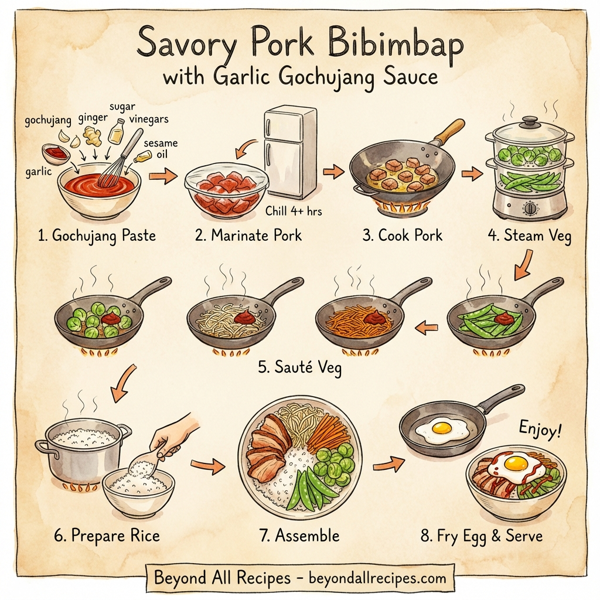
Prepare the Gochujang Paste: In a mixing bowl, combine gochujang, sugar, grated garlic, grated ginger, apple cider vinegar, chinkiang vinegar, and sesame oil. Mix thoroughly until smooth and well combined.
2
Marinate the Pork: Trim excess fat from the pork tenderloin and cut it into 1/2-inch chunks. Coat the pork pieces with a small amount of the gochujang paste, ensuring they are well covered. Transfer to a bowl, cover, and refrigerate for at least 4 hours, preferably overnight for deeper flavor.
3
Cook the Pork: Heat 1 tablespoon of olive oil in a medium-hot wok. Add the marinated pork and cook until browned and cooked through on both sides, approximately 6-8 minutes. Once cooked, set aside and cover to keep warm.
4
Steam the Vegetables: In a steamer, separately steam the Brussels sprouts and snap peas for about 10 minutes. Once done, set aside.
5
Sauté Brussels Sprouts: Cut steamed Brussels sprouts into chunks. In the same wok, toss them with a small amount of gochujang paste and sauté for a few minutes until evenly coated and heated through. Remove from heat and cover.
6
Sauté Bean Sprouts: In the wok, add bean sprouts with a small amount of gochujang paste. Stir-fry for a few minutes until tender and aromatic. Remove from heat and cover.
7
Cook Carrots: Toss shredded carrots in gochujang paste and cook in the wok for a few minutes until tender. Add olive oil as needed for proper sautéing. Remove from heat and cover.
8
Cook Snap Peas: Finally, toss the steamed snap peas in gochujang paste and sauté for a few minutes until warmed. Remove from heat and cover.
9
Prepare the Rice: Cook rice according to package instructions. If using a dolsot (Korean stone cooking bowl), warm the bowl as per the manufacturer's instructions. Add enough rice to cover the bottom of each serving bowl.
10
Assemble the Bibimbap: In each bowl, arrange the cooked pork and sautéed vegetables in separate wedges over the rice, creating a colorful presentation.
11
Fry the Eggs: In a pan, add oil and fry one egg for each serving sunny-side-up until the egg white is fully set. Keep the cooked eggs warm until ready to serve.
12
Serve: Top each assembled bowl with a fried egg, drizzle on extra gochujang paste if desired, and serve immediately for a delightful, homemade bibimbap experience.
Nutrition Information
20g
Fat
47g
Carbs
30g
Protein
125mg
Sodium
Frequently Asked Questions
Frequently Asked Questions
What is Savory Pork Bibimbap?
It is a delicious twist on the classic Korean rice bowl featuring marinated pork, colorful vegetables, and a garlic gochujang sauce.
What type of pork is used in this recipe?
The recipe calls for one pound of pork tenderloin, trimmed and cut into 1/2-inch chunks.
How long should I marinate the pork?
The pork should be refrigerated for at least 4 hours, though marinating overnight is preferred for deeper flavor.
What ingredients are in the Garlic Gochujang Sauce?
The sauce is a mixture of gochujang, sugar, grated garlic, grated ginger, apple cider vinegar, chinkiang vinegar, and sesame oil.
How do I cook the pork?
Heat 1 tablespoon of olive oil in a wok and cook the marinated pork for 6-8 minutes until browned and cooked through.
Which vegetables need to be steamed?
Brussels sprouts and snap peas should be steamed separately for approximately 10 minutes before sautéing.
How are the Brussels sprouts prepared?
After steaming, they are cut into chunks and sautéed in a wok with a small amount of gochujang paste.
What is the calorie count per serving?
Each serving of this Pork Bibimbap contains 480 calories.
How many servings does this recipe make?
This recipe is designed to provide 6 servings.
What is the sodium content of this dish?
This dish contains 125mg of sodium per serving.
How much protein is in each serving?
There are 30 grams of protein in each serving.
How do I prepare the carrots?
The carrots should be shredded and cooked in a wok with gochujang paste and olive oil until tender.
What type of egg is served with Bibimbap?
Each bowl is topped with one sunny-side-up egg with the egg white fully set.
What is Chinkiang vinegar?
It is a black rice vinegar that adds a unique tangy note to the sauce while helping to reduce the overall sodium of the dish.
How should I assemble the Bibimbap bowl?
Arrange the cooked pork and sautéed vegetables in separate wedges over a base of warm rice for a colorful presentation.
How much fat is in this recipe?
There are 20 grams of fat per serving.
How many carbohydrates are in a serving?
Each serving contains 47 grams of carbohydrates.
How are the bean sprouts prepared?
They are stir-fried in a wok with a little gochujang paste until they are tender and aromatic.
What garnish is recommended?
The recipe suggests using sesame seeds as a garnish for the finished dish.
Can I use a dolsot for this recipe?
Yes, if using a Korean stone cooking bowl (dolsot), warm it according to the manufacturer's instructions before adding the rice.
How much gochujang is required?
The recipe uses 6 tablespoons of gochujang for both the sauce and for sautéing the vegetables.
What type of mushrooms are included?
The recipe includes 8 ounces of sliced shiitake mushrooms.
How much garlic and ginger are needed for the sauce?
You will need 3 grated garlic cloves and 3 teaspoons of grated ginger.
What is the role of sugar in the recipe?
Three tablespoons of sugar are used to balance the flavors in the gochujang paste.
Is this recipe suitable for family meals?
Yes, it is described as a nutritious family meal that is visually stunning for gatherings or weeknight dinners.
How much sesame oil is used?
The recipe calls for 3 ounces of sesame oil, used for both the gochujang paste and for sautéing.
What color are the carrots in this dish?
The recipe uses 2 large carrots, which are shredded to add color to the medley of vegetables.
Do I cook the vegetables all together?
No, the vegetables are steamed and sautéed separately to maintain their distinct flavors and colors for the wedge presentation.
How long does it take to steam the snap peas?
The snap peas should be steamed for about 10 minutes before being sautéed with gochujang paste.
When should I add the extra gochujang sauce?
Extra gochujang paste can be drizzled over the assembled bowl just before serving, if desired.