Savory Miso Glazed Salmon
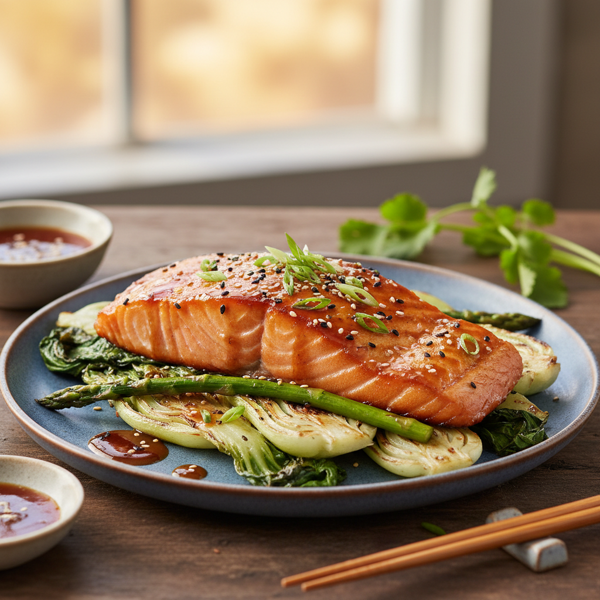
Indulge in this delicious and fragrant Savory Miso Glazed Salmon, a delightful dish that combines the rich flavors of miso and soy sauce with fresh ginger and vibrant greens. This Japanese-inspired recipe showcases tender salmon fillets braised to perfection in a sweet-salty broth enhanced with mirin and sake. Serve it over a bed of mixed greens tossed in the savory cooking liquid for a truly elegant meal. Perfect for a weeknight dinner or a special occasion, this dish promises to impress your family and friends.
4
Servings
300
Calories
12
Ingredients
Ingredients
Canola oil
3 tablespoons (none)
Vegetable broth
1/2 cup (none)
Mirin
1/3 cup (none)
Sake
1/4 cup (none)
White miso
2 tablespoons (none)
Soy sauce
2 tablespoons (none)
Fresh ginger, chopped
1 tablespoon (peeled and finely chopped)
Green onions
2 (thinly sliced (white and pale green parts only))
Salmon fillets
4 (6 oz each, 1 inch thick) (none)
Rice vinegar
1 tablespoon (none)
Mixed greens (frisee, arugula, spinach)
8 cups (washed and dried)
Fresh cilantro, chopped
2 tablespoons (none)
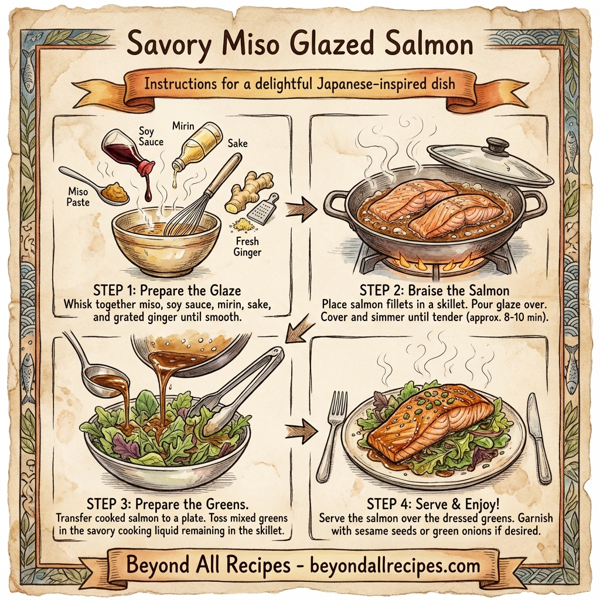
Instructions
Nutrition Information
15g
Fat
7.5g
Carbs
25g
Protein
Frequently Asked Questions
Frequently Asked Questions
What is Savory Miso Glazed Salmon?
It is a Japanese-inspired dish featuring salmon fillets braised in a savory broth of miso, soy sauce, and ginger, served over fresh greens.
How many servings does this recipe provide?
This recipe is designed to serve 4 people.
How many calories are in one serving?
Each serving contains approximately 300 calories.
What is the primary cooking method used?
The salmon is braised in a sweet-salty liquid enhanced with mirin and sake.
What type of miso should I use?
White miso is recommended for its mild and slightly sweet flavor profile.
Can I substitute the white miso with red miso?
Yes, but red miso is saltier and more pungent, so you may want to use slightly less than the recipe calls for.
Is this recipe gluten-free?
The recipe is tagged as gluten-free, but you must ensure you use a certified gluten-free soy sauce or tamari.
What can I use if I do not have sake?
You can substitute sake with dry sherry or additional vegetable broth if you prefer to avoid alcohol.
Is there a substitute for mirin?
A mixture of white wine with a pinch of sugar can work as a substitute for mirin.
What types of mixed greens work best?
A combination of frisee, arugula, and spinach provides a great variety of textures and flavors.
Is this dish high in protein?
Yes, each serving provides 25g of protein.
What is the fat content per serving?
There are 15g of fat per serving.
How many carbohydrates are in this recipe?
This dish contains 7.5g of carbohydrates per serving.
What kind of oil is recommended?
Canola oil is used for its neutral flavor and high smoke point.
How should the fresh ginger be prepared?
The ginger should be peeled and finely chopped before being added to the dish.
Which part of the green onions should I use?
Use only the thinly sliced white and pale green parts of the green onions.
Can I use frozen salmon fillets?
Yes, but ensure they are completely thawed and patted dry before you begin cooking.
What is the role of rice vinegar in this recipe?
Rice vinegar is used to dress the mixed greens, adding a bright acidity that balances the savory miso.
What does the vegetable broth contribute?
The vegetable broth serves as the base for the braising liquid, keeping the salmon moist during cooking.
Can I use chicken instead of salmon?
Yes, though cooking times will vary; ensure the chicken reaches an internal temperature of 165°F.
How do I know when the salmon is cooked through?
Salmon is done when it reaches an internal temperature of 145°F or when it flakes easily with a fork.
Is this recipe suitable for a quick weeknight dinner?
Yes, it is categorized as taking less than 60 minutes to prepare and cook.
What does braising involve in this context?
It involves cooking the fish partially submerged in a simmering liquid, resulting in a very tender texture.
Can I add other vegetables to this dish?
Absolutely; vegetables like bok choy or snap peas would complement the Japanese-inspired flavors well.
Is cilantro necessary?
Cilantro is used as a garnish; if you dislike it, you can omit it or use fresh parsley instead.
Can I grill the salmon instead?
You can, but you should simmer the braising liquid separately to create a glaze to brush on the fish.
How should I store leftovers?
Store any leftovers in an airtight container in the refrigerator for up to 2 days.
Is this recipe dairy-free?
Yes, this recipe contains no dairy ingredients.
Can I serve this with rice?
While suggested over greens, it also pairs excellently with steamed jasmine or brown rice.
What is the final texture of the salmon?
The salmon should be silky, moist, and infused with the sweet and salty flavors of the miso glaze.