Savory Herb-Infused Chicken Stock
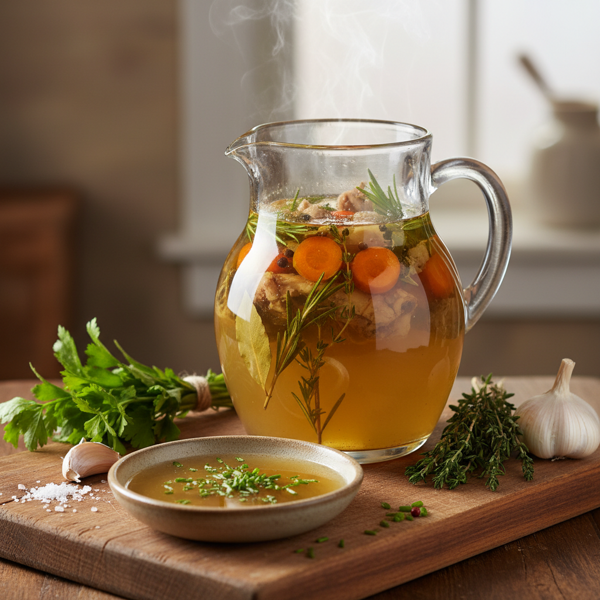
This Savory Herb-Infused Chicken Stock is a kitchen staple that I prepare every couple of months. Made from a whole roasting chicken, this recipe yields a rich, flavorful stock that can be used in countless dishes, eliminating the need for high-sodium commercial broth. As the stock simmers, the tantalizing aroma fills the home, invigorating your senses and building anticipation for your next meal. Additionally, after cooking, the tender chicken meat can be repurposed for soups, salads, and sandwiches, maximizing your meal prep efforts. For convenience, I freeze the stock in ice cube trays, making it easy to use in recipes whenever needed. Just 5 to 6 cubes equal one cup of stock, and it will maintain its quality in the freezer for up to 6 months.
N/A
Servings
N/A
Calories
10
Ingredients
Ingredients
Roasting chicken
1 (about 6 pounds, cut into 8 pieces, giblets reserved)
Water
12 cups
Yellow onions
2 medium (quarter them)
Carrots
3 medium (peeled and thinly sliced)
Garlic cloves
4 whole
Bay leaves
2 whole
Parsley
6 sprigs
Dried rosemary
1 teaspoon
Black peppercorns
4
Salt
1/4 teaspoon
Instructions
1
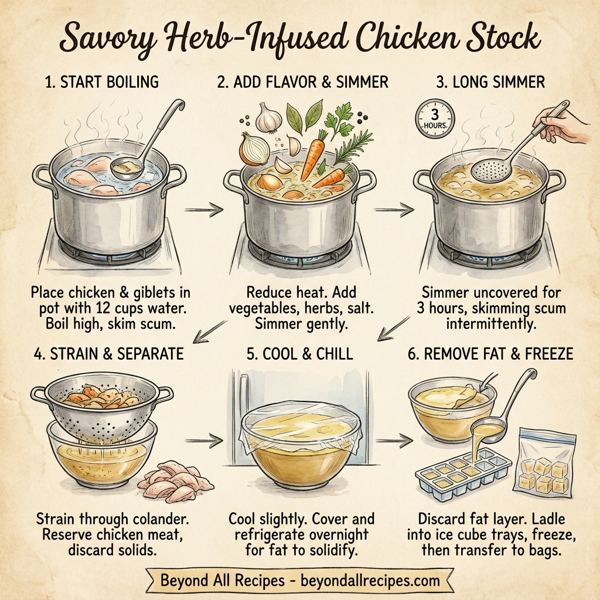
Begin by placing the chicken pieces and giblets (excluding the liver) into a large stockpot. Pour in the 12 cups of water and bring the mixture to a vigorous boil over high heat. As the stock heats, skim any scum that rises to the surface to keep the liquid clear.
2
Once boiling, reduce the heat to maintain a gentle simmer and add the quartered onions, sliced carrots, garlic cloves, bay leaves, parsley, dried rosemary, black peppercorns, and salt.
3
Allow the stock to simmer, uncovered, for approximately 3 hours. Throughout the cooking process, intermittently skim off any additional scum that forms on the surface.
4
After simmering, carefully strain the stock through a large colander or sieve placed over an even larger heatproof bowl to separate the liquid from the solid ingredients. Reserve the cooked chicken meat for use in other meals, discarding the other solids.
5
Let your fresh stock cool for a bit, then cover the bowl with plastic wrap and refrigerate overnight. This allows the fat to solidify on top for easy removal.
6
The following day, remove the stock from the fridge and discard the solidified fat layer. Use a ladle to pour the now clarified stock into ice cube trays for freezing. Once frozen, transfer the stock cubes into labeled freezer bags for easy storage and future use.
Nutrition Information
Frequently Asked Questions
Frequently Asked Questions
What is Savory Herb-Infused Chicken Stock?
It is a rich, flavorful kitchen staple made from a whole roasting chicken and fresh herbs, designed to replace high-sodium commercial broths.
What size chicken is required for this recipe?
A roasting chicken weighing approximately 6 pounds is recommended.
How should the chicken be prepared?
The chicken should be cut into 8 pieces with the giblets reserved.
Should I include the chicken liver in the stock?
No, you should exclude the liver when adding the chicken pieces and giblets to the pot.
How much water is needed to make the stock?
The recipe requires 12 cups of water.
What vegetables are used in the stock?
The recipe uses 2 medium yellow onions, 3 medium carrots, and 4 whole garlic cloves.
How should the carrots be prepared?
The carrots should be peeled and thinly sliced.
Which herbs are included in the herb-infused stock?
The stock is infused with 2 bay leaves, 6 sprigs of parsley, and 1 teaspoon of dried rosemary.
How much salt and pepper are used?
The recipe calls for 4 black peppercorns and 1/4 teaspoon of salt.
What is the first step in the cooking process?
Place chicken pieces and giblets in a stockpot with 12 cups of water and bring to a vigorous boil.
What should I do as the stock heats up?
You should skim any scum that rises to the surface to ensure the liquid remains clear.
How long does the chicken stock need to simmer?
The stock should simmer uncovered for approximately 3 hours.
Should the pot be covered while simmering?
No, the instructions specify to allow the stock to simmer uncovered.
When do I add the vegetables and herbs?
Add the onions, carrots, garlic, bay leaves, parsley, rosemary, peppercorns, and salt once the mixture has reached a boil and the heat is reduced.
How do I separate the liquid from the solids?
Strain the stock through a large colander or sieve placed over a large heatproof bowl.
Can I reuse the cooked chicken meat?
Yes, the tender chicken meat can be repurposed for use in soups, salads, and sandwiches.
What should be done with the vegetables after straining?
The vegetables and other solids should be discarded after the stock is strained.
How do I cool the stock?
Let the stock cool slightly, then cover the bowl with plastic wrap and refrigerate it overnight.
Why is the stock refrigerated overnight?
Refrigerating it overnight allows the fat to solidify on the top, making it easy to remove and discard.
How do I remove the fat from the stock?
The day after cooking, remove the stock from the fridge and lift off the solidified fat layer.
What is the best way to freeze the chicken stock?
Use a ladle to pour the clarified stock into ice cube trays and freeze.
How should I store the frozen stock cubes?
Once frozen, transfer the cubes into labeled freezer bags for easy storage.
How many ice cubes equal one cup of stock?
Approximately 5 to 6 ice cubes are equal to one cup of stock.
How long will the stock stay fresh in the freezer?
The stock will maintain its quality in the freezer for up to 6 months.
Is this recipe low in sodium?
Yes, it is a low-sodium alternative to commercial broth, using only 1/4 teaspoon of salt for the entire batch.
What is the benefit of making stock at home?
It eliminates the need for high-sodium commercial products and fills your home with a tantalizing aroma.
How many ingredients are in this recipe?
There are 10 total ingredients used in this recipe.
Can this recipe be used for meal prep?
Yes, the ability to freeze portions and repurpose the chicken meat makes it excellent for meal prep.
What kind of container should I use for straining?
Use a large heatproof bowl that is bigger than the colander or sieve.
How often should I make this stock?
The recipe author suggests preparing this stock every couple of months to keep a steady supply.