Rich & Flavorful Pressure-Cooker Beef Stock
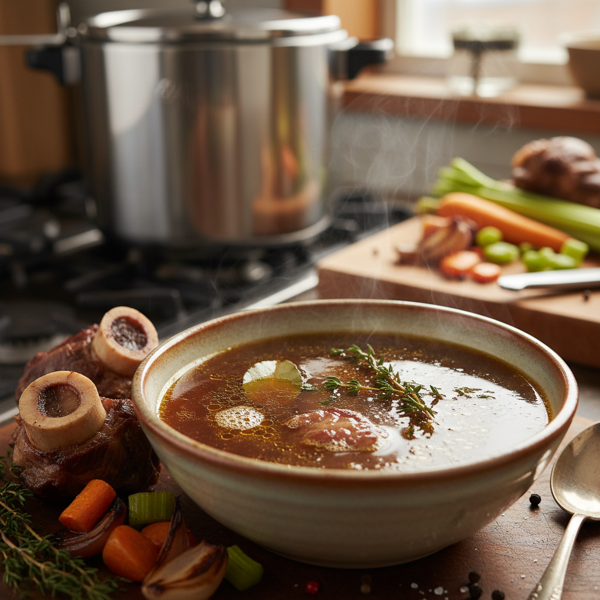
This rich and flavorful pressure-cooker beef stock is a game-changer for your kitchen staples, adapted from the beloved recipe by Julianna Grimes in Cooking Light. Perfected for a 6- or 8-quart pressure cooker, this stock delivers deep, savory richness with a significantly lower sodium content than store-bought options. Cooking in a pressure cooker not only saves you time, but it also extracts maximum flavor from the ingredients, ensuring a gelatinous texture that adds body to soups, sauces, and gravies. Although the stock benefits from an overnight chill to fully develop its flavors, you can use it right away by skimming off the excess fat. Get ready to elevate your culinary creations with this versatile and satisfying stock.
N/A
Servings
N/A
Calories
11
Ingredients
Ingredients
Tomato paste
2 tablespoons (Brush on bones and shanks)
Meaty beef bones with marrow
3 lbs (Use whole)
Beef shanks
2.5 lbs (Cut into 1-inch-thick pieces)
Celery ribs
2 (Cut diagonally into 2-inch pieces)
Carrot
1 large (Peeled and cut diagonally into 2-inch pieces)
Onion
1 large (Peeled and cut into 8 wedges)
Cooking spray
as needed (For coating vegetables)
Black peppercorns
1 tablespoon (Whole)
Bay leaves
2 (Whole)
Fresh flat-leaf parsley
1/2 bunch (Whole)
Cold water
8 cups (Use as is)
Instructions
1
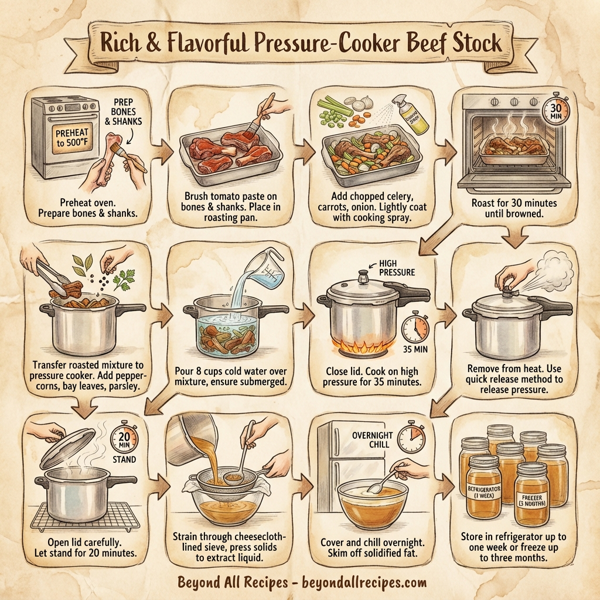
Preheat your oven to 500 degrees F (260 degrees C). While the oven is heating, prepare the bones and shanks.
2
Brush the tomato paste evenly over the meaty beef bones and beef shanks. Place them into a large roasting pan.
3
Add the chopped celery, carrot, and onion to the roasting pan, lightly coating everything with cooking spray to promote even roasting.
4
Roast in the preheated oven for 30 minutes, or until the bones and vegetables are browned, enhancing the flavor of your stock.
5
After roasting, transfer the entire mixture of bones and vegetables to a 6- or 8-quart pressure cooker. Add the black peppercorns, bay leaves, and fresh parsley.
6
Pour 8 cups of cold water over the mixture, ensuring everything is submerged.
7
Close the lid securely, bring the cooker to high pressure over high heat, then reduce the heat to maintain that pressure. Cook for 35 minutes.
8
Once cooking time is complete, remove the cooker from heat and release the pressure using the quick release method recommended by your pressure cooker manufacturer.
9
After pressure has released, carefully open the lid, directing steam away from you, and let the pot stand for about 20 minutes.
10
Strain the stock through a cheesecloth-lined sieve into a large bowl, pressing the solids to extract as much liquid as possible. Discard the solids.
11
Cover the strained stock and chill it overnight in the refrigerator. The next day, skim off the solidified fat from the surface before using.
12
Store the stock in the refrigerator for up to one week or freeze it for up to three months.
Nutrition Information
Frequently Asked Questions
Frequently Asked Questions
What is the origin of this pressure-cooker beef stock recipe?
This recipe is adapted from a version by Julianna Grimes originally published in Cooking Light.
What size pressure cooker is needed for this recipe?
This beef stock is specifically perfected for use in either a 6-quart or 8-quart pressure cooker.
Why should I make beef stock in a pressure cooker instead of on the stove?
A pressure cooker saves time and extracts maximum flavor and gelatin from the bones, creating a rich, body-filled stock.
Is this homemade beef stock healthier than store-bought versions?
Yes, it has a significantly lower sodium content than most store-bought options and contains no artificial preservatives.
What temperature should the oven be set to for roasting the bones?
The oven should be preheated to 500 degrees F (260 degrees C) to properly brown the ingredients.
Why is tomato paste used in this beef stock recipe?
Brushing tomato paste onto the bones and shanks before roasting adds deep color and savory umami richness to the stock.
What types of beef bones are recommended?
The recipe calls for 3 lbs of meaty beef bones with marrow to ensure a gelatinous and flavorful result.
How much beef shank is required?
You will need 2.5 lbs of beef shanks, cut into 1-inch-thick pieces.
How should the vegetables be prepared for roasting?
Celery and carrots should be cut diagonally into 2-inch pieces, and the onion should be peeled and cut into 8 wedges.
What is the purpose of using cooking spray on the vegetables?
A light coating of cooking spray helps the vegetables roast evenly and promotes browning.
How long should the bones and vegetables roast in the oven?
They should be roasted for 30 minutes or until they are well-browned.
What herbs and spices are included in the stock?
The stock uses black peppercorns, bay leaves, and a half bunch of fresh flat-leaf parsley.
How much water is added to the pressure cooker?
Add 8 cups of cold water, ensuring that all bones and vegetables are fully submerged.
How long does the stock cook under high pressure?
The stock should be cooked for 35 minutes once the cooker reaches high pressure.
What is the recommended pressure release method?
Use the quick release method as recommended by your pressure cooker's manufacturer.
How long should the pot stand after the pressure is released?
Let the pot stand for about 20 minutes before opening the lid to allow the liquid to settle.
How should the stock be strained?
Strain the liquid through a cheesecloth-lined sieve into a large bowl, pressing the solids to extract all flavor.
Should I keep the vegetables and bones after straining?
No, the solids should be discarded after their flavor and nutrients have been extracted into the liquid.
Why is it recommended to chill the stock overnight?
Chilling allows the flavors to fully develop and makes it easy to remove the solidified fat from the surface.
How do I remove the fat from the beef stock?
After chilling the stock overnight, the fat will solidify on the top, allowing you to easily skim it off with a spoon.
Can I use the stock immediately without chilling?
Yes, but you should skim off as much liquid fat as possible from the surface before using it.
How long does this beef stock last in the refrigerator?
The stock can be stored safely in the refrigerator for up to one week.
Is this beef stock freezer-friendly?
Yes, you can freeze the stock for up to three months.
What gives this stock its gelatinous texture?
The use of marrow bones and beef shanks, combined with the pressure-cooking process, extracts collagen which turns into gelatin.
What can I use this beef stock for?
It is an excellent base for soups, sauces, gravies, and can be used as a braising liquid for meats.
Do I need to peel the onion before roasting?
Yes, the onion should be peeled and then cut into 8 wedges for the best flavor profile.
How should the celery be cut?
The celery ribs should be cut diagonally into 2-inch pieces.
Is the parsley used whole or chopped?
The recipe calls for a half bunch of fresh flat-leaf parsley used whole.
How many bay leaves are required?
You will need 2 whole bay leaves for this recipe.
Why is cold water used instead of hot water?
Using cold water helps to slowly extract the proteins and flavors from the bones, resulting in a clearer and tastier stock.