Provençal Beef Daube
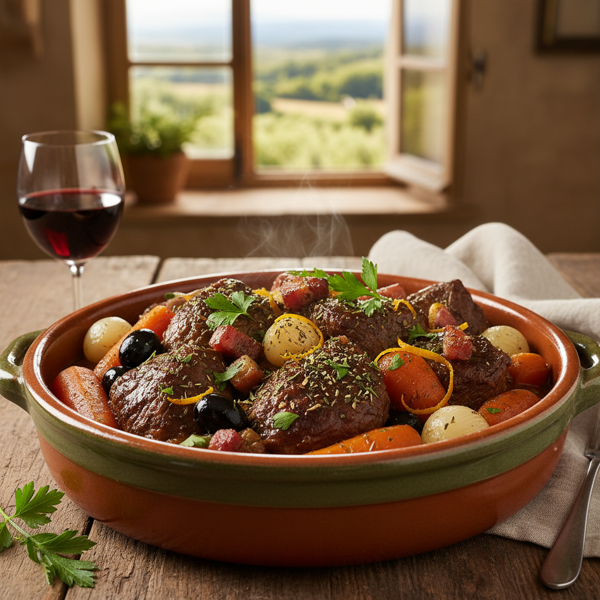
This Provençal Beef Daube is a rich and flavorful stew inspired by Julia Child's classic recipe. Marinated in an aromatic blend of dry vermouth, brandy, and herbs, the chuck steaks become tender and infused with the essence of garlic, thyme, and bay leaves. Paired with vibrant vegetables like carrots and mushrooms, this dish is perfect for a cozy dinner. Traditionally served with steamed rice, buttered noodles, or boiled potatoes, it's an ideal companion for French bread and a glass of Beaujolais, Mountain Red, or rosé wine. Enjoy the warm, rustic flavors of the South of France in your kitchen with this delightful stew, best prepared ahead of time for enhanced flavors.
N/A
Servings
N/A
Calories
20
Ingredients
Ingredients
olive oil
5 tablespoons (divided)
dry vermouth
1 1/2 cups (for marinade)
brandy or gin
1/4 cup (for marinade)
salt
2 teaspoons (to taste)
pepper
1/4 teaspoon (to taste)
thyme or sage
1/2 teaspoon (dry)
bay leaf
1 (whole)
garlic
2 cloves, minced (for marinade)
carrots
2 cups (thinly sliced)
onions
2 cups (thinly sliced)
chuck steaks
3 lbs (cut into 2 ½ x 2 ½ x 1 inch pieces)
flour
as needed (for dusting)
firm ripe tomatoes
1 1/2 cups (peeled, seeded, and chopped)
fresh mushrooms
1 1/2 cups (sliced)
beef bouillon
as needed (for adding liquid)
cornstarch
1 tablespoon (if needed for thickening)
garlic
2 cloves (for sauce)
capers
3 tablespoons (for sauce)
Dijon mustard
3 tablespoons (for sauce)
minced fresh basil or parsley
1/2 cup (for garnish)
Instructions
1
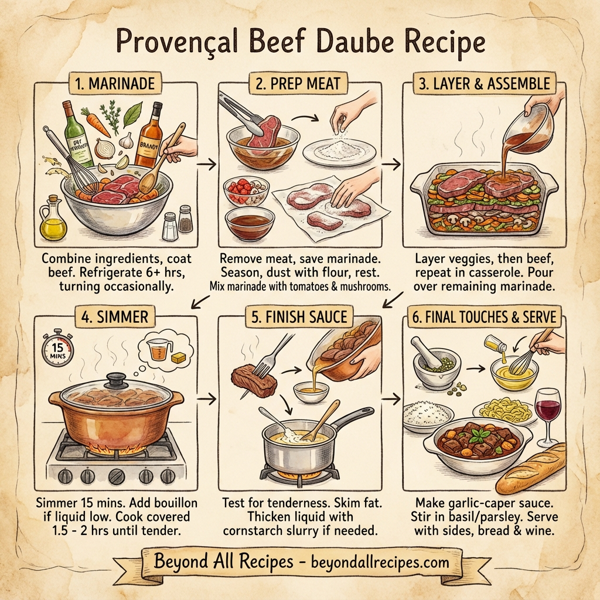
In a large mixing bowl, combine olive oil, dry vermouth, brandy (or gin), salt, pepper, thyme (or sage), bay leaf, minced garlic, sliced carrots, and onions. Add the chuck steaks, ensuring they're well coated. Cover and refrigerate for at least 6 hours, turning and basting the meat occasionally.
2
Remove the meat from the marinade, scraping off excess liquid, and set the marinade aside.
3
Season the beef lightly with salt and pepper, then dust with flour. Arrange the floured meat on waxed paper to rest.
4
In a separate bowl, mix the reserved marinade with chopped tomatoes and sliced mushrooms.
5
In a 6-quart flame-proof casserole, layer one-third of the vegetable mixture at the bottom. Place half of the beef on top, followed by another third of the veggies, and the remaining beef. Finish with the last third of the vegetable mix. Pour over any remaining marinade.
6
Cover the casserole and place it over moderate heat, simmering for 15 minutes.
7
Check the liquid level; if the vegetables haven't released enough juice, add a bit of beef bouillon to cover the meat almost completely.
8
Maintain a simmer and cook covered for 1½ to 2 hours or until the meat is tender when pierced with a fork.
9
Once done, tip the casserole to remove excess fat and taste for seasoning, adjusting with salt and pepper as needed.
10
If the liquid hasn't thickened, drain it into a saucepan. Mix cornstarch with a small amount of bouillon, then return it to a boil for 2 minutes before pouring it back to the casserole.
11
Next, chop the garlic and combine it with capers in a bowl, mashing them together. Gradually mix in the Dijon mustard and olive oil to create a thick sauce.
12
Finally, stir in the minced fresh basil or parsley just before serving to elevate the dish.
Nutrition Information
Frequently Asked Questions
Frequently Asked Questions
What is Provençal Beef Daube?
Provençal Beef Daube is a rich and flavorful stew inspired by Julia Child's classic recipe, involving beef marinated in dry vermouth, brandy, and aromatic herbs.
What type of meat is used in this recipe?
The recipe calls for 3 lbs of chuck steaks cut into 2.5 x 2.5 x 1 inch pieces.
How long should the meat marinate?
The meat should be marinated in the refrigerator for at least 6 hours, turning it occasionally.
What alcohol is needed for the marinade?
You will need 1 1/2 cups of dry vermouth and 1/4 cup of brandy or gin.
Which vegetables are included in the stew?
The stew features thinly sliced carrots, onions, fresh mushrooms, and peeled, seeded, and chopped tomatoes.
How do I prepare the meat before cooking?
After marinating, remove the meat, scrape off excess liquid, season with salt and pepper, and dust with flour.
How should the ingredients be layered in the casserole?
Layer one-third of the vegetable mixture, half the beef, another third of vegetables, the rest of the beef, and finally the remaining vegetables.
What size casserole dish is required?
A 6-quart flame-proof casserole is recommended for this recipe.
How long does the beef daube need to cook?
The stew should simmer covered for 1.5 to 2 hours or until the meat is fork-tender.
What should I do if there isn't enough liquid while simmering?
If the vegetables haven't released enough juice, add a small amount of beef bouillon to almost completely cover the meat.
How do I thicken the sauce if it is too thin?
Drain the liquid into a saucepan, mix 1 tablespoon of cornstarch with a bit of bouillon, and boil for 2 minutes before returning it to the casserole.
What is the special finishing sauce made of?
It is a thick sauce made by mashing garlic and capers together, then mixing in Dijon mustard and olive oil.
What garnish is recommended?
Stir in 1/2 cup of minced fresh basil or parsley just before serving.
What side dishes pair well with Beef Daube?
It is traditionally served with steamed rice, buttered noodles, or boiled potatoes.
What type of bread is recommended?
French bread is the ideal companion for this rustic stew.
Which wines pair best with this dish?
Beaujolais, Mountain Red, or a glass of rosé wine are excellent pairings.
Can I make this dish in advance?
Yes, it is best prepared ahead of time as the flavors enhance when allowed to sit.
How much olive oil is used in total?
The recipe uses 5 tablespoons of olive oil, divided between the marinade and the finishing sauce.
Can I use sage instead of thyme?
Yes, the recipe suggests 1/2 teaspoon of either dry thyme or dry sage.
How many cloves of garlic are needed?
A total of 4 cloves: 2 minced for the marinade and 2 for the finishing sauce.
What should I do with the marinade after removing the meat?
Set the marinade aside and later mix it with the chopped tomatoes and sliced mushrooms to form the vegetable layers.
How do I remove excess fat from the stew?
Once cooking is complete, tip the casserole to carefully drain or spoon out any excess fat.
Is the bay leaf left in the stew?
The bay leaf is used in the marinade and layering, but it is typically removed before serving.
What preparation is needed for the tomatoes?
The 1 1/2 cups of firm ripe tomatoes should be peeled, seeded, and chopped.
How much Dijon mustard is used?
The recipe calls for 3 tablespoons of Dijon mustard for the finishing sauce.
How many capers are used in the finishing sauce?
You will need 3 tablespoons of capers.
What is the first step of the instructions?
Combine olive oil, vermouth, brandy, salt, pepper, herbs, garlic, carrots, and onions in a bowl to marinate the beef.
How do I check if the meat is done?
The meat is ready when it is tender enough to be easily pierced with a fork.
Should I season the beef again after marinating?
Yes, lightly season the meat with salt and pepper before dusting it with flour.
What is the cooking temperature?
The dish should be started over moderate heat and then maintained at a simmer.