Nutrient-Dense Gelatinous Bone Broth
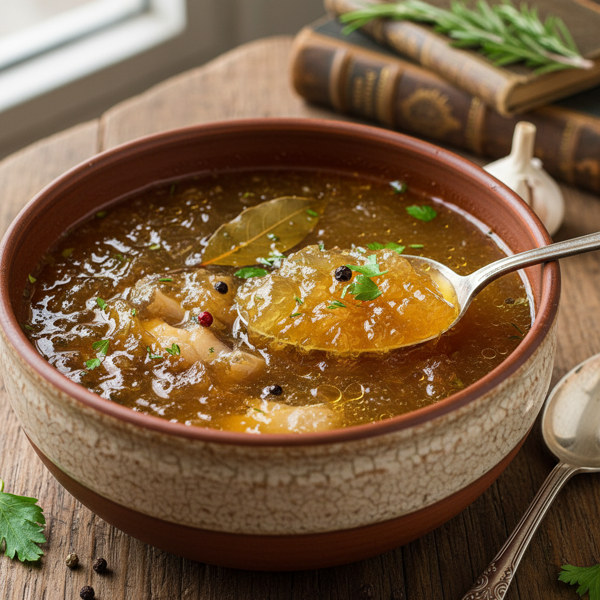
Enjoy a hearty and mineral-rich bone broth crafted from the finest bones, perfect for nourishing both body and soul. This economical yet nutrient-dense broth is not only easy to consume and digest, but it also boasts a wealth of glycosaminoglycans beneficial for joint health. Choose high-quality ingredients like grass-fed beef, wild-caught fish, and pasture-raised poultry to ensure maximum health benefits. From sipping directly from a mug to enriching soups, stews, and gravies, this bone broth is a versatile addition to your culinary repertoire. The most gelatinous parts of the animal, like hooves, feet, and heads, provide an extra boost of nutrition and flavor, making it far superior to store-bought options laden with additives such as MSG. Elevate your health naturally with this wholesome and restorative broth.
N/A
Servings
N/A
Calories
18
Ingredients
Ingredients
chicken or fish bones
2-3 lbs (Use free-range chicken or wild-caught fish bones.)
chicken feet
2 (Optional, for extra gelatin.)
onion
1 (Quartered, no need to peel.)
carrots
2 (Rough cut.)
celery stalks
2 (Rough cut.)
apple cider vinegar
2 tablespoons (To aid in mineral extraction.)
ginseng roots
to taste (Optional.)
burdock root
to taste (Optional.)
kombu
to taste (Optional.)
fresh parsley
to taste (Optional, add at the end.)
sea salt
to taste (Optional.)
black peppercorns
to taste (Optional.)
green peppercorns
to taste (Optional.)
garlic
to taste (Optional.)
bay leaf
1 (Optional.)
ginger
to taste (Optional.)
dried goji berries
to taste (Optional.)
schisandra chinensis seeds
to taste (Optional, can be found online or in Asian food stores.)
Instructions
1
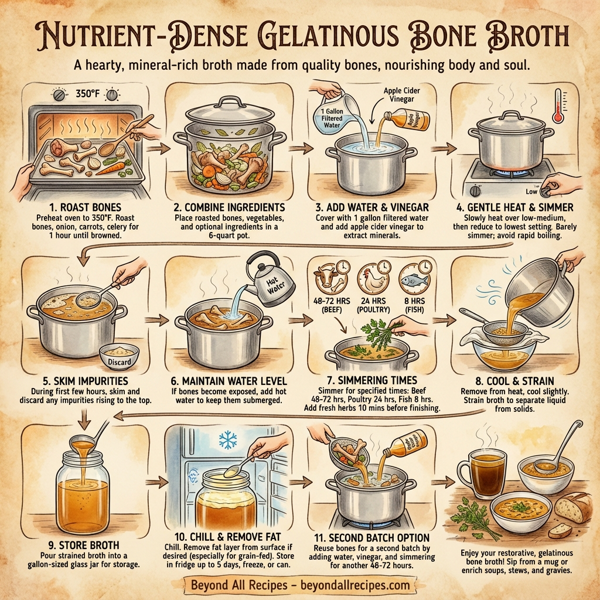
Preheat your oven to 350°F (175°C). Spread the bones on a baking sheet and roast for 1 hour or until they are nicely browned. This step enhances the flavor and color of your broth.
2
In a 6-quart stock pot or crock pot, combine the roasted bones, onion, carrots, celery, and any of the optional ingredients you wish to add for enhanced nutrition and flavor.
3
Cover the mixture with 1 gallon of filtered water, then add the apple cider vinegar to help extract minerals from the bones.
4
Slowly heat the broth over low-medium heat. Once it begins to boil, reduce the heat to the lowest setting, ensuring it barely simmers. Avoid rapid boiling as it can produce impurities.
5
During the first few hours of simmering, skim any impurities that rise to the top using a fine-mesh skimmer. Discard these impurities.
6
If the water level gets low and the bones become exposed, add hot water to ensure they remain submerged.
7
Simmer the broth according to the type of bones used: 48-72 hours for beef, 24 hours for poultry, and 8 hours for fish. About 10 minutes before you finish cooking, add any fresh herbs like parsley to enhance the nutrient profile.
8
After the broth has simmered for the appropriate time, remove it from heat and allow it to cool slightly.
9
Strain the broth through a fine strainer to separate the liquid from the solids. Pour the strained broth into a gallon-sized glass jar for storage.
10
You can store the broth in the refrigerator for up to 5 days, freeze for later use, or can it in a pressure canner for up to a year.
11
If desired, remove the fat that forms on the surface after chilling by scraping it off with a spoon. Note that grass-fed broth maintains beneficial nutrients in the fat, while grain-fed broth may need fat removal.
12
For a second batch of broth, you can reuse the bones by adding water and apple cider vinegar and simmering for an additional 48-72 hours.
Nutrition Information
Frequently Asked Questions
Frequently Asked Questions
What is Nutrient-Dense Gelatinous Bone Broth?
It is a mineral-rich, hearty liquid made from high-quality animal bones and connective tissues, designed to be easy to digest and nourishing for the body.
What are the primary health benefits of this bone broth?
This broth is rich in minerals and glycosaminoglycans, which are highly beneficial for joint health and overall restoration.
Why is apple cider vinegar used in the recipe?
Apple cider vinegar is added to the water to help extract essential minerals from the bones during the long simmering process.
How long should I roast the bones before simmering?
Roast the bones at 350°F (175°C) for approximately one hour or until they are nicely browned to enhance flavor and color.
Can I make this broth in a slow cooker?
Yes, you can use either a 6-quart stock pot or a crock pot (slow cooker) to prepare this recipe.
What is the recommended simmer time for beef bones?
Beef bones require the longest simmer time, ranging from 48 to 72 hours for maximum nutrient extraction.
How long should poultry bones be simmered?
Poultry bones should be simmered for approximately 24 hours.
What is the simmer time for fish bones?
Fish bones require the shortest simmer time, which is approximately 8 hours.
Why should I avoid a rapid boil?
Rapid boiling can produce impurities; it is better to maintain a very low simmer where the liquid barely moves.
Do I need to peel the onion for the broth?
No, there is no need to peel the onion; simply quarter it and add it to the pot.
What should I do if the water level gets too low during cooking?
If the bones become exposed, add hot water to the pot to ensure they remain fully submerged.
When should fresh herbs like parsley be added?
Fresh herbs should be added about 10 minutes before you finish cooking to preserve their nutrients.
How should the finished broth be stored?
Strain the broth and pour it into a gallon-sized glass jar. It can be kept in the refrigerator for up to 5 days.
Can this bone broth be frozen?
Yes, the broth can be frozen for later use if you do not plan to consume it within 5 days.
Can I preserve the broth through canning?
Yes, you can use a pressure canner to store the broth for up to a year.
Should I remove the layer of fat from the chilled broth?
You can scrape it off if desired, but note that fat from grass-fed animals contains beneficial nutrients.
Can I reuse the bones for a second batch of broth?
Yes, you can add fresh water and vinegar to the used bones and simmer for another 48-72 hours for a second batch.
Why are chicken feet included in the recipe?
Chicken feet are optional but recommended because they provide extra gelatin, which increases the nutritional value and thickness.
What quality of ingredients is recommended?
It is best to use grass-fed beef, wild-caught fish, and pasture-raised poultry to ensure the highest health benefits.
What are some optional nutritional boosters I can add?
You can add ginseng roots, burdock root, kombu, goji berries, or schisandra chinensis seeds for enhanced nutrition.
How do I handle impurities that rise to the top?
During the first few hours, use a fine-mesh skimmer to remove and discard any impurities that float to the surface.
Is this broth better than store-bought options?
Yes, homemade broth is superior because it lacks additives like MSG and uses higher-quality, nutrient-dense parts like hooves and heads.
What equipment do I need for straining?
A fine-mesh strainer is required to effectively separate the liquid broth from the solid bones and vegetables.
What kind of water is best for this recipe?
Filtered water is recommended to ensure the purity and quality of the final broth.
What vegetables are traditionally included?
The core vegetables for this broth are onions, carrots, and celery stalks.
What are glycosaminoglycans?
These are compounds found in the connective tissues of the bones that help support joint health and repair.
Can I add garlic and ginger?
Yes, garlic and ginger are excellent optional additions that add flavor and medicinal properties.
How much bone material is needed for one gallon?
The recipe calls for approximately 2 to 3 lbs of bones per gallon of water.
What makes the broth 'gelatinous'?
Using parts like feet, hooves, and joints provides the collagen necessary to create a gelatinous texture when chilled.
What is the best way to consume bone broth?
It can be sipped directly from a mug or used as a base for soups, stews, and gravies.