Mediterranean Shakshuka
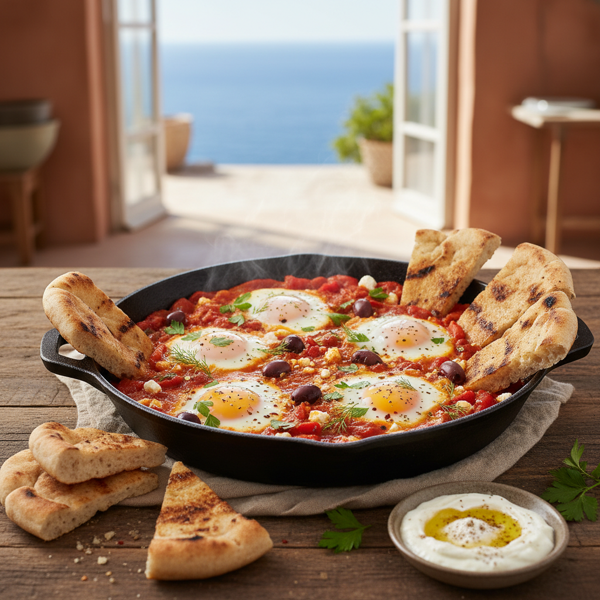
This Mediterranean Shakshuka recipe brings a delightful twist to your breakfast table with its vibrant flavors and rich aromas. Originating from North Africa, this dish features succulent tomatoes simmered to perfection, enhanced by fragrant spices and fresh ingredients. Not only is it a fantastic option for vegetarians, but it also packs a nutritional punch with healthy fats from olive oil and protein from the eggs. Serve this dish warm alongside crusty bread to soak up the delicious sauce, creating a satisfying and wholesome meal to kick-start your day.
4
Servings
112.5
Calories
8
Ingredients
Ingredients
ripe tomatoes
600 g (Blanched, peeled, quartered, and de-seeded)
olive oil
4 tablespoons (None)
green onions
6 (Chopped)
garlic cloves
4 (Sliced)
cumin seed
1 teaspoon (Roughly ground)
cayenne pepper
1 pinch (None)
sugar
1 teaspoon (None)
eggs
4 (Cracked into the sauce)
Instructions
1
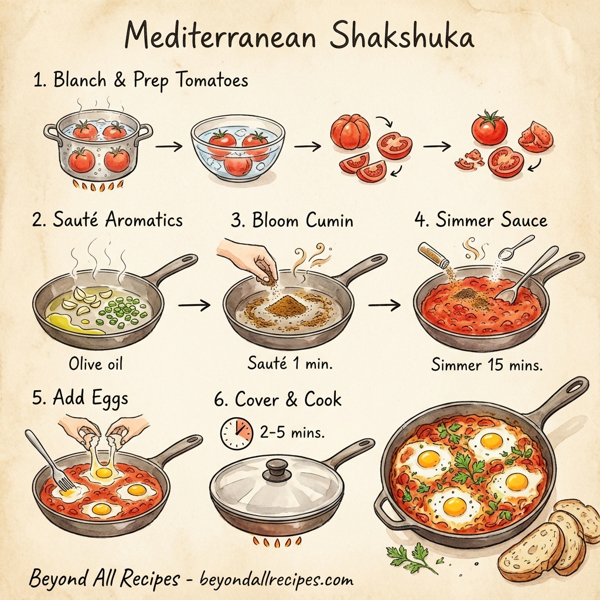
Begin by blanching the ripe tomatoes in boiling water for about 30 seconds. Remove them and place them in cold water to cool. Once cooled, peel off the skins, cut the tomatoes into quarters, and carefully de-seed them.
2
In a large frying pan, heat the olive oil over medium heat. Add the sliced garlic and chopped green onions, and sauté for about 2-3 minutes until they begin to soften.
3
Incorporate the roughly ground cumin into the pan, stirring for another minute until the spices are fragrant and the mixture starts to caramelize slightly.
4
Add the blanched tomatoes to the pan along with a pinch of cayenne pepper, salt, and sugar. Stir well and let the mixture simmer for about 15 minutes, stirring occasionally. Cook until the tomatoes are soft but not completely broken down.
5
Create small wells in the tomato mixture and carefully crack an egg into each well. Use a fork to gently spread the egg whites to cover as much of the tomato sauce as possible.
6
Cover the pan and simmer for an additional 2-5 minutes, or until the eggs are cooked to your preferred doneness. Serve immediately with warm bread for dipping.
Nutrition Information
7.5 g
Fat
7.5 g
Carbs
5.5 g
Protein
Frequently Asked Questions
Frequently Asked Questions
What is Mediterranean Shakshuka?
Mediterranean Shakshuka is a traditional North African dish consisting of eggs poached in a flavorful sauce of tomatoes, spices, and olive oil.
How many servings does this recipe make?
This recipe is designed to serve 4 people.
Is this Shakshuka recipe vegetarian?
Yes, this recipe is vegetarian-friendly as it uses eggs and fresh vegetables as its primary components.
How many calories are in one serving?
Each serving contains approximately 112.5 calories.
What are the main ingredients for this dish?
The main ingredients include ripe tomatoes, olive oil, green onions, garlic, cumin seeds, cayenne pepper, sugar, and eggs.
How should I prepare the tomatoes for Shakshuka?
The tomatoes should be blanched in boiling water for 30 seconds, peeled, quartered, and de-seeded before cooking.
Can I use canned tomatoes instead of fresh ones?
While the recipe calls for 600g of fresh ripe tomatoes, you can substitute with canned tomatoes if fresh ones are unavailable.
What spices give Shakshuka its flavor?
This recipe specifically uses roughly ground cumin seeds and a pinch of cayenne pepper for a fragrant and slightly spicy flavor.
How long does the tomato sauce need to simmer?
The tomato mixture should simmer for about 15 minutes until the tomatoes are soft but not completely broken down.
How do I cook the eggs in the sauce?
Create small wells in the tomato mixture, crack an egg into each well, and use a fork to spread the whites across the sauce.
What is the sauté time for the garlic and onions?
Sauté the sliced garlic and chopped green onions for about 2-3 minutes until they begin to soften.
Is this recipe considered healthy?
Yes, it is a nutritious option featuring healthy fats from olive oil, high protein from eggs, and fresh vegetables.
What should I serve with Shakshuka?
It is best served warm alongside crusty bread to soak up the tomato sauce and egg yolks.
How many eggs are required for this recipe?
The recipe requires 4 eggs, providing one egg per serving.
Why is sugar added to the tomato sauce?
A teaspoon of sugar is added to help balance the natural acidity of the tomatoes.
How long do the eggs take to cook?
Once the eggs are in the pan, cover it and simmer for 2 to 5 minutes depending on your preferred level of doneness.
What type of oil is recommended?
The recipe calls for 4 tablespoons of olive oil, which provides a rich flavor and healthy fats.
Can I make this dish spicier?
Yes, you can increase the amount of cayenne pepper or add chili flakes to suit your heat preference.
What is the protein content per serving?
Each serving provides approximately 5.5 grams of protein.
What is the origin of Shakshuka?
Shakshuka originated from North Africa and has become a popular staple in Mediterranean and Middle Eastern cuisines.
What is the fat content in this recipe?
Each serving contains 7.5 grams of fat.
How many carbohydrates are in a serving?
There are 7.5 grams of carbohydrates per serving.
How do I blanch the tomatoes?
Boil the tomatoes for 30 seconds, then immediately transfer them to cold water to make the skins easy to peel.
How should the cumin seeds be prepared?
The cumin seeds should be roughly ground to release their aromatic oils during cooking.
What type of garlic preparation is needed?
The recipe specifies using 4 garlic cloves that have been thinly sliced.
Can I use red onions instead of green onions?
Yes, while green onions offer a milder flavor, you can substitute them with red or white onions if preferred.
Is this a good recipe for breakfast?
Absolutely, it is traditionally served as a breakfast dish, though it also makes a great brunch or light dinner.
How do I ensure the egg whites cook evenly?
Use a fork to gently spread the egg whites over the surface of the tomato sauce after cracking them into the wells.
What kind of pan should I use?
A large frying pan with a lid is ideal for this recipe to allow enough space for the sauce and for poaching the eggs.
Is this recipe easy to follow for beginners?
Yes, it is tagged as an easy recipe and involves simple simmering and poaching techniques.