Mediterranean Seafood Bouillabaisse with Rouille
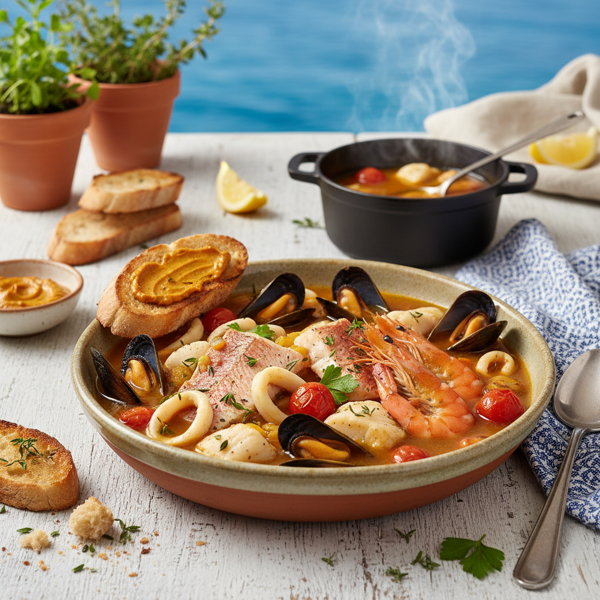
Experience the vibrant flavors of the South of France with this exquisite Mediterranean Seafood Bouillabaisse. This rich and aromatic fish stew originates from the picturesque port city of Marseille, where it has been celebrated for centuries. Bursting with tender fish, succulent shellfish, and fragrant herbs, this dish is sure to transport you to the sun-drenched shores of the Mediterranean. A savory broth infused with garlic, leeks, and a hint of citrus comes alive when paired with flavorful rouille—a spicy garlic mayonnaise that perfectly complements the seafood. Serve it with crusty French bread for a truly authentic dining experience.
N/A
Servings
500
Calories
29
Ingredients
Ingredients
Leeks
2 (washed and sliced thinly)
Spanish onion
1 (halved and sliced thinly)
Olive oil
3 tablespoons (for sautéing)
Garlic cloves
6 (peeled and finely chopped)
Bay leaves
2 (whole)
Carrots
2 (peeled and roughly chopped)
Black pepper
to taste (freshly ground)
Potatoes
4 (cut into large cubes)
Ground fennel
1/2 teaspoon (dried)
Orange peel
2 slices (each about 3 inches long)
Dried thyme
1 teaspoon (or use fresh)
Dried marjoram
2 teaspoons (or use fresh)
Fish stock
3 cups (or sub with 2 cups clam juice and 1 cup water)
Tomatoes
2 (diced)
Lemon
1 (juiced)
Cod fish fillets
1 1/2 lbs (or other white firm fish)
Mussels
1/2 lb (or other shellfish)
Uncooked shrimp
1 lb (peeled and deveined)
Saffron
1 pinch (for flavor)
Fresh parsley
1 cup (chopped fine)
Sea salt
to taste (for seasoning)
Breadcrumbs
2 cups (for Rouille)
Parmesan cheese
1 cup (freshly grated)
Cayenne pepper
1/8 teaspoon (to taste)
Water
1/2 cup (for Rouille)
Fresh basil
1/4 cup (chopped fine or 1 tbsp dried)
Fresh parsley
1/4 cup (chopped fine)
Olive oil
3 tablespoons (for Rouille)
French bread
1 loaf (for serving)
Instructions
1
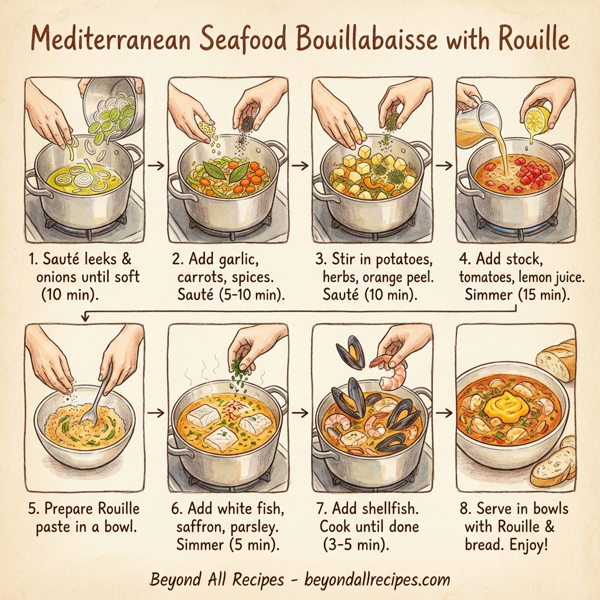
In a large soup pot, heat the olive oil over medium heat. Add the thinly sliced leeks and onions, sautéing them for about 10 minutes until soft and translucent.
2
Next, incorporate the minced garlic, bay leaves, roughly chopped carrots, and several rounds of freshly ground black pepper. Continue to sauté the mixture for an additional 5-10 minutes until fragrant.
3
Stir in the cubed potatoes, ground fennel, orange peel, dried thyme, and dried marjoram, sautéing for another 10 minutes while stirring frequently. This will enhance the earthy flavors of the stew.
4
Pour in the fish stock (or clam juice mixed with water) and add the diced tomatoes. Squeeze the juice of a lemon into the pot, being careful to avoid any seeds. Bring the mixture to a gentle simmer and cook for about 15 minutes, until the carrots are tender and the potatoes are cooked but still firm.
5
While the broth is simmering, you can prepare the Rouille. In a medium bowl, combine the breadcrumbs, grated Parmesan cheese, and cayenne pepper. Slowly mix in the water to form a paste. Stir in the fresh basil, chopped parsley, and olive oil, adjusting seasoning to taste.
6
After 15 minutes, gently add the firm white fish to the broth (do not add shellfish yet) along with the saffron and chopped parsley. Allow this to simmer for an additional 5 minutes.
7
Finally, add the mussels and shrimp to the pot. Cook until the mussels open up and the shrimp turn pink and firm, usually around 3-5 minutes. Taste and adjust seasoning with sea salt if necessary.
8
Remove the bay leaves and orange peel from the pot. Ladle the bouillabaisse into warmed bowls and top each serving with a generous spoonful of rouille. Serve with slices of crusty French bread on the side for dipping.
Nutrition Information
15g
Fat
58g
Carbs
30g
Protein
Frequently Asked Questions
Frequently Asked Questions
What is Mediterranean Seafood Bouillabaisse?
Mediterranean Seafood Bouillabaisse is a rich and aromatic fish stew featuring a variety of tender fish, succulent shellfish, and fragrant herbs in a savory broth.
Where does Bouillabaisse originate from?
This dish originates from the picturesque port city of Marseille in the South of France.
What is Rouille?
Rouille is a spicy garlic mayonnaise-style paste that is traditionally served as a topping for bouillabaisse to complement the seafood flavors.
How many calories are in a serving of this Bouillabaisse?
One serving of this recipe contains approximately 500 calories.
What kind of fish is best for this recipe?
Firm white fish fillets, such as cod, are ideal because they hold their shape well during the simmering process.
What are the primary aromatics used in the broth?
The broth is built on a base of sautéed leeks, Spanish onions, garlic, and carrots.
Why is orange peel used in the stew?
Orange peel is added to the broth to provide a subtle hint of citrus and a unique aromatic fragrance that defines the Mediterranean style.
Can I substitute the fish stock?
Yes, you can substitute the fish stock with a mixture of 2 cups of clam juice and 1 cup of water.
What shellfish are included in this recipe?
The recipe calls for half a pound of mussels and one pound of peeled and deveined uncooked shrimp.
How do you prepare the Rouille?
Rouille is prepared by combining breadcrumbs, Parmesan cheese, and cayenne pepper with water to form a paste, then stirring in basil, parsley, and olive oil.
Is this Bouillabaisse spicy?
The stew itself is savory and aromatic, but the Rouille adds a spicy kick due to the inclusion of cayenne pepper.
How long should I sauté the leeks and onions?
They should be sautéed over medium heat for about 10 minutes until they become soft and translucent.
What herbs are used in the broth?
The broth is flavored with bay leaves, ground fennel, dried thyme, dried marjoram, and fresh parsley.
When should the mussels and shrimp be added?
The shellfish should be added last, cooking for only 3 to 5 minutes until the mussels open and the shrimp turn pink.
How much protein is in this dish?
This recipe provides a high protein content of 30 grams per serving.
What is the purpose of saffron in the recipe?
Saffron is added to provide a distinct, luxurious flavor and a beautiful golden hue to the seafood stew.
Should I leave the bay leaves and orange peel in the bowl?
No, you should remove the bay leaves and orange peel from the pot before ladling the stew into bowls.
What kind of potatoes should I use?
The recipe suggests using 4 potatoes cut into large cubes, which help make the stew hearty and filling.
Is there any dairy in the recipe?
Yes, the Rouille contains one cup of freshly grated Parmesan cheese.
What should I serve as a side dish?
It is traditionally served with slices of crusty French bread, which are perfect for dipping into the broth and Rouille.
How much fat and carbohydrates are in the recipe?
Each serving contains 15 grams of fat and 58 grams of carbohydrates.
How do I ensure the potatoes are cooked correctly?
Simmer the broth for about 15 minutes until the potatoes are cooked through but still firm enough to hold their shape.
Can I use fresh herbs instead of dried?
Yes, the recipe notes that you can use fresh thyme and marjoram instead of dried versions.
How many garlic cloves are needed?
This flavorful recipe uses 6 cloves of garlic, peeled and finely chopped.
What type of onion is recommended?
A Spanish onion is recommended, halved and sliced thinly.
How is the lemon juice used?
The juice of one lemon is squeezed into the pot after adding the stock to provide brightness and balance to the rich seafood.
How many ingredients are in this recipe in total?
There are 29 individual ingredients used to create the stew, the rouille, and the serving sides.
What is the first step in making the broth?
The first step is heating olive oil in a large soup pot and sautéing leeks and onions until soft.
Is this recipe considered healthy?
Yes, with its lean protein from seafood and abundance of vegetables, it is tagged as a healthy, gourmet comfort food.
How do I prevent the fish from falling apart?
Add the firm white fish gently to the broth after the initial simmer and only cook it for about 5 minutes before adding the shellfish.