Mediterranean Lentil and Bulgur Pilaf with Summer Squash

This vibrant Mediterranean-inspired dish features a hearty combination of lentils and bulgur, enriched by the freshness of zucchini and yellow squash. Originating from Lenten traditions in Lebanon, this recipe is not only packed with fiber and vital nutrients but also brimming with flavor. Enhanced with aromatic herbs and a splash of lemon, it makes for a delightful one-dish meal or an inviting side entrée for gatherings. As a versatile recipe, simply swap chicken broth for vegetable broth to create a delicious vegan option that everyone can enjoy!
N/A
Servings
75
Calories
17
Ingredients
Ingredients
fat-free chicken broth or vegetable broth
4 cups (choose according to preference)
medium grain bulgur
1 cup (dry)
brown lentils
1 cup (rinsed and picked over)
onion
1 medium (coarsely chopped)
bay leaf
1 (whole)
salt
1/2 teaspoon (to taste)
allspice
1/2 teaspoon (ground)
black pepper
1/2 teaspoon (freshly ground, to taste)
lemon juice
1 tablespoon (freshly squeezed)
olive oil
1 tablespoon (for sautéing)
zucchini
1 small (diced)
yellow squash
1 small (diced)
garlic
1 clove (minced)
lemon zest
1 teaspoon (finely grated)
parsley
1 1/2 tablespoons (chopped)
cilantro
1 tablespoon (chopped)
lemon wedge
for garnish
Instructions
1
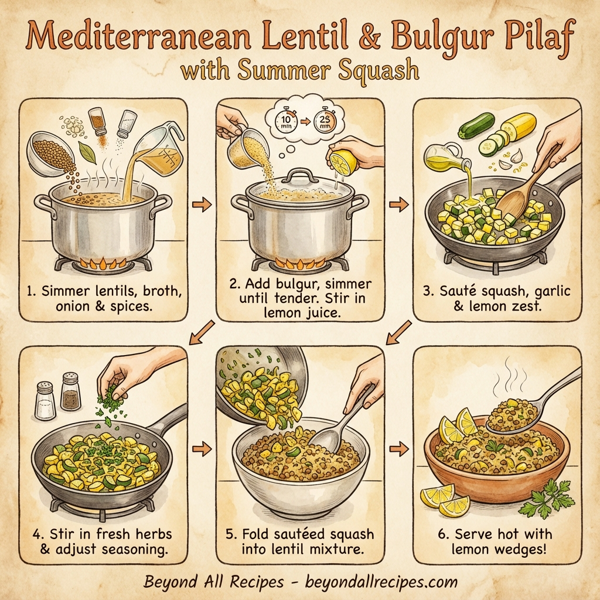
In a large saucepan, combine the chicken or vegetable broth, brown lentils, chopped onion, bay leaf, salt, allspice, and black pepper. Bring the mixture to a boil over medium heat, then reduce the heat to low, cover the saucepan, and let it simmer for 10 minutes.
2
Add the medium grain bulgur to the saucepan and continue to simmer for an additional 25 minutes, or until the lentils and bulgur are tender. Once cooked, remove the saucepan from heat and stir in the fresh lemon juice.
3
While the lentils and bulgur are cooking, heat the olive oil in a nonstick skillet over medium heat. Add the diced zucchini and yellow squash, cooking for about 2 minutes. Then, add the minced garlic and lemon zest to the skillet, cooking for an additional 3 minutes, or until the squash is tender.
4
Stir in the chopped parsley and cilantro, adjusting the seasoning with additional salt and pepper if desired.
5
Incorporate the sautéed squash mixture into the lentil and bulgur pilaf, gently folding everything together until well combined.
6
Serve the pilaf hot, garnished with lemon wedges for an extra burst of flavor.
Nutrition Information
1.7g
Fat
12.5g
Carbs
4g
Protein
3g
Fiber
Frequently Asked Questions
Frequently Asked Questions
What is Mediterranean Lentil and Bulgur Pilaf?
It is a vibrant Mediterranean-inspired dish featuring a combination of lentils and bulgur, enriched with zucchini and yellow squash, originating from Lebanese Lenten traditions.
Is this recipe suitable for vegans?
Yes, by using vegetable broth instead of chicken broth, this recipe becomes a delicious vegan option.
How many calories are in a serving of this pilaf?
Each serving contains approximately 75 calories.
What type of lentils are best for this recipe?
The recipe calls for brown lentils, which should be rinsed and picked over before use.
What kind of bulgur should I use?
Medium grain bulgur is the recommended type for this specific pilaf.
Can I substitute the chicken broth?
Yes, you can use fat-free chicken broth or vegetable broth depending on your dietary preference.
How much fiber is in this dish?
This pilaf is fiber-rich, providing 3g of fiber per serving.
What vegetables are included in the recipe?
The dish includes a medium onion, a small zucchini, and a small yellow squash.
What spices are used for seasoning?
The pilaf is seasoned with allspice, black pepper, salt, and a bay leaf.
How long do the lentils need to simmer initially?
The lentils should simmer in the broth with spices for 10 minutes before adding the bulgur.
How long does it take for the bulgur and lentils to cook together?
After adding the bulgur, the mixture should simmer for an additional 25 minutes until tender.
What is the fat content per serving?
This is a low-fat dish with only 1.7g of fat per serving.
How much protein does this recipe provide?
Each serving contains 4g of protein.
What fresh herbs are added to the pilaf?
The recipe uses freshly chopped parsley and cilantro.
How is the squash prepared?
The zucchini and yellow squash should be diced and then sautéed in olive oil with garlic and lemon zest.
When should I add the lemon juice?
Stir in the fresh lemon juice once the saucepan has been removed from the heat after the lentils and bulgur are cooked.
Is this recipe high in carbohydrates?
Each serving contains 12.5g of carbohydrates.
How should the dish be garnished?
Serve the pilaf hot and garnish with lemon wedges for an extra burst of flavor.
How many ingredients are required in total?
The recipe requires 17 ingredients, including the broth, grains, vegetables, spices, and herbs.
Can I use a different type of oil for sautéing?
The recipe suggests olive oil, but you can use your preferred cooking oil for sautéing the squash.
What is the purpose of the bay leaf?
The bay leaf is added during the initial simmering process to infuse the broth and lentils with aromatic flavor.
How much garlic is needed?
The recipe calls for one minced clove of garlic.
What is the serving size for this recipe?
The specific serving size is not specified, but the nutritional data provided is based on a standard serving calculation.
Is this dish considered a main course?
It can serve as a hearty one-dish meal or as an inviting side entrée for gatherings.
Does this recipe contain cholesterol?
Based on the nutritional data provided, the cholesterol content is negligible or null.
How much lemon zest is used?
One teaspoon of finely grated lemon zest is added to the sautéed squash mixture.
Can I make this dish ahead of time?
Yes, pilaf dishes generally store well and can be reheated, though fresh herbs are best added just before serving.
Is the bulgur cooked separately?
No, the bulgur is added to the same saucepan as the lentils after they have simmered for 10 minutes.
How do I know when the squash is ready?
Sauté the diced squash for about 2 minutes alone, then 3 more minutes with garlic and zest until tender.
What are the primary flavor profiles?
The dish features earthy tones from lentils and bulgur, balanced by citrusy lemon and aromatic allspice.