Korean Mixed Rice Bowl (Bibimbap)
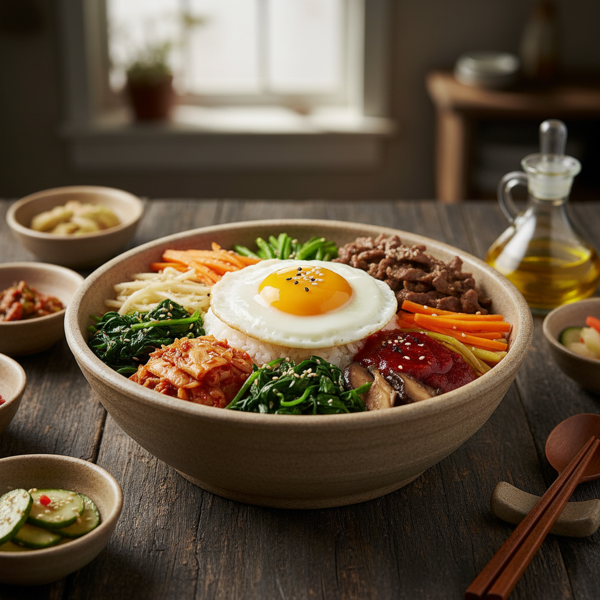
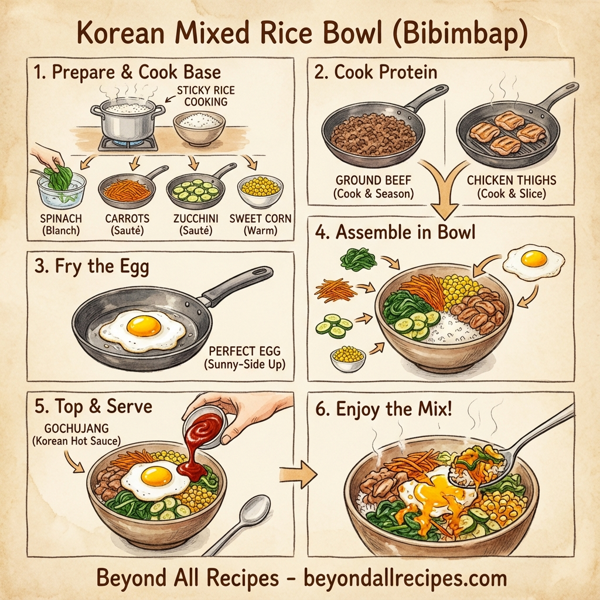
Experience the vibrant flavors of Korea with this delicious Bibimbap, a traditional dish that translates to 'mixed rice'. This hearty and nutritious meal features a medley of colorful vegetables including crunchy carrots, fresh spinach, sweet corn, and tender zucchini, all beautifully arranged over a bed of sticky rice. Choose between lean ground beef or succulent chicken thighs as your protein, and top it all off with a perfectly cooked egg, allowing the rich yolk to meld into the dish. Served with a side of spicy Korean hot sauce (gochujang), this Bibimbap is not only satisfying but also customizable to your preference, making it a delightful option for any meal.
N/A
Servings
N/A
Calories
16
Ingredients
Ingredients
sticky rice
2 cups (uncooked (Japanese or Korean short grain rice))
lean ground beef or chicken
1 lb (or 4 boneless skinless chicken thighs, chopped into bite-sized pieces)
carrots
2 cups (shredded)
corn kernels
1 can (15 1/4 ounces) (drained)
frozen spinach
16 ounces (defrosted (1 package))
zucchini
2 (sliced into strips)
eggs
5 (cooked over easy or sunny side up)
light soy sauce
1/2 cup
granulated sugar
2 tablespoons
brown sugar
1 tablespoon
garlic
1/8 cup (chopped)
sesame oil
to taste (for frying)
salt and pepper
to taste
hot pepper paste (gochujang)
4 tablespoons
granulated sugar (for gochujang)
1 tablespoon
sesame seeds (for gochujang)
1 tablespoon (optional)
Instructions
Nutrition Information
Frequently Asked Questions
Frequently Asked Questions
What is Bibimbap?
Bibimbap is a traditional Korean dish that translates to 'mixed rice,' consisting of a bed of rice topped with various vegetables, protein, and a spicy sauce.
What does the word 'Bibimbap' mean?
The name comes from 'bibim,' which means mixing ingredients, and 'bap,' which refers to cooked rice.
What type of rice is best for this recipe?
Japanese or Korean short-grain sticky rice is recommended for the most authentic texture.
What proteins can I use in this Bibimbap?
You can use lean ground beef or boneless skinless chicken thighs chopped into bite-sized pieces.
What vegetables are included in this specific recipe?
This version features shredded carrots, corn kernels, defrosted spinach, and sliced zucchini.
How do I prepare the spinach?
The recipe calls for one 16-ounce package of frozen spinach that has been defrosted.
How should the zucchini be cut?
The zucchini should be sliced into thin strips for quick and even cooking.
Is the corn a traditional ingredient?
While not always in traditional recipes, corn adds a sweet crunch that complements the other vibrant flavors.
What is Gochujang?
Gochujang is a savory, sweet, and spicy fermented Korean red chili paste that serves as the base for the sauce.
How do I make the Bibimbap sauce?
Mix 4 tablespoons of hot pepper paste (gochujang) with 1 tablespoon of granulated sugar and optional sesame seeds.
How should the eggs be cooked?
The eggs should be cooked over easy or sunny side up so that the runny yolk can meld into the rice.
Why is the runny yolk important?
When the yolk is broken and mixed into the bowl, it creates a rich, creamy coating for the rice and vegetables.
Can I make this dish vegetarian?
Yes, you can easily omit the meat and add more vegetables or tofu to make it a vegetarian meal.
Can I make this dish vegan?
To make it vegan, omit the meat and the egg, and ensure your gochujang paste is vegan-friendly.
Is Bibimbap a healthy meal option?
Yes, it is a nutritious and balanced meal featuring lean protein, complex carbohydrates from rice, and a variety of vegetables.
How do I season the meat for this recipe?
The meat is seasoned with a mixture of light soy sauce, granulated sugar, brown sugar, and chopped garlic.
What role does sesame oil play?
Sesame oil is used for frying the ingredients to provide a distinct nutty aroma and flavor essential to Korean cuisine.
Can I use fresh spinach instead of frozen?
Yes, you can use fresh spinach; simply sauté it briefly until wilted before adding it to the bowl.
How many servings does this recipe provide?
Based on the ingredient list calling for 5 eggs, this recipe typically serves approximately 5 people.
How is Bibimbap typically served?
It is served in a large bowl with the rice at the bottom and the colorful vegetables and meat arranged neatly on top.
Should I eat the ingredients separately?
No, the tradition is to mix all the ingredients, the sauce, and the egg together thoroughly before eating.
Can I prepare the components in advance?
Yes, you can cook the rice and prepare the vegetables ahead of time, then assemble and cook the egg just before serving.
Is this recipe spicy?
The spice level depends on the amount of gochujang sauce you use; it can range from mild to very spicy.
What can I substitute for gochujang if I can't find it?
While hard to replicate perfectly, a mix of Sriracha with a bit of miso paste and sugar can serve as a makeshift substitute.
How do I store leftovers?
Store the rice and toppings in airtight containers in the refrigerator for up to 3 days.
Can I reheat Bibimbap?
Yes, it is best to reheat the rice and meat separately; fresh eggs should be fried at the time of eating for the best texture.
What type of garlic should be used?
Freshly chopped garlic is recommended for the marinade to provide the most robust flavor.
Can I add other vegetables to this bowl?
Absolutely, Bibimbap is highly customizable; you can add mushrooms, bean sprouts, or cucumber as well.
Is this recipe gluten-free?
To make it gluten-free, ensure you use a gluten-free tamari instead of soy sauce and verify that your gochujang is gluten-free.
What is the purpose of the sugar in the marinade?
The granulated and brown sugars balance the saltiness of the soy sauce and help caramelize the meat during cooking.