Julia Child's Classic Coq Au Vin
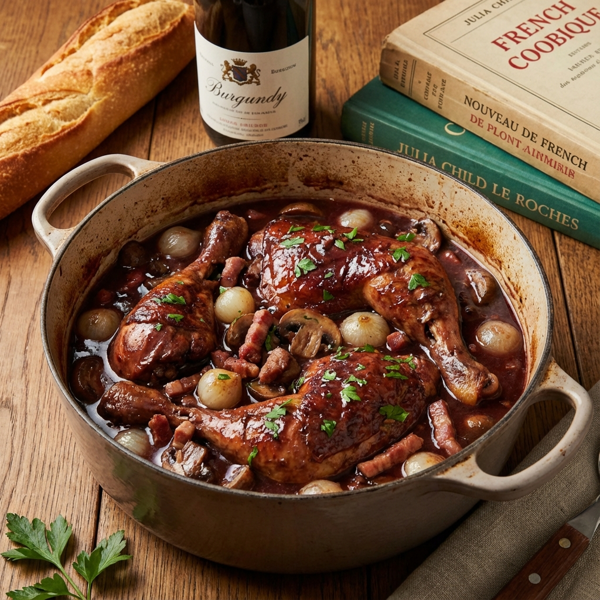
This classic Coq Au Vin recipe, inspired by Julia Child, brings a taste of French countryside dining right into your home. With tender chicken simmered in a rich red wine sauce, accented by the flavors of lardons, pearl onions, and mushrooms, this dish is more than just a meal—it's a culinary experience. The method of igniting Cognac adds a thrilling touch and an aromatic depth that perfectly complements the hearty ingredients. Perfectly paired with buttered egg noodles or a homemade brioche, this dish is ideal for family gatherings or special occasions. Follow Julia's steps for a delicious, fragrant dish that is surprisingly easy to master!
N/A
Servings
N/A
Calories
15
Ingredients
Ingredients
Lardons
1/2 cup (cut into 1/4 by 1 1/2 inch strips)
Olive oil
2 tablespoons
Ready-cut frying chickens
2 1/2 lbs (thoroughly dried (use a selection of parts or all of one kind; chicken thighs are recommended))
Cognac or Armagnac
1/4 cup
Salt
to taste
Pepper
to taste
Bay leaf
1 (imported or domestic)
Thyme
1/4 teaspoon
Small white onions
16-20 (peeled)
Flour
3 tablespoons
Red wine
2 cups (Burgundy, Cotes du Rhone, or Pinot Noir recommended)
Brown chicken stock or beef bouillon
2 cups (more or less as desired)
Garlic
1-2 cloves (mashed or minced)
Tomato paste
1 tablespoon
Fresh mushrooms
3/4 lb (trimmed, washed, and quartered)
Instructions
1
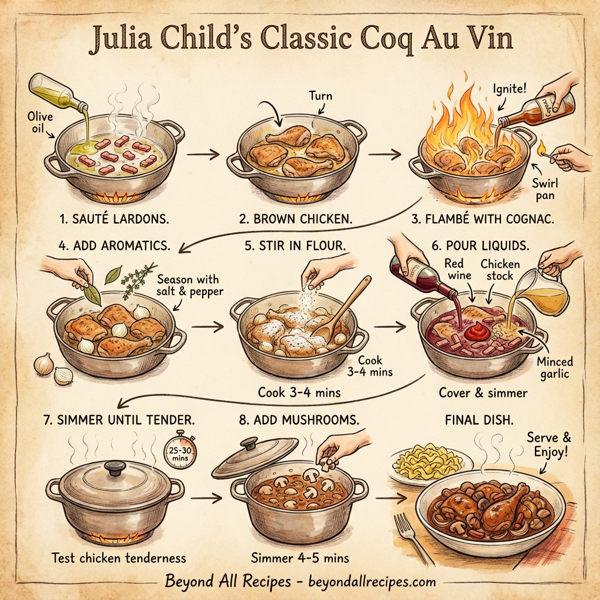
Begin by sautéing the lardons in 2 tablespoons of olive oil in a heavy-bottomed casserole over medium heat. Cook them for several minutes until they are lightly browned. Once done, remove the lardons to a side dish, leaving the rendered fat in the pan. If using turkey bacon or another substitution, adjust by adding a little more olive oil in the pan to coat the base well.
2
Increase the heat moderately and add the dried chicken pieces to the pan in a single layer, ensuring not to crowd the pan. Brown the chicken on all sides, turning frequently. Note that skinless thighs may not achieve the same browning, but browning is still essential for flavor.
3
Once the chicken is nicely browned, carefully pour in the Cognac. Allow the pan to heat for a few seconds until bubbling hot. Ignite the Cognac with a match to flambé, swirling the pan to burn off the alcohol. Let it flame for about a minute before extinguishing using the pan cover.
4
Season the chicken with salt and pepper, then add the bay leaf and thyme. Place the peeled small white onions around the chicken in the pan.
5
Cover and cook gently for about 10 minutes, turning the chicken and onions once during this time.
6
Uncover the pan, sprinkle the flour over the chicken and onions, and stir to ensure the flour is well absorbed. Cook for an additional 3 to 4 minutes, stirring once or twice to prevent sticking.
7
Remove the pan from heat and gradually stir in the red wine and enough chicken stock or beef bouillon to almost cover the chicken pieces. Add the browned lardons, minced garlic, and tomato paste.
8
Cover the pan and let it simmer slowly for 25 to 30 minutes. Test the chicken for tenderness, removing the pieces that are ready to serve and continuing to cook any that require more time.
9
For a richer sauce, you might want to simmer for an additional 15 to 20 minutes to reduce the sauce further.
10
Finally, return all chicken to the pan, add the quartered mushrooms, and let simmer for another 4-5 minutes to finish cooking the mushrooms and integrate flavors.
11
Before serving, taste and adjust seasoning as necessary. The sauce should have a creamy consistency, lightly coating the chicken and vegetables. If you find the sauce too thin, boil it down rapidly; if it becomes too thick, add spoonfuls of bouillon as needed.
Nutrition Information
Frequently Asked Questions
Frequently Asked Questions
What is Julia Child's Classic Coq Au Vin?
It is a classic French dish featuring tender chicken simmered in a rich red wine sauce with lardons, pearl onions, and mushrooms.
What kind of chicken is recommended for this recipe?
The recipe recommends 2.5 lbs of ready-cut frying chickens, specifically suggesting chicken thighs for the best results.
What are lardons?
Lardons are strips of pork fat or bacon, cut into 1/4 by 1 1/2 inch strips for this recipe.
Why is Cognac used in the recipe?
Cognac or Armagnac is used to flambé the chicken, adding a thrilling touch and an aromatic depth to the dish.
Which red wines are recommended for the sauce?
Burgundy, Cotes du Rhone, or Pinot Noir are the recommended red wines for an authentic flavor.
How do you achieve a nicely browned chicken?
Brown the thoroughly dried chicken pieces in a single layer in the rendered lardon fat and olive oil, turning them frequently.
What is the purpose of the flour in this recipe?
Flour is sprinkled over the chicken and onions to be absorbed, which later thickens the wine and stock into a sauce.
What should I do if the sauce is too thin?
If the sauce is too thin, you should boil it down rapidly until it reaches a creamy consistency that lightly coats the chicken.
What should I do if the sauce is too thick?
If the sauce becomes too thick, you can add spoonfuls of chicken stock or bouillon as needed to reach the desired consistency.
How long does the chicken need to simmer?
The chicken should simmer slowly for approximately 25 to 30 minutes, or until tender.
When should the mushrooms be added?
Quartered fresh mushrooms are added during the final 4-5 minutes of simmering to integrate their flavor.
Can I use beef bouillon instead of chicken stock?
Yes, the recipe allows for the use of either brown chicken stock or beef bouillon to cover the chicken.
What herbs are used for seasoning?
The dish is seasoned with a bay leaf, thyme, salt, and pepper.
Why is it important to dry the chicken before cooking?
Drying the chicken pieces thoroughly ensures they brown properly in the pan rather than steaming.
What type of onions are used in Coq Au Vin?
The recipe calls for 16-20 small white onions, such as pearl onions, which should be peeled before use.
What is the role of tomato paste in the recipe?
Tomato paste is added to the wine and stock mixture to provide depth of flavor and color to the sauce.
How are the lardons prepared?
They are sautéed in olive oil until lightly browned, then removed and set aside before browning the chicken.
What sides go well with this dish?
This dish is perfectly paired with buttered egg noodles or a homemade brioche.
Do I need to use olive oil?
Yes, 2 tablespoons of olive oil are used to sauté the lardons and provide fat for browning the chicken.
How much chicken does the recipe require?
The recipe requires 2 1/2 pounds of frying chicken parts.
Can I use skinless chicken thighs?
Yes, but the recipe notes they may not achieve the same level of browning as skin-on pieces.
What is the first step of the recipe?
The first step is sautéing the lardons in olive oil in a heavy-bottomed casserole over medium heat.
How do I flambé the Cognac safely?
Heat the Cognac until bubbling, ignite with a match, swirl the pan to burn off alcohol, and use a pan cover to extinguish.
How do I extinguish the flames after flambéing?
You should extinguish the flames by placing the cover over the pan.
What kind of pan is recommended?
A heavy-bottomed casserole is recommended for browning and slow simmering.
How much wine is needed for the sauce?
The recipe calls for 2 cups of red wine.
How much Cognac or Armagnac is used?
The recipe specifies 1/4 cup of Cognac or Armagnac.
Is garlic included in this recipe?
Yes, 1-2 cloves of garlic, mashed or minced, are added when combining the liquids.
How long do you cook the flour with the chicken?
Once the flour is sprinkled over, cook for an additional 3 to 4 minutes, stirring to prevent sticking.
Can I reduce the sauce further for more flavor?
Yes, you can simmer for an additional 15 to 20 minutes to reduce the sauce further for a richer result.