Herb-Crusted Bone-In Beef Sirloin Steaks
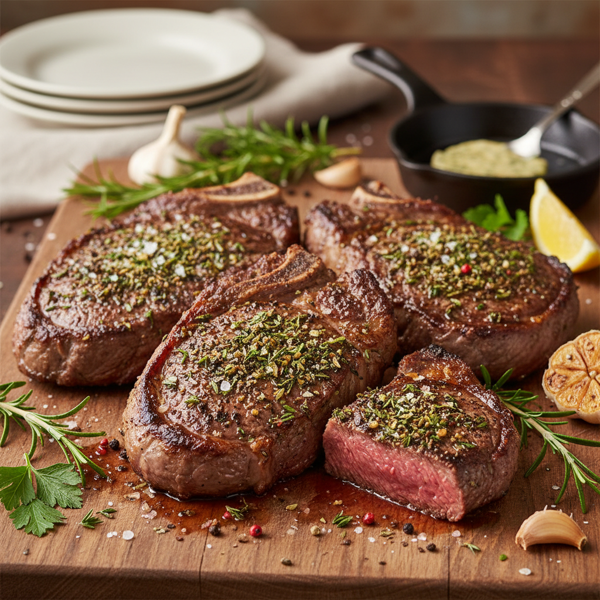
Indulge in the luxurious flavors of Herb-Crusted Bone-In Beef Sirloin Steaks, a dish that epitomizes French culinary elegance. This recipe honors the top sirloin, a prime cut often savored during special occasions such as wedding feasts, highlighting the harmony of quality beef and fresh herbs. The steaks are seared to perfection, resulting in a beautifully caramelized crust that seals in the juices. Paired with a rich, aromatic sauce made from shallots, beef stock, and a blend of garden-fresh herbs, this dish transforms any meal into a memorable celebration. Serve it alongside roasted vegetables or creamy mashed potatoes for a complete gourmet experience.
N/A
Servings
N/A
Calories
9
Ingredients
Ingredients
Unsalted Butter
5 tablespoons (divided (2 tablespoons for cooking, 3 tablespoons for the sauce))
Olive Oil
2 tablespoons (for searing the steaks)
Sirloin Steaks
2 (about 1 1/2 pounds each, thick-cut, bone-in)
Kosher Sea Salt
to taste (for seasoning the steaks and sauce)
Fresh Ground Black Pepper
to taste (for seasoning steaks and finishing)
Shallots
4 (finely chopped)
Beef Stock
1/4 cup (for the sauce)
Green Mustard with Herbs or Dijon Mustard
2 tablespoons (for the sauce)
Mixed Fresh Herbs (Flat-Leaf Parsley, Chervil, Tarragon)
3 tablespoons (chopped, for the sauce)
Instructions
1
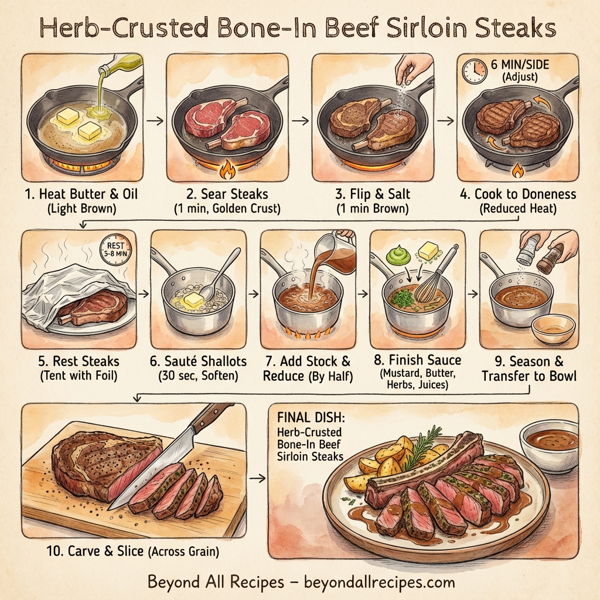
Preheat a cast-iron frying pan over high heat. In the pan, combine 2 tablespoons of unsalted butter and 2 tablespoons of olive oil, allowing them to melt together until the mixture reaches a light brown color.
2
Carefully add the sirloin steaks to the pan, ensuring not to overcrowd. Sear the steaks for about 1 minute on one side until a golden crust forms.
3
Flip the steaks and generously sprinkle with kosher sea salt. Allow them to brown on the other side for another minute.
4
Reduce the heat slightly and continue cooking, turning the steaks once, for approximately 6 minutes per side for a rare finish, or adjust according to your preferred doneness.
5
Once cooked to your liking, transfer the steaks to a serving platter, tent them with aluminum foil, and let them rest for 5 to 8 minutes to retain the juices.
6
While steaks are resting, prepare the sauce: In a separate saucepan over medium heat, melt 2 tablespoons of butter. Add the finely chopped shallots and sauté until softened, about 30 seconds without browning.
7
Pour in the beef stock and bring to a boil, reducing the mixture by half to concentrate the flavors.
8
Remove from heat and stir in the green mustard (or Dijon), the remaining tablespoon of butter, and the chopped fresh herbs. Add any juices collected from the resting steak to enhance the flavor.
9
Season the sauce with kosher salt and fresh ground black pepper. Transfer it into a warmed serving bowl.
10
To serve, place the rested steaks on a cutting board, sprinkle with black pepper, and carry them to the table. Cut along the bone to free the meat, then carve the steaks into slices diagonally across the grain. Present the sauce on the side for guests to drizzle on their servings.
Nutrition Information
Frequently Asked Questions
Frequently Asked Questions
What is the main cut of meat used in this recipe?
The recipe uses bone-in top sirloin steaks, specifically two thick-cut pieces weighing about 1.5 pounds each.
What type of pan is recommended for cooking the steaks?
A cast-iron frying pan is recommended for its ability to maintain high heat and create a beautiful sear.
What fats are used to sear the steaks?
A combination of 2 tablespoons of unsalted butter and 2 tablespoons of olive oil is used for searing.
How long should I sear each side initially?
You should sear the steaks for approximately 1 minute on each side over high heat until a golden crust forms.
When is the salt added to the steaks?
Kosher sea salt is generously sprinkled on the steaks after they have been flipped once in the pan.
How long does it take to cook these steaks to a rare finish?
After the initial sear, continue cooking for approximately 6 minutes per side for a rare result.
Why is it important to rest the steaks after cooking?
Resting allows the juices to redistribute throughout the meat, ensuring it remains succulent and flavorful.
How long should the steaks rest?
The steaks should rest for 5 to 8 minutes on a serving platter.
Should the steaks be covered while resting?
Yes, you should tent them with aluminum foil to keep them warm while they rest.
What ingredients are needed for the aromatic sauce?
The sauce consists of shallots, beef stock, green or Dijon mustard, butter, and mixed fresh herbs.
How do I prepare the shallots for the sauce?
The shallots should be finely chopped and sautéed in butter until softened, which takes about 30 seconds.
Should the shallots be browned?
No, the instructions specify to sauté them without allowing them to brown.
Why is the beef stock reduced?
The beef stock is boiled and reduced by half to concentrate the flavors and create a richer sauce.
Which mustards are suitable for this sauce?
You can use either green mustard with herbs or standard Dijon mustard.
What specific herbs are recommended?
The recipe suggests a mix of flat-leaf parsley, chervil, and tarragon.
When are the fresh herbs added to the sauce?
The chopped fresh herbs are stirred in after the saucepan has been removed from the heat.
What should be done with the juices that collect while the steak rests?
You should add those resting juices into the sauce to enhance its depth and flavor.
How should the steaks be carved?
Cut along the bone to free the meat, then carve the steaks into slices diagonally across the grain.
Is this dish appropriate for formal occasions?
Yes, it is described as epitomizing French culinary elegance and is suitable for events like wedding feasts.
What are the best side dishes for this steak?
It is recommended to serve these steaks with roasted vegetables or creamy mashed potatoes.
How much total butter is used in this recipe?
A total of 5 tablespoons of unsalted butter is used: 2 for cooking and 3 for the sauce.
How much beef stock is required?
The recipe calls for 1/4 cup of beef stock.
At what temperature should the pan be before adding meat?
The pan should be preheated over high heat until the butter and oil mixture is light brown.
How is the sauce served?
The sauce is presented in a warmed serving bowl on the side for guests to drizzle over their meat.
When is black pepper applied to the dish?
Black pepper is added both to season the sauce and as a final sprinkle on the rested steaks before carving.
Can I use different herbs if I don't have parsley, chervil, or tarragon?
While those are the traditional French choices, you can use other fresh garden herbs, though the flavor profile will change.
How many people does this recipe serve?
The recipe uses two large 1.5-pound steaks, which can serve 2 to 4 people depending on the portion size.
What does 'cutting across the grain' mean?
It means slicing perpendicular to the muscle fibers, which makes the meat much more tender to chew.
Is the heat reduced at any point during steak cooking?
Yes, after the initial high-heat sear and salting, the heat should be reduced slightly for the remainder of the cooking time.
Why use unsalted butter instead of salted?
Using unsalted butter allows you to precisely control the sodium level by adding kosher sea salt separately.