Hearty Ugandan Groundnut Stew
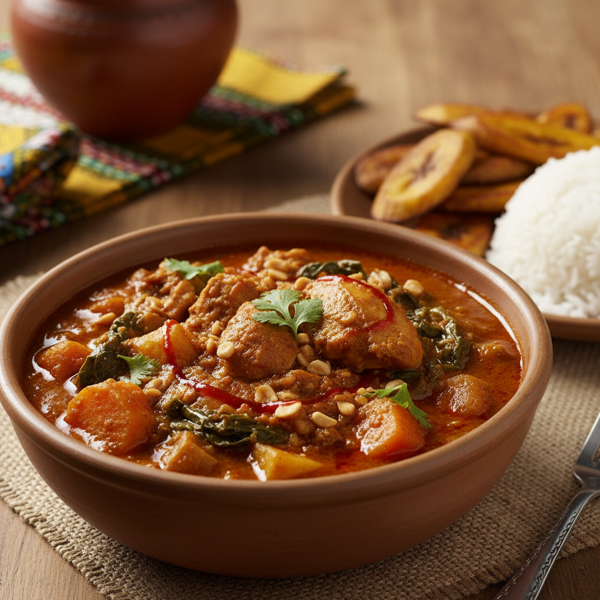
Experience the vibrant flavors of Uganda with this hearty Groundnut Stew, a dish that beautifully combines the richness of stewing beef with the creamy texture of peanut butter. Groundnuts are a staple in Ugandan cuisine, celebrated for their flavor and nutritional benefits. This recipe showcases the traditional method of creating a savory sauce from peanuts, complemented with fresh tomatoes, aromatic spices, and colorful vegetables like carrots and chili peppers. Perfect for a family gathering, this stew offers a comforting meal that's both satisfying and nourishing, while paying homage to the culinary heritage of Uganda.
4-6
Servings
N/A
Calories
9
Ingredients
Ingredients
Stewing beef
450 g (cut into bite-sized pieces)
Smooth peanut butter
6 tablespoons (preferably natural and unsweetened)
Onions
2 medium (chopped)
Ripe tomatoes
450 g (chopped (or 400 g canned tomatoes))
Fresh chili peppers
3 (seeds removed and finely chopped)
Carrots
450 g (sliced (can substitute with turnips or courgettes))
Mixed herbs
1 pinch (to taste)
Fresh ginger
2.5 cm piece (grated (or 1 teaspoon dry ginger powder))
Salt and black pepper
to taste (for seasoning)
Instructions
1
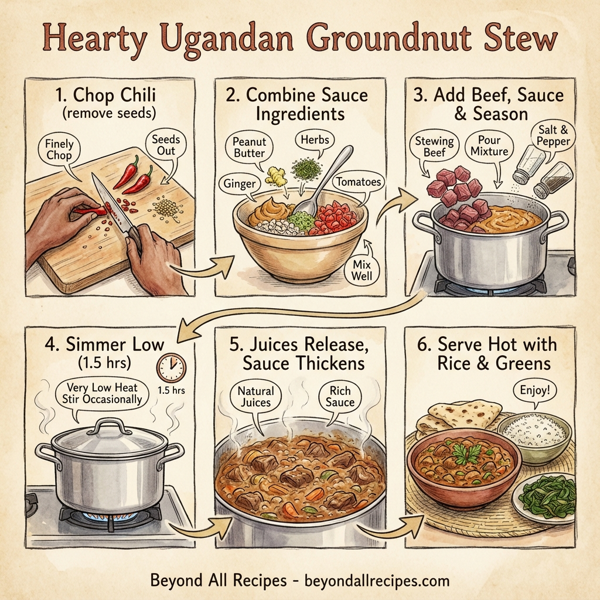
Start by removing the seeds from the chili peppers and finely chopping them. Set aside.
2
In a mixing bowl, combine the chopped chili peppers with the smooth peanut butter, grated ginger, mixed herbs, chopped onions, and chopped tomatoes. Mix thoroughly to create a flavorful sauce.
3
In a large saucepan with a tight-fitting lid, add the stewing beef and pour in the vegetable-peanut mixture. Season with salt and black pepper.
4
Cover the saucepan and cook over very low heat for about 1.5 hours, or until the beef is tender. Stir occasionally to ensure even cooking.
5
As the stew cooks, the beef and vegetables will release their juices, creating a rich sauce without the need for additional liquid.
6
Once the meat is tender, taste the stew and adjust seasoning if necessary. Serve hot with your choice of rice, bread, or a side of leafy greens.
Nutrition Information
Frequently Asked Questions
Frequently Asked Questions
What is Hearty Ugandan Groundnut Stew?
It is a traditional Ugandan dish that combines stewing beef with a rich, creamy sauce made from peanut butter, tomatoes, and aromatic spices.
What are the primary ingredients for this stew?
The main ingredients include stewing beef, smooth peanut butter, onions, ripe tomatoes, fresh chili peppers, carrots, ginger, and mixed herbs.
How long does it take to cook this recipe?
The stew should be cooked over very low heat for approximately 1.5 hours or until the beef becomes tender.
Can I use canned tomatoes instead of fresh ones?
Yes, you can substitute 450g of fresh tomatoes with one 400g can of tomatoes.
What type of beef should I use?
Stewing beef is ideal for this recipe; it should be cut into bite-sized pieces for even cooking.
Are there any substitutes for carrots?
Yes, you can substitute carrots with other vegetables like turnips or courgettes.
How spicy is this Ugandan Groundnut Stew?
The recipe calls for three chili peppers with seeds removed, providing a vibrant but manageable heat that can be adjusted to your preference.
How should I prepare the chili peppers?
Remove the seeds and finely chop the chili peppers before mixing them into the sauce.
Do I need to add water to the pot?
No, additional liquid is not required as the beef and vegetables release their own juices to create a rich sauce.
What is the best way to prepare the peanut butter sauce?
Mix smooth peanut butter with chopped chilis, grated ginger, herbs, onions, and tomatoes in a bowl before adding it to the meat.
Can I use crunchy peanut butter?
While smooth peanut butter is recommended for a creamy texture, crunchy peanut butter can be used if you prefer more texture.
What should I serve with this stew?
This stew is traditionally served hot with rice, bread, or a side of fresh leafy greens.
How do I know when the meat is done?
The meat is finished when it is fork-tender after simmering for about 90 minutes.
Can I use dry ginger instead of fresh ginger?
Yes, you can substitute the 2.5 cm piece of fresh ginger with 1 teaspoon of dry ginger powder.
Is this recipe suitable for families?
Absolutely, it is a satisfying and nourishing meal perfect for family gatherings.
How many servings does this recipe make?
This recipe is designed to provide 4 to 6 servings.
Can I make this dish vegetarian?
Yes, you can omit the beef and use extra vegetables or legumes while keeping the peanut-based sauce the same.
What kind of herbs are best for this stew?
A pinch of dried mixed herbs works well, or you can use fresh herbs like cilantro or parsley for garnish.
How should I store leftovers?
Store any remaining stew in an airtight container in the refrigerator for up to three days.
Can this stew be frozen?
Yes, this stew freezes well; just ensure it is completely cooled before placing it in a freezer-safe container.
What is the texture of the finished sauce?
The sauce is thick, rich, and creamy thanks to the combination of peanut butter and reduced vegetable juices.
Should the beef be browned before adding the sauce?
The recipe calls for cooking the beef directly with the vegetable-peanut mixture over low heat without pre-browning.
Can I cook this in a slow cooker?
Yes, you can adapt this for a slow cooker by cooking on low for 6-8 hours or high for 3-4 hours.
What makes this dish healthy?
It is packed with protein from the beef and peanuts, and provides vitamins from the tomatoes and carrots.
Should I use sweetened or unsweetened peanut butter?
Unsweetened, natural peanut butter is preferred to maintain the savory profile of the dish.
What can I do if the stew is too thick?
If the sauce becomes too thick for your liking, you can stir in a small amount of water or vegetable broth.
How much peanut butter is needed?
The recipe requires 6 tablespoons of smooth peanut butter.
Can I use other meats like chicken?
Yes, chicken or goat meat can also be used, though cooking times may vary depending on the protein chosen.
Is it necessary to use a tight-fitting lid?
Yes, a tight lid is essential to trap moisture and ensure the meat cooks in its own juices without drying out.
Why is it called Groundnut Stew?
In many parts of Africa, including Uganda, peanuts are commonly referred to as groundnuts.