Hearty Black-Kale & White-Bean Barley Soup
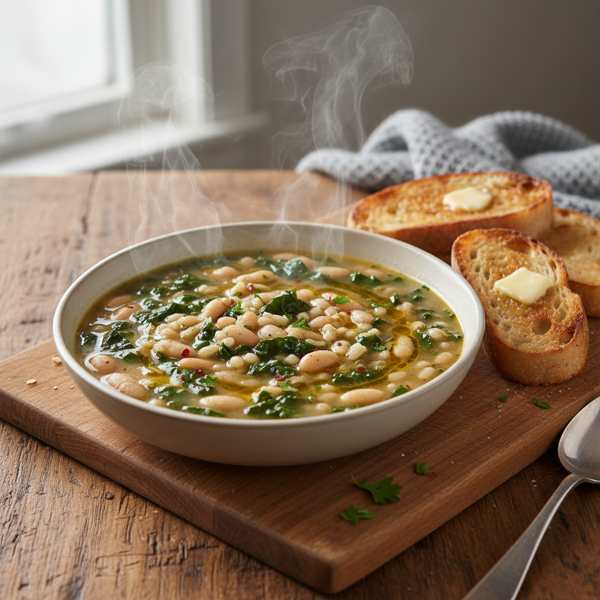
Warm up with this nourishing Hearty Black-Kale & White-Bean Barley Soup, perfect for cozy evenings. This delicious, nutrient-packed dish combines the robust flavors of black kale and creamy cannellini beans with the satisfying chew of pearl barley. Each bowl is brimming with wholesome ingredients, creating a flavorful and healthy meal that is simple to prepare and ideal for sharing with loved ones. Top it off with a touch of parmesan and fresh lemon zest for a delightful finish. Healthy, hearty, and heartwarming!
4
Servings
N/A
Calories
12
Ingredients
Ingredients
water
10 cups (bring to a boil, then reduce for barley simmering)
pearl barley
3/4 cup (rinsed and drained)
low sodium chicken broth
3 cups (measured)
onion
1 large (chopped)
garlic cloves
2 (thinly sliced)
red pepper flakes
1/2 teaspoon (measured)
coarse salt
3/4 teaspoon (measured)
fresh ground pepper
to taste (for seasoning)
cannellini beans
28 ounces (liquid reserved)
kale (Tuscan black preferred)
6 ounces (chopped)
grated parmesan cheese
2 tablespoons (for garnish)
lemon zest
1/2 teaspoon (grated for garnish)
Instructions
1
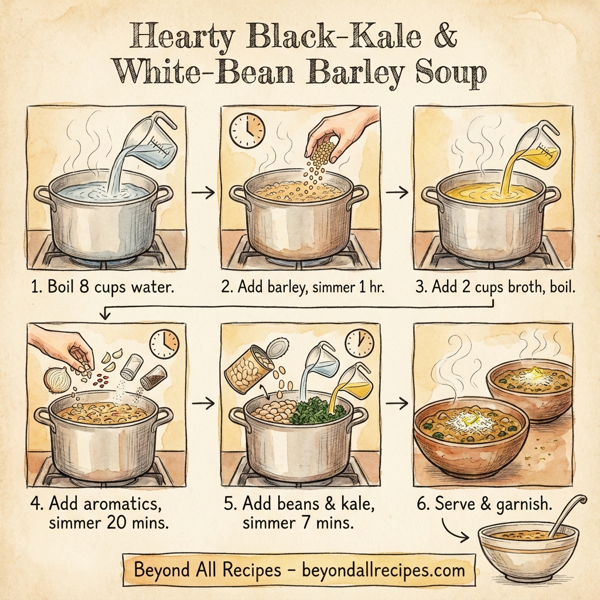
In a large pot, bring 8 cups of water to a rolling boil.
2
Reduce the heat and stir in the rinsed pearl barley. Allow the barley to simmer gently until just tender, which should take about 1 hour.
3
Once the barley is tender, add 2 cups of low-sodium chicken broth to the pot and return to a boil.
4
Lower the heat again and incorporate the chopped onion, thinly sliced garlic, red pepper flakes, and coarse salt into the pot. Season generously with fresh ground pepper. Allow this mixture to simmer until the barley becomes soft, approximately 20 minutes.
5
Next, add the cannellini beans along with their reserved liquid, the chopped black kale, the remaining 2 cups of water, and the last cup of chicken broth. Stir well and let it simmer until the kale is tender and cooked through, which should take around 7 minutes.
6
To serve, divide the soup into bowls, and generously sprinkle each serving with grated parmesan cheese and lemon zest. Finish with a pinch of fresh ground pepper.
Nutrition Information
Frequently Asked Questions
Frequently Asked Questions
What is Hearty Black-Kale & White-Bean Barley Soup?
It is a nutrient-dense, comforting soup featuring Tuscan kale, cannellini beans, pearl barley, and aromatic seasonings.
How long does it take to cook the pearl barley?
The pearl barley needs to simmer gently for approximately 1 hour until it is just tender.
Is this soup vegetarian?
As written, it uses chicken broth, but it can easily be made vegetarian or vegan by substituting it with vegetable broth and omitting the parmesan garnish.
What type of kale is best for this recipe?
Tuscan black kale (also known as Lacinato or Dinosaur kale) is preferred for its robust flavor and tender texture.
How many servings does this recipe make?
This recipe is designed to provide 4 hearty servings.
Do I need to drain the cannellini beans?
No, you should add the cannellini beans along with their reserved liquid to help thicken and flavor the soup.
How much water is needed in total?
The recipe uses a total of 10 cups of water: 8 cups for the initial boil and 2 cups added later with the kale.
When do I add the garlic and onion?
Add the chopped onion and sliced garlic after the barley has finished its first hour of simmering.
What is the total amount of chicken broth required?
You will need 3 cups of low-sodium chicken broth in total, added in two stages (2 cups, then 1 cup).
Can I use a different type of bean?
Yes, Great Northern beans or Navy beans are excellent substitutes for cannellini beans.
How long do the kale and beans need to cook?
Once added, the kale and beans only need to simmer for about 7 minutes until the kale is tender.
Does the barley need preparation?
The pearl barley should be rinsed and drained before being added to the boiling water.
Is this soup gluten-free?
No, barley contains gluten. To make it gluten-free, you would need to substitute the barley with a grain like brown rice or buckwheat.
Can I make this soup spicy?
The recipe includes 1/2 teaspoon of red pepper flakes for a mild heat, but you can increase this amount for more spice.
How should I store leftover soup?
Store leftovers in an airtight container in the refrigerator for up to 5 days.
Can this soup be frozen?
Yes, this soup freezes well for up to 3 months. Note that the barley may absorb more liquid upon thawing, so you may need to add a splash of water when reheating.
What are the garnishes for this soup?
The soup is finished with grated parmesan cheese, fresh lemon zest, and a pinch of ground black pepper.
Why add lemon zest at the end?
Lemon zest provides a bright acidity that cuts through the earthy flavors of the kale and barley, balancing the dish.
Can I use quick-cooking barley instead?
Yes, but you will need to significantly reduce the initial simmering time according to the package instructions.
Can I use frozen kale?
Yes, frozen chopped kale can be used, though the texture may be slightly softer than fresh kale.
Is this recipe suitable for meal prep?
Absolutely, the flavors often improve the next day as the ingredients meld together.
What size of onion should I use?
The recipe calls for one large onion, chopped.
Can I add other vegetables?
Yes, diced carrots or celery would be great additions; add them at the same time as the onions.
How much salt is in the recipe?
The recipe uses 3/4 teaspoon of coarse salt, plus whatever is present in the chicken broth.
What if I don't have fresh garlic?
You can use 1/2 teaspoon of garlic powder as a substitute, though fresh sliced garlic provides better flavor.
Does the soup thicken over time?
Yes, the starches in the barley and bean liquid will naturally thicken the broth as it sits.
Can I use curly kale?
Yes, curly kale works fine, though you may want to remove the tough stems before chopping.
Is the parmesan cheese necessary?
While it adds a savory umami finish, the soup is still delicious without it if you are avoiding dairy.
How much lemon zest do I need?
Approximately 1/2 teaspoon of grated lemon zest is recommended for the whole batch.
What is the total weight of beans used?
The recipe uses 28 ounces of cannellini beans, which is typically two standard-sized cans.