Green Tea Infused Rice Bowl (Ocha-Zuke)
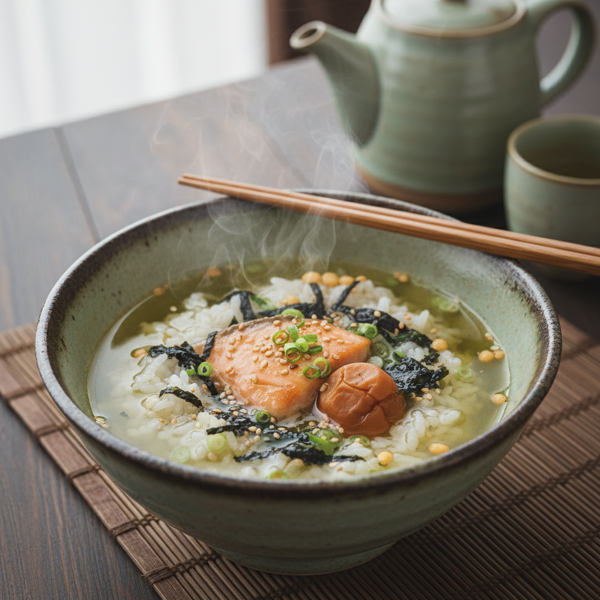
Explore the delightful combination of flavors in this Green Tea Infused Rice Bowl, known as Ocha-Zuke in Japan. This dish transforms leftover rice into a fragrant, comforting meal that highlights the unique umami of green tea. Each bowl is a canvas of textures and tastes, enhanced by the umami-rich seaweed, aromatic sesame seeds, and fresh herbs, making it not only a nourishing dish but also a visual treat. It is typically served with an assortment of bright pickles, offering a refreshing contrast. Ideal for a quick lunch or a light dinner, this recipe allows the versatility of leftovers to shine through while embracing the soothing qualities of green tea.
N/A
Servings
163
Calories
7
Ingredients
Ingredients
cooked rice
3 (cups, preferably leftover)
sesame seeds
1 (tablespoon, dry roasted)
nori
1 (sheet, dry roasted and torn into rectangles)
steamed chicken breast or grilled salmon
1 (optional, cooked, cut into chunks)
chopped coriander
2 (tablespoons)
wasabi or fresh ginger
1/4 or 1/2 (teaspoon of wasabi or teaspoon of grated fresh ginger)
green tea
2 (cups, hot and freshly brewed)
Instructions
1
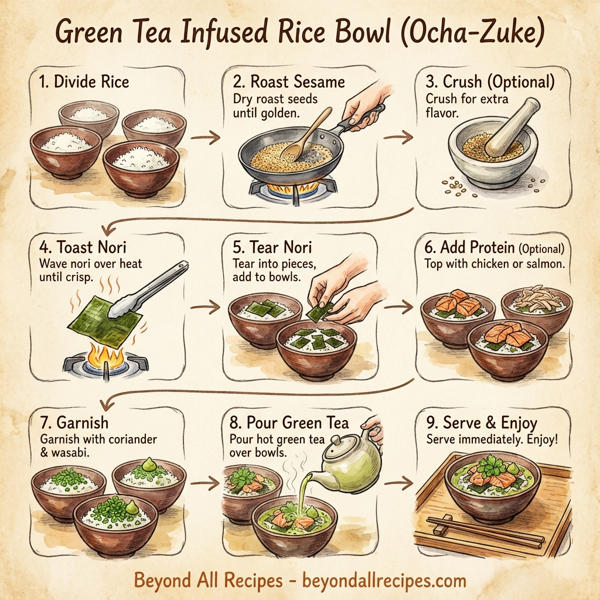
1. Begin by dividing the cooked rice evenly into four deep bowls.
2
2. In a skillet over medium heat, dry roast the sesame seeds, stirring frequently until they turn golden brown. This enhances their nutty flavor.
3
3. Optional: After toasting, you can slightly crush the sesame seeds in a mortar and pestle for extra texture and flavor.
4
4. Next, dry roast the nori sheet by holding it with tongs and waving it over direct medium heat for about 1 minute, until it becomes crisp. Be careful not to burn it.
5
5. Tear the roasted nori into 20 small rectangles, distributing 5 rectangles into each bowl on top of the rice.
6
6. If desired, add chunks of cooked chicken or grilled salmon as a protein source on top of the rice and nori.
7
7. Generously garnish each bowl with a handful of chopped coriander and a dollop of wasabi or grated fresh ginger, according to your preference.
8
8. Finally, pour approximately 1/2 cup of hot, freshly brewed green tea over each bowl to bring the dish together.
9
9. Serve immediately and enjoy the comforting combination of flavors and aromas.
Nutrition Information
2.5
Fat
24
Carbs
8.75
Protein
Frequently Asked Questions
Frequently Asked Questions
What is Ocha-Zuke?
Ocha-Zuke is a traditional Japanese dish where hot green tea is poured over cooked rice, often enhanced with various savory toppings.
What kind of tea should I use for this recipe?
You should use freshly brewed hot green tea to bring out the aromatic and umami qualities of the dish.
Can I use fresh rice instead of leftover rice?
Yes, you can use fresh rice, though the recipe notes that leftover rice is traditionally preferred for its texture.
How do I toast the sesame seeds?
Dry roast the sesame seeds in a skillet over medium heat, stirring frequently until they turn golden brown.
Why should I crush the sesame seeds?
Slightly crushing the toasted seeds in a mortar and pestle helps release extra texture and nutty flavor.
How do I prepare the nori?
Hold the nori sheet with tongs and wave it over direct medium heat for about 1 minute until it becomes crisp, then tear it into rectangles.
What protein can I add to my Green Tea Rice Bowl?
You can add chunks of steamed chicken breast or grilled salmon as an optional protein source.
What garnishes are recommended?
The dish is garnished with chopped coriander and a dollop of wasabi or grated fresh ginger.
How much tea do I pour over each bowl?
Pour approximately 1/2 cup of hot green tea over each bowl of rice and toppings.
Is this dish served hot or cold?
This recipe is served hot by pouring freshly brewed hot tea over the ingredients.
How many calories are in one serving?
Each serving contains approximately 163 calories.
What is the fat content of this recipe?
There are 2.5 grams of fat per serving.
How much protein is in the Ocha-Zuke?
Each serving provides about 8.75 grams of protein.
How many carbohydrates are in this dish?
There are 24 grams of carbohydrates per serving.
Is this recipe suitable for a quick lunch?
Yes, it is ideal for a quick lunch or light dinner because it uses leftover rice and simple ingredients.
Can I substitute wasabi for ginger?
Yes, you can use either 1/4 to 1/2 teaspoon of wasabi or a teaspoon of grated fresh ginger depending on your preference.
How many nori rectangles should I use?
The recipe suggests distributing 5 small rectangles of roasted nori into each bowl.
What gives the dish its umami flavor?
The combination of green tea, roasted nori, and optional protein provides a rich umami profile.
How many servings does this recipe make?
The recipe instructions are designed to be divided into four deep bowls.
Is coriander a necessary ingredient?
Coriander is used as a garnish for freshness, but you can adjust herbs to your liking.
What is the preparation for the ginger?
If using ginger instead of wasabi, it should be freshly grated.
Can I make this vegetarian?
Yes, simply omit the chicken or salmon to keep the dish vegetarian.
What kind of bowls are best for serving?
Deep bowls are recommended to accommodate both the rice and the tea liquid.
Is there any sodium or cholesterol information?
The provided data does not list specific values for sodium or cholesterol.
How long does it take to roast the nori?
It takes about 1 minute of waving the sheet over direct heat to make it crisp.
What are the primary tags for this recipe?
Tags include ocha-zuke, green tea rice, japanese cuisine, leftover rice, and healthy meal.
What is the total ingredient count?
There are 7 primary ingredients used in this recipe.
Can I use bottled green tea?
The recipe specifies freshly brewed hot tea for the best fragrance and flavor.
What side dishes go well with this?
It is typically served with an assortment of bright Japanese pickles.
Is this considered a comfort food?
Yes, Ocha-Zuke is widely known as a fragrant and comforting meal in Japan.