Golden Hour Sourdough Starter
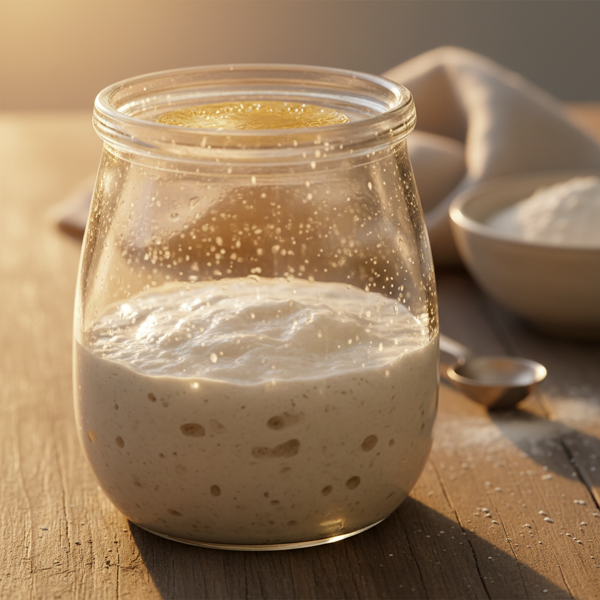
This Golden Hour Sourdough Starter is a treasured recipe adapted from the renowned Sunset Magazine. Known for its reliability, this starter is perfect for beginners and seasoned bakers alike. Using it in recipes with supplementary leavening will yield best results in the first six months. With patience and care, this starter will become a foundational ingredient for your artisanal bread creations.
N/A
Servings
N/A
Calories
3
Ingredients
Ingredients
Low-fat milk or Skim milk
1 cup (Heated to 90-100°F)
Plain yogurt (unflavored)
3 tablespoons (Stirred into warm milk)
All-purpose flour
1 cup (Gradually stirred in after curd forms)
Instructions
1
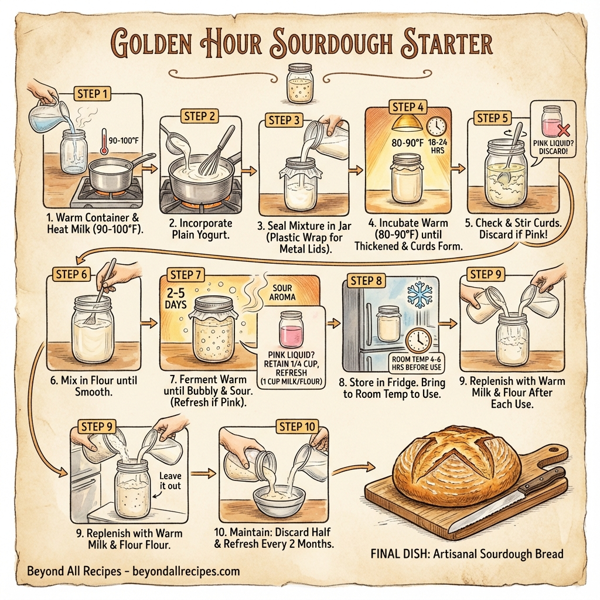
Prepare your workspace by filling a 3 to 6-cup container with hot water to warm it, then let it stand while you begin heating your milk.
2
In a saucepan, gently warm the milk to 90-100°F (32-37°C) using a thermometer. Remove from heat and incorporate the plain yogurt by stirring until evenly mixed.
3
Discard the hot water from your container, then dry it thoroughly. Pour the milk-yogurt mixture into the container, ensuring a tight seal with a lid. If using a jar with a metal lid, place a double layer of plastic wrap over the mouth before securing the lid.
4
Store the mixture in a consistently warm environment between 80-90°F (27-32°C) for 18-24 hours. The mixture should thicken to a yogurt-like consistency, with curds formed.
5
Examine the mixture; if it has curdled but exhibits clear liquid on top, stir the liquid back in. If the liquid is pink, discard and start fresh as it indicates spoilage.
6
Once the curd has formed satisfactorily, gradually mix in the all-purpose flour until the combination is smooth. Cover tightly and place back in a warm spot (80-90°F) until it becomes bubbly and exudes a sour aroma, a process taking approximately 2-5 days.
7
During this fermentation period, if clear liquid surfaces, simply stir it back. If the liquid turns pink, retain just 1/4 cup of the starter and refresh with a blend of 1 cup each of warm milk (90-100°F) and flour. Cover and allow it to stand again until it reaches peak bubbles and aroma.
8
Store the bubbly starter by sealing it and placing it in the refrigerator. Always bring the starter to room temperature before using it in recipes, allowing 4 to 6 hours.
9
To maintain starter vitality, replenish with equal parts of warm milk and flour after each use. Follow up with room temperature storage for a few hours until bubbly before refrigerating.
10
For infrequent bakers, it's advisable to discard half of the starter around every two months to rejuvenate it. Refresh with equal parts warm milk and flour to keep it lively.
Nutrition Information
Frequently Asked Questions
Frequently Asked Questions
What is the Golden Hour Sourdough Starter?
The Golden Hour Sourdough Starter is a reliable, artisanal recipe adapted from Sunset Magazine, ideal for both beginners and experienced bakers to create a foundation for bread making.
What ingredients are required for this sourdough starter?
You will need 1 cup of low-fat or skim milk, 3 tablespoons of plain unflavored yogurt, and 1 cup of all-purpose flour.
What is the origin of this specific sourdough recipe?
This recipe is a treasured version adapted from the renowned Sunset Magazine, known for its consistency and success.
Do I need to add extra leavening when using this starter initially?
Yes, for the first six months of the starter's life, it is recommended to use supplementary leavening in your recipes for the best results.
How should I prepare the container before mixing the ingredients?
Fill a 3 to 6-cup container with hot water to warm it up, then let it stand while you heat the milk. Discard the water and dry the container thoroughly before use.
What temperature should the milk reach?
The milk should be gently warmed in a saucepan to a temperature between 90-100°F (32-37°C).
How is the yogurt incorporated into the recipe?
Once the milk is at the correct temperature, remove it from the heat and stir in the plain yogurt until it is evenly mixed.
What special precautions should I take if using a jar with a metal lid?
If your container has a metal lid, place a double layer of plastic wrap over the mouth of the jar before securing the lid to prevent a reaction.
What is the ideal environment temperature for the initial fermentation?
Store the milk-yogurt mixture in a consistently warm environment between 80-90°F (27-32°C).
How long does the initial milk and yogurt mixture need to sit?
The mixture should sit for 18-24 hours until it thickens to a yogurt-like consistency with formed curds.
What should I do if clear liquid appears on top of the curd?
If the liquid is clear, simply stir it back into the mixture. This is a normal part of the process.
What is a sign that the starter has spoiled during the initial phase?
If the liquid on top of the mixture is pink, it indicates spoilage and you should discard the batch and start fresh.
At what point do I add the flour to the starter?
The flour should be added only after a satisfactory curd has formed, which typically takes 18-24 hours.
How long does the second stage of fermentation take after adding flour?
Once the flour is stirred in, it takes approximately 2 to 5 days in a warm spot (80-90°F) to become bubbly and aromatic.
What are the physical signs that the starter is ready?
The starter is ready when it is bubbly throughout and gives off a distinct, sour aroma.
How do I fix a pink liquid issue during the 2-5 day fermentation period?
Retain only 1/4 cup of the starter and refresh it with 1 cup of warm milk (90-100°F) and 1 cup of flour, then let it stand until it reaches peak bubbles.
Where should the finished starter be stored?
The finished bubbly starter should be sealed and stored in the refrigerator.
How do I prepare the refrigerated starter for baking?
Always bring the starter to room temperature before using it in a recipe, which usually takes between 4 to 6 hours.
How do I replenish the starter after using it?
Replenish the starter with equal parts of warm milk and flour after each use, then let it sit at room temperature until bubbly before refrigerating.
What maintenance is required if I don't bake often?
It is advisable to discard half of the starter approximately every two months and refresh it with equal parts warm milk and flour.
Can I use whole milk for this recipe?
The recipe specifically recommends low-fat or skim milk for the best results in achieving the desired consistency.
What kind of yogurt should I use?
Use plain, unflavored yogurt. Flavored or sweetened yogurts will interfere with the fermentation process.
Does the container need to be airtight?
Yes, during the initial phases and storage, the container should be tightly sealed with a lid.
Why is this recipe good for beginners?
It is considered a highly reliable and foundational recipe that yields consistent results with simple, common ingredients.
What temperature is too cold for the fermentation process?
Fermentation thrives between 80-90°F; temperatures significantly lower than this will slow down or stall the bacterial activity.
What is the purpose of warming the container with hot water?
Warming the container helps maintain the temperature of the milk-yogurt mixture at the start of the fermentation process.
Is the starter supposed to be smooth after adding flour?
Yes, you should gradually mix in the all-purpose flour until the combination is completely smooth.
What does the sour aroma signify?
The sour aroma indicates that the fermentation is successful and the natural acids and yeasts have developed.
Why is it called Golden Hour Sourdough Starter?
It is a name given to this specific version of the starter, reflecting its warm, artisanal nature and reliability.
How many ingredients are in this recipe?
There are 3 main ingredients: milk, yogurt, and all-purpose flour.