Creamy Nutmeg Butterscotch Pudding
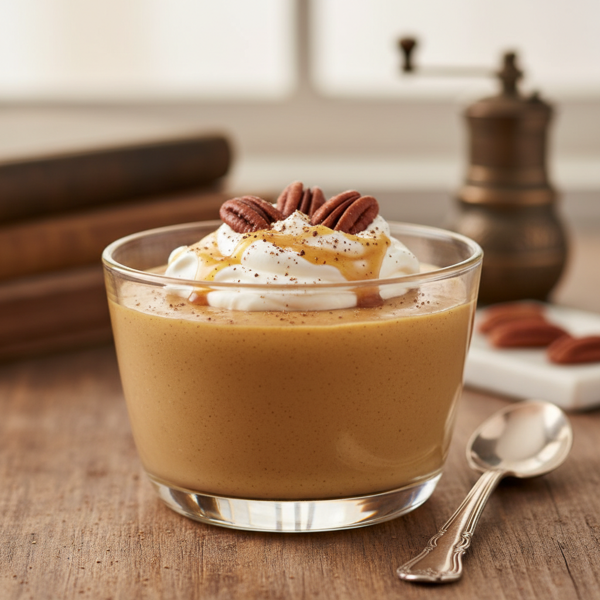
This delectable Creamy Nutmeg Butterscotch Pudding is a delightful twist on the classic dessert, combining rich flavors with a light texture. Inspired by a recipe from the January 2008 Cooking Light magazine, this pudding not only satisfies your sweet tooth but also packs a punch of calcium, meeting about 1/5 of your daily needs in just one serving. The addition of freshly grated nutmeg enhances the warm, buttery notes of butterscotch, making it a perfect dessert for any occasion. Enjoy it chilled and topped with a dollop of whipped topping for an extra indulgence.
6
Servings
217
Calories
9
Ingredients
Ingredients
dark brown sugar
1 cup (packed)
cornstarch
1/4 cup (none)
salt
1/2 teaspoon (none)
1% low-fat milk
3 cups (divided)
large egg
1 (lightly beaten)
large egg yolk
1 (lightly beaten)
butter
1 tablespoon (none)
vanilla extract
1 teaspoon (none)
frozen reduced-calorie whipped topping
6 tablespoons (thawed)
Instructions
1
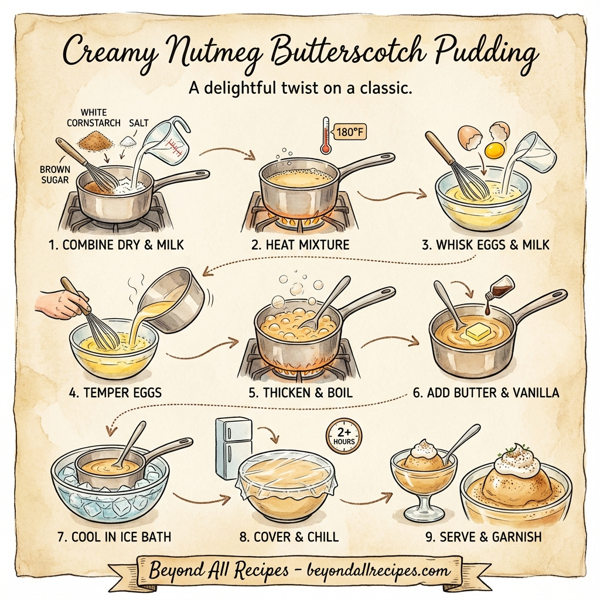
In a medium saucepan, combine the dark brown sugar, cornstarch, and salt.
2
Gradually whisk in 2 cups of the 1% low-fat milk until well blended.
3
Place the saucepan over medium heat and cook the mixture, stirring constantly until the temperature reaches 180 degrees Fahrenheit, or until tiny bubbles form around the edge. Avoid boiling.
4
In a separate bowl, whisk together the remaining 1 cup of milk, the lightly beaten egg, and the egg yolk until smooth.
5
Slowly add 1 cup of the hot milk mixture into the egg mixture, whisking constantly to temper the eggs.
6
Pour the egg mixture back into the saucepan with the remaining milk mixture. Bring to a boil while stirring continuously, then cook for an additional minute until thickened.
7
Remove from heat and stir in the butter and vanilla extract until melted and incorporated.
8
To cool the pudding quickly, place the saucepan into a large bowl filled with ice water for about 20 minutes, stirring occasionally until the mixture reaches room temperature.
9
Once cooled, place a sheet of plastic wrap directly on the surface of the pudding to prevent a skin from forming. Refrigerate for at least 2 hours or until fully chilled.
10
To serve, spoon the pudding into individual dishes and top each serving with a dollop of the thawed whipped topping and a sprinkle of freshly grated nutmeg.
Nutrition Information
3.3g
Fat
36.7g
Carbs
6.3g
Protein
Frequently Asked Questions
Frequently Asked Questions
What is Creamy Nutmeg Butterscotch Pudding?
It is a rich and creamy dessert that puts a modern twist on classic butterscotch pudding by adding freshly grated nutmeg and using low-fat milk.
Where did the inspiration for this pudding recipe come from?
This recipe was inspired by a dessert featured in the January 2008 issue of Cooking Light magazine.
How many servings does this recipe yield?
The recipe is designed to make 6 individual servings.
What is the calorie count for a single serving of this pudding?
Each serving contains approximately 217 calories.
Is this butterscotch pudding high in fat?
No, it is a low-fat dessert option containing only 3.3 grams of fat per serving.
How much calcium does one serving provide?
One serving provides about 1/5 of the daily recommended intake of calcium.
What kind of sugar is best for this recipe?
The recipe calls for 1 cup of packed dark brown sugar to achieve a deep butterscotch flavor.
What type of milk should I use?
The recipe specifies using 3 cups of 1% low-fat milk.
How do I thicken the pudding?
Thickening is achieved by combining cornstarch with the sugar and milk and cooking it until it reaches a boil.
How many eggs are required for the recipe?
You will need one large egg and one large egg yolk, both lightly beaten.
At what temperature should the milk mixture be heated before adding eggs?
The milk mixture should reach 180 degrees Fahrenheit or until tiny bubbles form around the edge.
What is the process for tempering the eggs in this recipe?
Slowly whisk 1 cup of the hot milk mixture into the beaten eggs before adding the egg mixture back into the saucepan.
How long should the pudding cook after the eggs are added?
Once the egg mixture is added, bring the pudding to a boil and cook for one additional minute while stirring constantly.
When should I add the vanilla and butter?
Remove the saucepan from the heat before stirring in the butter and vanilla extract.
How can I quickly cool the pudding?
Place the saucepan into a large bowl of ice water for about 20 minutes, stirring occasionally.
How do I prevent a skin from forming on top of the pudding?
Place a sheet of plastic wrap directly onto the surface of the pudding while it cools and refrigerates.
How long does the pudding need to chill?
The pudding should be refrigerated for at least 2 hours or until it is fully chilled.
What topping is recommended for serving?
Top each serving with a dollop of thawed reduced-calorie whipped topping and freshly grated nutmeg.
How much protein is in each serving?
Each serving of this pudding provides 6.3 grams of protein.
How many carbohydrates are in a serving?
There are 36.7 grams of carbohydrates per serving.
Does this recipe contain any fiber?
No, this specific pudding recipe does not contain significant dietary fiber.
What is the role of cornstarch in this dessert?
Cornstarch acts as the primary thickening agent for the pudding base.
Is this pudding served warm or cold?
This pudding is intended to be served chilled.
What makes the flavor profile 'butterscotch'?
The combination of dark brown sugar and butter creates the signature butterscotch taste.
Can I use fresh nutmeg for this recipe?
Yes, the recipe specifically recommends freshly grated nutmeg for the best flavor.
How much salt is used in the recipe?
The recipe calls for 1/2 teaspoon of salt.
What size saucepan is needed?
A medium-sized saucepan is recommended for preparing the pudding.
Is the whipped topping added before or after chilling?
The whipped topping should be added just before serving, after the pudding has fully chilled.
How much butter is in the entire recipe?
The recipe uses 1 tablespoon of butter.
What are the primary flavor notes of this dish?
The primary flavors are rich butterscotch, warm nutmeg, and sweet vanilla.