Classic French Herb-Roasted Chicken
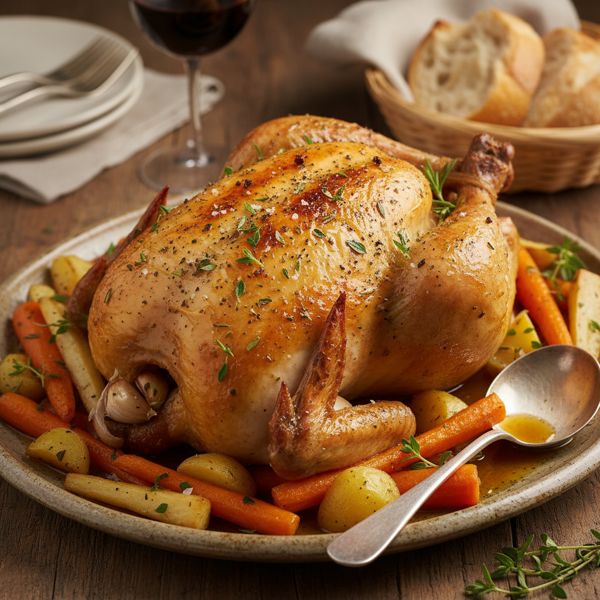
Elevate your dining experience with this exquisite recipe for Classic French Herb-Roasted Chicken, inspired by Julia Child's timeless cooking techniques. This dish features a beautifully roasted chicken that is both moist and flavorful, thanks to a unique turning method during roasting. The infusion of aromatic herbs and the decadent sauce reduction provide layers of depth and sophistication that elevate this simple comfort food to gourmet status. Pair it with buttery green beans or peas and your choice of potatoes, whether sautéed, roasted, or even in the form of creamy potato crepes, for a quintessential French meal that will impress family and friends. Plus, using homemade brown chicken stock enhances the depth of flavor, making each bite an unforgettable culinary experience.
N/A
Servings
N/A
Calories
8
Ingredients
Ingredients
broiler-fryer chicken
3 lbs (whole, cleaned)
salt
3/4 teaspoon (divided)
butter
3 tablespoons (softened and melted)
carrot
1 small (sliced)
onion
1 small (sliced)
cooking oil
1 tablespoon (to mix with melted butter for basting)
minced shallots or green onion
1/2 tablespoon (finely minced)
brown chicken stock or canned chicken broth
1 cup (homemade preferred)
Instructions
1
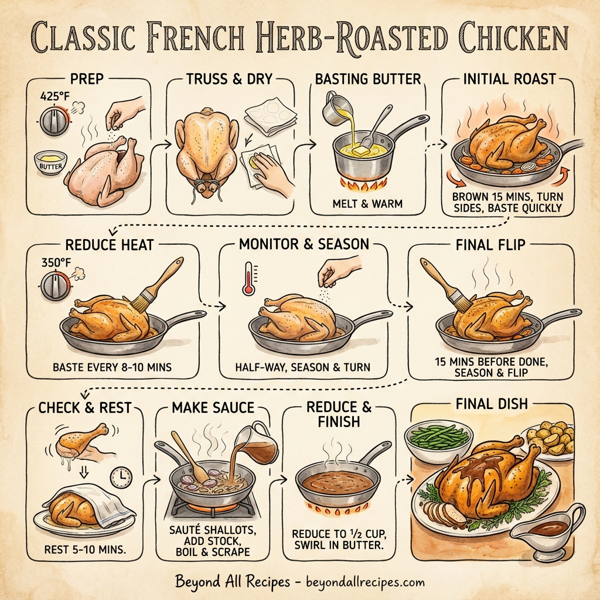
Preheat your oven to 425°F (220°C).
2
Inside the chicken, sprinkle with 1/2 teaspoon salt and rub in 1 tablespoon of softened butter to create a seasoned cavity.
3
Truss the chicken securely and pat the skin dry with paper towels. Rub the remaining butter evenly over the skin.
4
In a small saucepan, melt 2 tablespoons of butter together with 1 tablespoon of cooking oil for basting. Set aside and keep warm.
5
Place the chicken breast side up in a shallow roasting pan and arrange the sliced carrot and onion around it.
6
Roast the chicken in the preheated oven, browning slightly for 15 minutes. Turn the chicken onto its left side after 5 minutes, then onto its right side for the final 5 minutes, basting quickly each time to maintain heat.
7
Reduce the oven temperature to 350°F (175°C) and place the chicken on its left side in the pan. Baste every 8 to 10 minutes with the melted butter.
8
Monitor the oven temperature, making adjustments as needed to ensure even cooking without burning the fat.
9
Approximately halfway through the estimated cooking time (around 35-40 minutes), season the chicken with salt and turn it onto its other side. Continue basting regularly.
10
About 15 minutes before the chicken is done, season again and flip it breast side up. Continue to baste until cooked through.
11
The chicken is ready when the drumstick moves easily in its socket and juices run clear. Allow it to rest on a platter for 5 to 10 minutes before carving.
12
Remove all but 2 tablespoons of fat from the roasting pan. Stir in the shallots or onion, cooking gently for about 1 minute.
13
Add the brown chicken stock and bring to a rapid boil over high heat, scraping up flavorful bits from the pan with a wooden spoon.
14
Reduce the sauce to about 1/2 cup, then season with salt and pepper to taste.
15
Just before serving, swirl in the remaining 1 to 2 tablespoons of butter until melted and incorporated.
16
Serve the chicken on a platter with a drizzle of the sauce over it, and pour the rest into a gravy boat for guests to help themselves.
Nutrition Information
Frequently Asked Questions
Frequently Asked Questions
What is Classic French Herb-Roasted Chicken?
This is a gourmet dish inspired by Julia Child's techniques featuring a chicken roasted using a unique turning method to ensure it is moist and flavorful.
Whose cooking techniques inspired this recipe?
This recipe is inspired by the timeless cooking techniques of the legendary chef Julia Child.
What is the secret to keeping the chicken moist?
The secret lies in the unique turning method during roasting and frequent basting with a butter and oil mixture.
What temperature should the oven be preheated to?
The oven should be preheated to 425°F (220°C) for the initial roasting phase.
How do I season the cavity of the chicken?
Sprinkle 1/2 teaspoon of salt and rub in 1 tablespoon of softened butter inside the cavity.
Why is trussing the chicken necessary?
Trussing the chicken securely helps it maintain its shape and ensures even cooking throughout the roasting process.
How should I prepare the chicken skin before roasting?
Pat the skin dry with paper towels and rub it evenly with softened butter.
What are the ingredients for the basting liquid?
The basting liquid consists of 2 tablespoons of melted butter mixed with 1 tablespoon of cooking oil.
Where do the carrot and onion go during roasting?
The sliced carrot and onion should be arranged around the chicken in a shallow roasting pan.
How long is the initial browning phase?
The chicken is roasted at a high temperature for 15 minutes to brown slightly before the temperature is reduced.
What is the turning sequence in the first 15 minutes?
Start breast side up, turn onto the left side after 5 minutes, then onto the right side for the final 5 minutes.
To what temperature should the oven be reduced after browning?
The oven temperature should be reduced to 350°F (175°C).
How often should the chicken be basted?
Once the temperature is reduced, the chicken should be basted every 8 to 10 minutes with the melted butter mixture.
What should I do if the fat in the pan starts to burn?
Monitor the oven temperature closely and make adjustments to ensure even cooking without burning the fat.
When do I add salt to the exterior of the chicken?
Season the chicken with salt approximately halfway through the estimated cooking time and again about 15 minutes before it is done.
When should the chicken be flipped back to the breast side?
Flip the chicken breast side up about 15 minutes before the estimated end of the cooking time.
How do I know when the roasted chicken is finished?
The chicken is ready when the juices run clear and the drumstick moves easily in its socket.
How long should the chicken rest after cooking?
Allow the chicken to rest on a platter for 5 to 10 minutes before carving to let the juices redistribute.
How much fat should remain in the pan for the sauce?
Remove all but 2 tablespoons of fat from the roasting pan before starting the sauce reduction.
What is the purpose of adding shallots or onions to the pan after roasting?
They are cooked gently for about one minute to add aromatic depth to the final sauce.
What liquid is used to deglaze the pan?
Use 1 cup of brown chicken stock or canned chicken broth to scrape up the flavorful bits from the pan.
How much should the chicken sauce be reduced?
The sauce should be boiled rapidly and reduced to approximately 1/2 cup.
What is the final touch for the sauce?
Just before serving, swirl in 1 to 2 tablespoons of butter until it is melted and fully incorporated.
What side dishes are recommended with this recipe?
It pairs beautifully with buttery green beans, peas, or various potato dishes like roasted potatoes or potato crepes.
What size chicken should be used?
The recipe calls for a 3 lb whole broiler-fryer chicken.
Can I use canned broth instead of homemade stock?
Yes, while homemade brown chicken stock is preferred for depth of flavor, canned chicken broth is an acceptable substitute.
Is this recipe suitable for a dinner party?
Absolutely, the sophisticated sauce reduction and classic French presentation make it a quintessential gourmet meal for guests.
Does the recipe require many ingredients?
No, this recipe is elegant in its simplicity, requiring only 8 main ingredients.
What kind of roasting pan is best?
A shallow roasting pan is recommended to allow for proper airflow and even browning of the chicken and vegetables.
How is the sauce served?
A small amount is drizzled over the chicken on the platter, and the remainder is served in a gravy boat.