Classic French Duck Confit
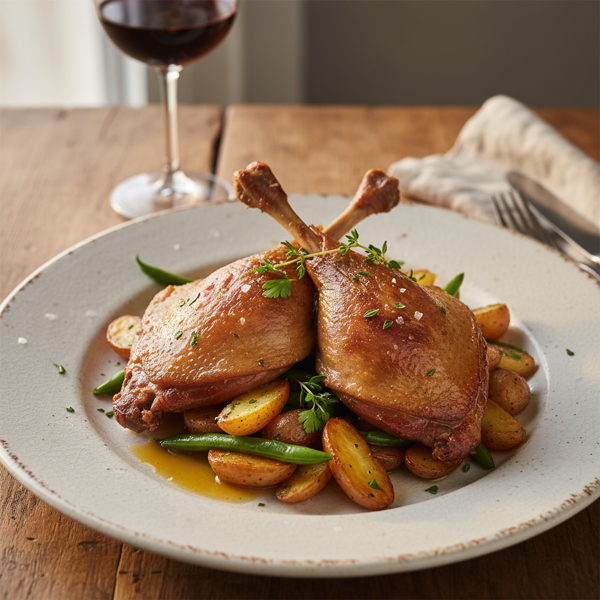
Experience the rich, savory flavors of this Classic French Duck Confit recipe. Slow-cooked to perfection, the duck becomes meltingly tender and infused with the aromatic essence of bay leaves, thyme, and garlic. This traditional dish is not only a delight for the senses but also perfect for entertaining, allowing you to serve a gourmet meal with ease. With its origins in southwestern France, duck confit represents the essence of French culinary heritage. Enjoy this luxurious dish as part of a cozy dinner, paired with crusty bread or a fresh salad to balance its richness. Whether you're a seasoned chef or a novice in the kitchen, this recipe will guide you step-by-step to create an unforgettable dining experience.
4
Servings
550
Calories
6
Ingredients
Ingredients
Duck
1 (4 1/2 lb) (quartered)
Kosher salt
4 teaspoons
Bay leaves
2 (broken into pieces)
Fresh thyme
5 sprigs
Garlic cloves
3 (crushed and peeled)
Lard or duck fat
1 1/2 cups
Instructions
1
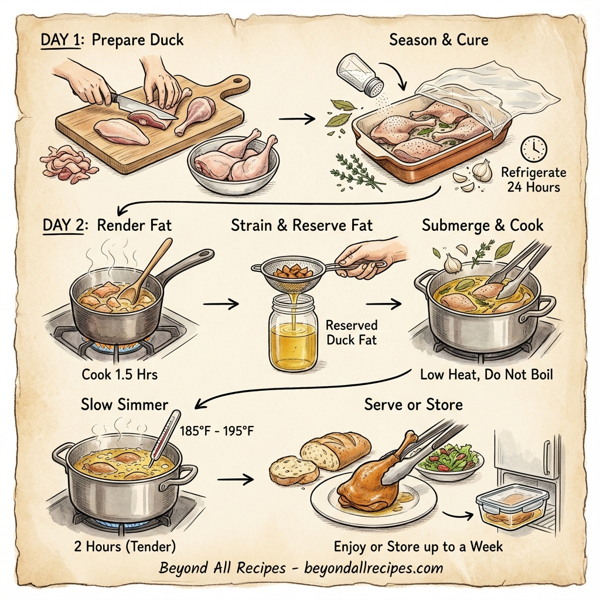
Begin by preparing the duck. Carefully cut the legs and each breast half from the duck, ensuring minimal loss of meat. Set aside the remaining carcass for later.
2
Trim off excess skin and fat from the legs, saving the trimmings for rendering fat. Then, gently separate the skin from the breast meat, keeping it intact, and arrange the duck pieces in a baking dish.
3
Generously sprinkle kosher salt over the duck pieces, ensuring even coverage. Distribute the broken bay leaves, fresh thyme sprigs, and crushed garlic cloves among the meat. Cover the dish with plastic wrap and refrigerate for 24 hours to allow the flavors to meld.
4
On the following day, it's time to render the fat. Place the duck skin and any collected fat from the carcass into a small, heavy saucepan. Cook over low heat, partially covered, allowing the fat to slowly render out. Stir occasionally to prevent sticking. This process should take about 1.5 hours, at which point the skin will be golden and crispy.
5
Once the fat is rendered, strain it through a fine-mesh sieve into a heatproof container. Allow it to cool slightly before sealing and refrigerating until ready for use. You can enjoy the crispy skin as a delicious snack or discard it if preferred.
6
In a heavy 1.5 quart saucepan, gently melt the reserved duck fat over low heat. Blot the duck pieces with paper towels to remove excess salt and moisture. Place the duck into the warm fat, adding the reserved garlic, thyme, and bay leaves to the pan. Ensure that all pieces are fully submerged; add more lard if necessary.
7
Cook the duck over very low heat, maintaining a temperature between 185°F and 195°F for 2 hours. Stay vigilant, as it should simmer gently—never boil—and refrain from stirring the duck during cooking.
8
After 2 hours, the duck should be exquisitely tender and easily pulled from the bone. To finish, use tongs to carefully lift the duck out of the fat. You can serve the duck immediately or allow it to cool before storing it in the refrigerator, where it will keep for up to a week.
Nutrition Information
45g
Fat
0g
Carbs
27.5g
Protein
0g
Fiber
Frequently Asked Questions
Frequently Asked Questions
What is Classic French Duck Confit?
Classic French Duck Confit is a traditional dish from southwestern France where duck is slow-cooked in fat until meltingly tender and infused with aromatics like garlic and thyme.
How many servings does this recipe yield?
This recipe is designed to serve 4 people.
How long should the duck be refrigerated before cooking?
The duck should be refrigerated for 24 hours with salt, bay leaves, thyme, and garlic to allow flavors to meld.
What temperature should the duck be cooked at?
The duck should be cooked at a very low heat, maintaining a temperature between 185°F and 195°F.
How long does the slow-cooking process take?
The duck needs to simmer gently in fat for approximately 2 hours.
What are the main ingredients for the seasoning rub?
The seasoning rub consists of 4 teaspoons of kosher salt, 2 broken bay leaves, 5 sprigs of fresh thyme, and 3 crushed garlic cloves.
How many calories are in a serving of Duck Confit?
Each serving contains approximately 550 calories.
What is the fat content per serving?
There are 45 grams of fat per serving.
Does this recipe contain any carbohydrates?
No, this duck confit recipe contains 0g of carbohydrates.
How much protein is provided per serving?
Each serving provides 27.5 grams of protein.
How long does it take to render the duck fat?
Rendering the fat from the skin and trimmings takes about 1.5 hours over low heat.
What type of fat can be used if I do not have enough duck fat?
You can use lard or additional duck fat to ensure the meat is fully submerged.
What size duck is required for this recipe?
The recipe calls for one duck weighing approximately 4 1/2 lbs.
Can I store duck confit after cooking?
Yes, the cooked duck can be stored in the refrigerator for up to one week.
How do I know when the duck is finished cooking?
The duck is done when it is exquisitely tender and the meat can be easily pulled from the bone.
Should the duck fat be boiling during cooking?
No, the fat should only simmer gently and never reach a boil.
Can I eat the rendered duck skin?
Yes, the skin becomes golden and crispy during rendering and can be enjoyed as a snack.
How should the rendered fat be prepared for storage?
Strain the rendered fat through a fine-mesh sieve into a heatproof container and allow it to cool before sealing.
Do I need to stir the duck while it is in the fat?
No, you should refrain from stirring the duck during the 2-hour cooking process.
What should be done with the duck carcass?
The remaining carcass should be set aside and can be used for making stock or rendering additional fat.
Is it necessary to remove the salt before cooking?
Yes, you should blot the duck pieces with paper towels to remove excess salt and moisture before placing them in the warm fat.
What size saucepan is recommended for this recipe?
A heavy 1.5 quart saucepan is recommended for the cooking process.
What are the recommended side dishes for duck confit?
It is delicious when paired with crusty bread or a fresh salad to balance the richness.
How do I prepare the duck pieces?
Carefully cut the legs and each breast half from the duck, ensuring minimal loss of meat.
What is the fiber content of this dish?
This dish contains 0g of fiber.
Can I serve the duck immediately after cooking?
Yes, you can serve the duck immediately after lifting it out of the fat.
What herbs are used in the flavoring?
The recipe uses 2 broken bay leaves and 5 sprigs of fresh thyme.
Is this recipe suitable for beginners?
Yes, the recipe provides step-by-step guidance making it accessible for both seasoned chefs and novices.
Does the recipe use peeled garlic?
Yes, the 3 garlic cloves should be crushed and peeled.
What is the primary culinary heritage of this dish?
Duck confit represents the essence of French culinary heritage, specifically from southwestern France.