Canned Lemon-Infused Grape Leaves
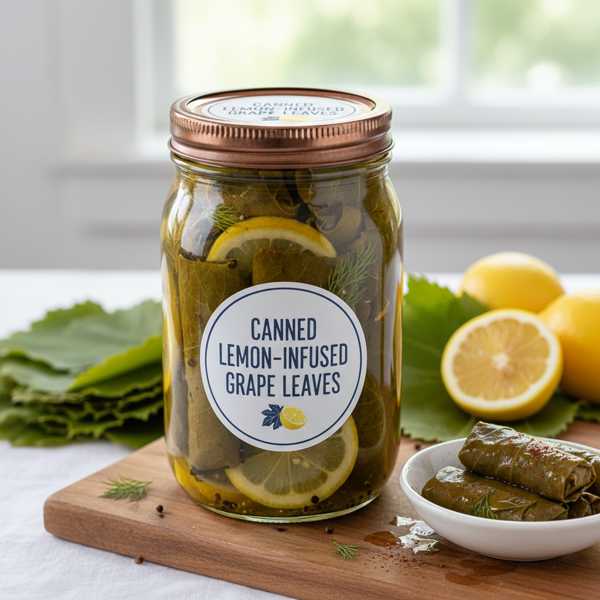
Discover the vibrant flavors of spring with this delightful recipe for preserving young grape leaves. Perfectly tender and infused with the bright acidity of lemon, these grape leaves serve as a versatile canvas for your favorite fillings. Ideal for stuffing with rice, meats, or vegetable mixtures, they can elevate any dish or serve as a unique appetizer. These preserved grape leaves can last for months, allowing you to enjoy the taste of spring long after the season has passed. Make sure to pick young, fresh leaves in the spring for the best results, and don't forget to remove the tough stems for optimal texture.
2
Servings
N/A
Calories
5
Ingredients
Ingredients
Young spring grape leaves
1 quart (Stems removed)
Kosher salt
2 teaspoons (For blanching)
Water
1 quart (For blanching)
Fresh lemon juice
1 cup (Or use 2 1/2 teaspoons citric acid)
Water
1 quart (For mixing with lemon juice)
Instructions
1
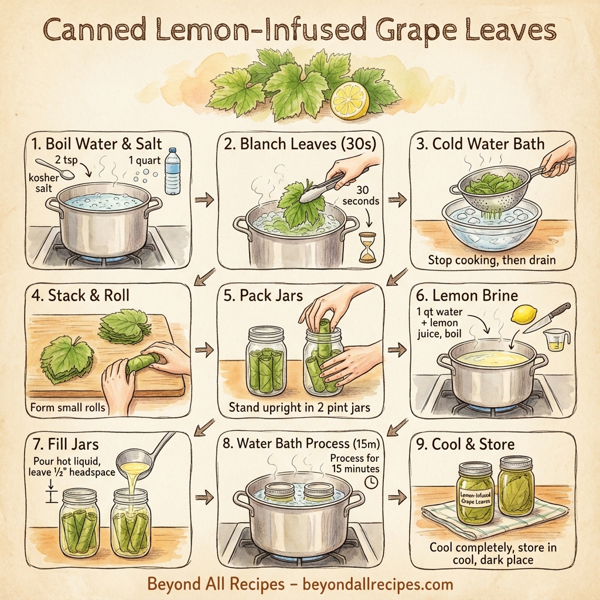
Begin by bringing 1 quart of salted water (with 2 teaspoons of kosher salt) to a rolling boil in a large pot.
2
Once boiling, carefully add the washed grape leaves to the pot and blanch them for 30 seconds to soften.
3
After blanching, swiftly drain the grape leaves and immerse them in cold water to stop the cooking process. Drain again and set aside.
4
Stack the blanched leaves into two separate piles and roll them loosely, forming small rolls.
5
Stand each roll upright in two clean pint canning jars, ensuring they are compact but not overcrowded.
6
In a separate pot, combine 1 quart of water with the fresh lemon juice (or citric acid) and bring this mixture to a boil.
7
Pour the hot lemon-infused water into the jars with the grape leaves, filling each jar up to 1/2 inch from the top.
8
Seal the jars with canning lids and process them in a boiling water bath for 15 minutes to ensure they are properly preserved.
9
Remove the jars from the water bath and allow them to cool completely before storing them in a cool, dark place.
Nutrition Information
Frequently Asked Questions
Frequently Asked Questions
What are Canned Lemon-Infused Grape Leaves?
They are young spring grape leaves preserved in a lemon-infused brine, perfect for stuffing with rice or meats.
When should I pick grape leaves for canning?
For the best results, pick young, fresh grape leaves in the spring when they are most tender.
Do I need to remove the stems from the grape leaves?
Yes, you should remove the tough stems to ensure an optimal texture when eating.
How do I prepare the grape leaves before canning?
The leaves should be washed, then blanched in boiling salted water for 30 seconds and cooled in cold water.
Why is blanching necessary for grape leaves?
Blanching softens the leaves, making them easier to roll and pack into canning jars.
How much salt is used in the blanching water?
The recipe calls for 2 teaspoons of kosher salt per 1 quart of boiling water.
How long should I blanch the grape leaves?
Blanch the grape leaves for exactly 30 seconds to soften them without overcooking.
What should I do after blanching the leaves?
Immediately immerse them in cold water to stop the cooking process, then drain them.
How should I pack the grape leaves into jars?
Stack the leaves, roll them loosely, and stand the rolls upright in clean pint jars.
Can I use citric acid instead of fresh lemon juice?
Yes, you can substitute 1 cup of fresh lemon juice with 2 1/2 teaspoons of citric acid.
What is the ratio for the canning liquid?
Combine 1 cup of lemon juice (or citric acid) with 1 quart of water and bring to a boil.
How much headspace should I leave in the canning jars?
Fill the jars with the hot lemon-infused water, leaving 1/2 inch of headspace from the top.
How long should I process the jars in a water bath?
Process the jars in a boiling water bath for 15 minutes to ensure proper preservation.
How long do these preserved grape leaves last?
When properly canned and stored, these grape leaves can last for several months.
Where is the best place to store the canned grape leaves?
Store the processed and cooled jars in a cool, dark place.
What can I fill these grape leaves with?
Common fillings include rice, ground meats, herbs, or various vegetable mixtures.
Are these grape leaves suitable for vegetarians?
Yes, the preserved leaves themselves are vegetarian and vegan-friendly.
How many servings does this recipe yield?
This specific recipe is designed to produce 2 pint-sized jars.
Can I use older grape leaves if I miss the spring harvest?
While possible, older leaves tend to be tougher and more fibrous; spring leaves are preferred for tenderness.
Do I need to use kosher salt?
Kosher salt is recommended for its purity and lack of additives which is ideal for canning.
What is the purpose of the lemon juice?
Lemon juice provides the necessary acidity for safe canning and infuses the leaves with a bright flavor.
Should the rolls be packed tightly?
They should be compact enough to stay upright but not overcrowded so the brine can circulate.
Can these be used as an appetizer?
Yes, once stuffed and cooked, they make a unique and delicious Mediterranean-style appetizer.
What size jars are recommended?
The recipe specifies using two pint-sized canning jars.
Do the leaves need to be dried before rolling?
No, they should be drained but can remain moist for the rolling process.
Is a pressure canner required?
No, a standard boiling water bath is sufficient for this recipe due to the acidity of the lemon juice.
Can I add other herbs to the jars?
While the recipe focuses on lemon, you can experiment with adding garlic or dill if desired.
Should I cool the jars quickly after processing?
No, let the jars cool naturally at room temperature before moving them to storage.
What is the texture of these grape leaves?
They are tender yet durable enough to hold fillings without tearing.
Are these grape leaves healthy?
Yes, grape leaves are low in calories and a good source of fiber and vitamins.