Zesty Lemon-Shallot Vinaigrette with Parmesan
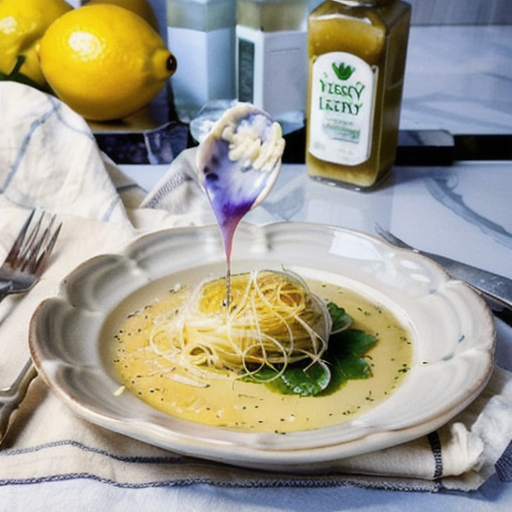
Elevate your salads and dishes with this Zesty Lemon-Shallot Vinaigrette. Bursting with fresh flavors, this dressing blends nutty Parmesan cheese with the brightness of fresh lemon juice, minced shallots, and aromatic thyme. It's perfect for drizzling over mixed greens, roasted vegetables, or even as a marinade for grilled meats. Simple to prepare and a delightful addition to any meal, this vinaigrette can be made in advance, allowing the flavors to meld beautifully. Make a batch to impress your family and guests with its vibrant taste that will transform your everyday salads into gourmet creations.
1
Servings
720
Calories
9
Ingredients
Ingredients
Extra Virgin Olive Oil
3/4 cup (none)
Grated Parmesan Cheese
1/3 cup (none)
Fresh Lemon Juice
3 tablespoons (freshly squeezed)
Shallot
1 (minced)
Dijon Mustard
2 teaspoons (none)
Fresh Thyme
1 1/2 teaspoons (minced)
Garlic Clove
1 (minced)
Salt
1/4 teaspoon (none)
Pepper
1/8 teaspoon (freshly ground)
Instructions
1
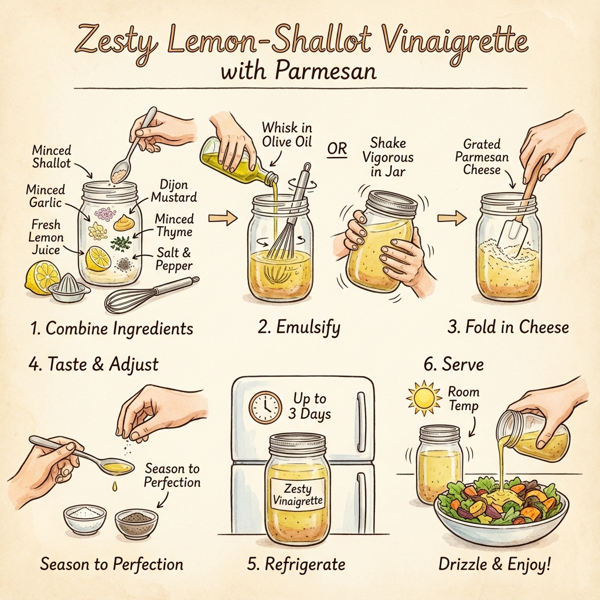
In a medium jar or a bowl, combine minced shallot, minced garlic, fresh lemon juice, Dijon mustard, minced thyme, salt, and pepper.
2
Slowly whisk in the extra virgin olive oil until well incorporated and the mixture is emulsified, or if using a jar, secure the lid tightly and shake vigorously.
3
Fold in the grated Parmesan cheese gently until mixed.
4
Taste the vinaigrette and adjust seasoning with additional salt or pepper as desired.
5
Transfer the dressing to a container with a tight-fitting lid and refrigerate it for up to 3 days.
6
Before serving, allow the vinaigrette to come to room temperature and shake well to recombine all ingredients.
Nutrition Information
79g
Fat
4g
Carbs
7g
Protein
Frequently Asked Questions
Frequently Asked Questions
What is Zesty Lemon-Shallot Vinaigrette with Parmesan?
It is a fresh, homemade salad dressing that combines the brightness of lemon juice with the savory depth of shallots, garlic, Dijon mustard, and nutty Parmesan cheese.
How long can I store this vinaigrette?
The dressing can be stored in a container with a tight-fitting lid in the refrigerator for up to 3 days.
What is the best way to serve the dressing after refrigeration?
Before serving, allow the vinaigrette to come to room temperature and shake it well to recombine all the ingredients as the oil may solidify when cold.
Can I use bottled lemon juice instead of fresh?
While fresh lemon juice is recommended for the best flavor, you can use bottled juice in a pinch, though it may lack the vibrant zing of fresh citrus.
Is this vinaigrette gluten-free?
Yes, based on the ingredients provided (olive oil, cheese, lemon, shallot, mustard, herbs), this recipe is naturally gluten-free.
What can I use this dressing for besides salads?
This vinaigrette works beautifully as a marinade for grilled meats or a flavorful drizzle over roasted vegetables.
How do I emulsify the dressing correctly?
You can either slowly whisk the olive oil into the other ingredients until well incorporated or place everything in a jar and shake it vigorously.
Can I substitute the shallot with something else?
If you do not have a shallot, you can use finely minced red onion or the white parts of a green onion for a similar flavor profile.
Is this recipe keto-friendly?
Yes, with 79g of fat and only 4g of carbohydrates per batch, this dressing fits well within a ketogenic or low-carb diet.
Can I use dried thyme instead of fresh thyme?
Yes, if using dried thyme, reduce the amount to about 1/2 teaspoon as dried herbs are more concentrated than fresh ones.
What type of olive oil is recommended?
Extra virgin olive oil is recommended for its rich flavor and health benefits, which serve as the base of the vinaigrette.
Is this dressing vegan?
No, this recipe contains Parmesan cheese. To make it vegan, you would need to omit the cheese or use a dairy-free Parmesan alternative.
How many calories are in the entire recipe?
The total recipe contains approximately 720 calories.
What type of Parmesan cheese should I use?
Grated Parmesan cheese is best as it incorporates smoothly into the vinaigrette.
Do I need a blender to make this?
No, a blender is not necessary. You can easily prepare this in a bowl with a whisk or by shaking it in a glass jar.
Can I make this vinaigrette ahead of time?
Yes, making it in advance is actually recommended to allow the flavors of the shallot, garlic, and thyme to meld together.
How much sodium is in this dressing?
While specific totals are not provided, the recipe includes 1/4 teaspoon of salt plus the natural saltiness from the Parmesan cheese.
Can I use a different type of mustard?
Dijon mustard is preferred for its sharp flavor and emulsifying properties, but you could use a spicy brown mustard as a substitute.
Is there any added sugar in this recipe?
No, this recipe does not contain any added sugars or sweeteners.
What is the serving size for this recipe?
The recipe is listed as 1 serving for the total batch, but it is typically used across several salad portions.
Can I freeze this vinaigrette?
Freezing is not recommended as the texture of the cheese and the emulsion of the oil and lemon juice may break upon thawing.
How many ingredients are in this recipe?
There are 9 ingredients: extra virgin olive oil, Parmesan, lemon juice, shallot, Dijon mustard, fresh thyme, garlic, salt, and pepper.
What is the total fat content?
The entire recipe contains 79 grams of fat, primarily from the olive oil and cheese.
Can I add more garlic?
Yes, you can adjust the seasoning and aromatics like garlic to suit your personal taste preferences.
What makes this vinaigrette 'zesty'?
The combination of 3 tablespoons of fresh lemon juice and Dijon mustard provides the characteristic 'zest' and tang.
Does the dressing contain protein?
Yes, the recipe contains 7 grams of protein, largely contributed by the Parmesan cheese.
Is it necessary to mince the shallots finely?
Yes, mincing them finely ensures they are evenly distributed throughout the dressing and provides a subtle flavor in every bite.
Can I use a different herb instead of thyme?
Yes, fresh oregano or parsley would also work well with these flavors if you do not have thyme.
Why is my dressing thick?
The addition of Parmesan cheese and Dijon mustard acts as a thickener, creating a more substantial texture than a standard oil-and-vinegar mix.
Is this dressing spicy?
It is not spicy in terms of heat, though it has a sharp, bright bite from the raw garlic, shallots, and lemon juice.