Zesty Japanese Ginger-Sesame Salad Dressing
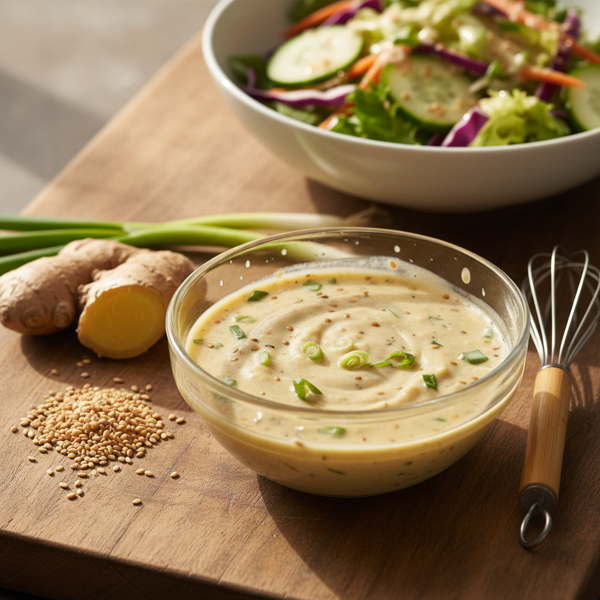
Elevate your salads with this flavorful and creamy Ginger-Sesame Dressing, inspired by the delightful dressings found in Japanese restaurants. This vibrant pink dressing is a perfect blend of tangy rice wine vinegar, rich tomato paste, and aromatic fresh ginger, rounded off with the nutty taste of toasted sesame oil. The addition of crunchy celery and sweet onion enhances the texture, while the canola oil ensures a silky finish. Perfect for drizzling over iceberg lettuce, tomatoes, cucumbers, and grated carrot, this dressing brings an irresistible zing to your salads. Discover the joy of umami and acidity on your plate, and remember: chopstick etiquette is key to enjoying your meal!
N/A
Servings
40
Calories
10
Ingredients
Ingredients
Rice wine vinegar (or white vinegar)
1/4 cup (liquid)
Tomato paste
2 tablespoons (paste)
Soy sauce
1 tablespoon (liquid)
Salt
1/2 teaspoon (granulated)
Fresh ginger
1 (1 inch) knob (grated (about 2 teaspoons))
Sugar
1 teaspoon (granulated)
Toasted sesame oil
1 teaspoon (liquid)
Chopped celery
1/3 cup (chopped)
Chopped sweet onion
1/4 cup (chopped)
Canola oil
1/2 cup (liquid)
Instructions
1
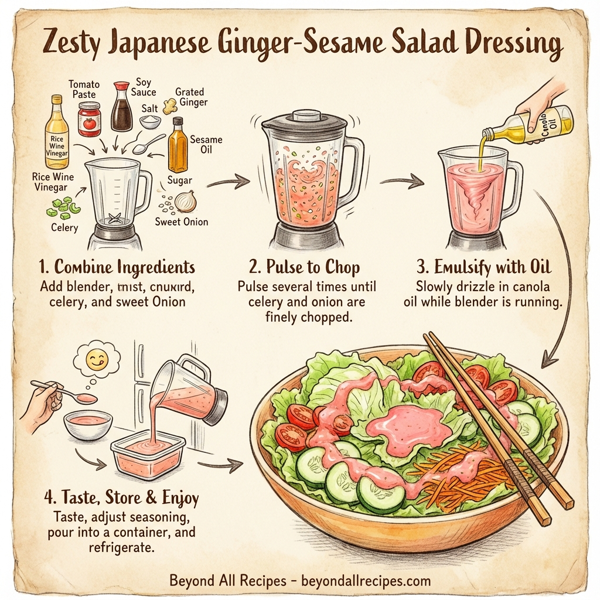
In a blender, combine the rice wine vinegar (or white vinegar), tomato paste, soy sauce, salt, grated ginger, sugar, sesame oil, chopped celery, and chopped sweet onion.
2
Pulse the blender several times, ensuring that the celery and onion are finely chopped and well mixed.
3
While the blender is running, slowly drizzle in the canola oil to emulsify the dressing into a smooth consistency.
4
Taste and adjust the seasoning if necessary, then pour the dressing into a serving container and refrigerate until ready to use.
Nutrition Information
4.5g
Fat
1g
Carbs
0.1g
Protein
Frequently Asked Questions
Frequently Asked Questions
What is the inspiration for this Ginger-Sesame dressing?
It is inspired by the delightful dressings found in Japanese restaurants.
What characterizes the color of this dressing?
The dressing has a vibrant pink color.
What are the key flavor profiles of this recipe?
It is a blend of tangy, nutty, and aromatic flavors with a hint of umami.
Can I use white vinegar if I do not have rice wine vinegar?
Yes, white vinegar is a suitable substitute for rice wine vinegar in this recipe.
What role does tomato paste play in this dressing?
Tomato paste provides a rich flavor and contributes to the characteristic pink color.
How much fresh ginger should I use?
You should use a 1-inch knob of fresh ginger, which is approximately 2 teaspoons when grated.
Which oil is used as the base for this dressing?
Canola oil is used to ensure a silky finish and smooth consistency.
Is toasted sesame oil necessary?
Yes, toasted sesame oil provides the essential nutty taste that defines the dressing.
Why is celery included in the ingredients?
Chopped celery is added to enhance the texture and volume of the dressing.
What type of onion is recommended?
A sweet onion is recommended for its mild and slightly sweet flavor.
What is the correct way to blend the ingredients?
Combine everything except the canola oil first, pulse until finely chopped, then slowly drizzle in the oil.
How do I achieve the best consistency?
Slow drizzling of the canola oil while the blender is running helps emulsify the dressing.
What kitchen equipment do I need?
A blender is required to properly chop the vegetables and emulsify the oil.
Is this dressing suitable for vegans?
Yes, this recipe contains no animal products.
Does this dressing contain gluten?
It contains soy sauce, which typically contains wheat; use tamari for a gluten-free version.
How should I store the finished dressing?
Pour the dressing into a serving container and keep it refrigerated.
What is the calorie count for a serving?
There are 40 calories per serving.
How much fat is in one serving?
Each serving contains 4.5g of fat.
What are the carbohydrate and protein values?
There is 1g of carbohydrates and 0.1g of protein per serving.
Which vegetables pair best with this dressing?
It is perfect for iceberg lettuce, tomatoes, cucumbers, and grated carrots.
How much salt is in the recipe?
The recipe calls for 1/2 teaspoon of salt.
Is sugar used in this dressing?
Yes, 1 teaspoon of sugar is added to balance the acidity.
How many total ingredients are in this recipe?
There are 10 main ingredients including seasonings and oils.
Can I use dried ginger instead of fresh?
Fresh ginger is preferred for its aromatic quality, but dried could be used in a pinch.
Does the dressing contain cholesterol?
No, this recipe contains 0mg of cholesterol.
What provides the umami in this dressing?
The combination of soy sauce and tomato paste provides the umami flavor.
Should I serve the dressing immediately?
It is recommended to refrigerate the dressing until you are ready to use it for the best taste.
What is the preparation method for the ginger?
The ginger should be grated, resulting in about 2 teaspoons of paste.
What is the amount of soy sauce required?
The recipe calls for 1 tablespoon of soy sauce.
What is the main tip for enjoying the meal?
Chopstick etiquette is mentioned as key to enjoying your meal with this dressing.