Yeast-Fermented Appams without Coconut
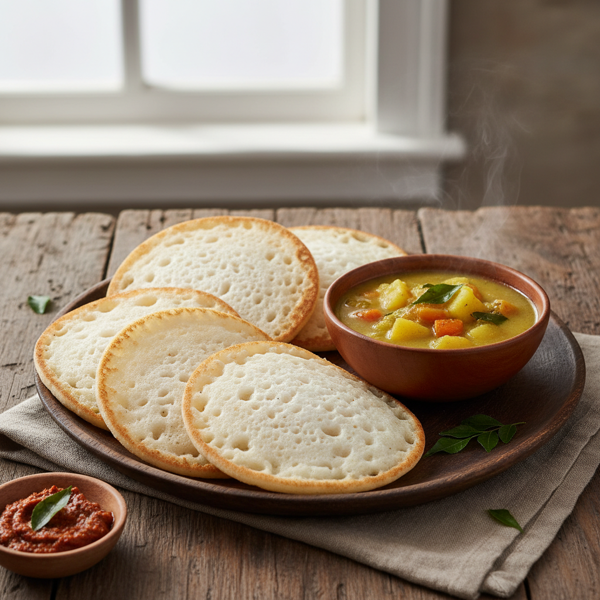
Experience a delightful twist on traditional South Indian appams with this coconut-less version that stays true to the authentic flavors. Appams, known for their unique lacy edges and soft, fluffy center, are a beloved breakfast favorite. This innovative recipe by Mercy Zachariah allows you to enjoy this dish without coconut, making it accessible for those avoiding it while still retaining the rich textures and tastes. Perfectly paired with sambar or chutney, these appams are guaranteed to brighten your mornings and bring a taste of South India to your plate!
N/A
Servings
N/A
Calories
5
Ingredients
Ingredients
Raw rice
1 cup (Clean and wash thoroughly; soak in water for 4 hours.)
Semolina
1/4 cup (Measure and prepare to mix with water.)
Dry yeast
1/2 teaspoon (To be mixed into the batter.)
Sugar
1 teaspoon (To be mixed into the batter the next day.)
Salt
To taste (To be mixed into the batter the next day.)
Instructions
1
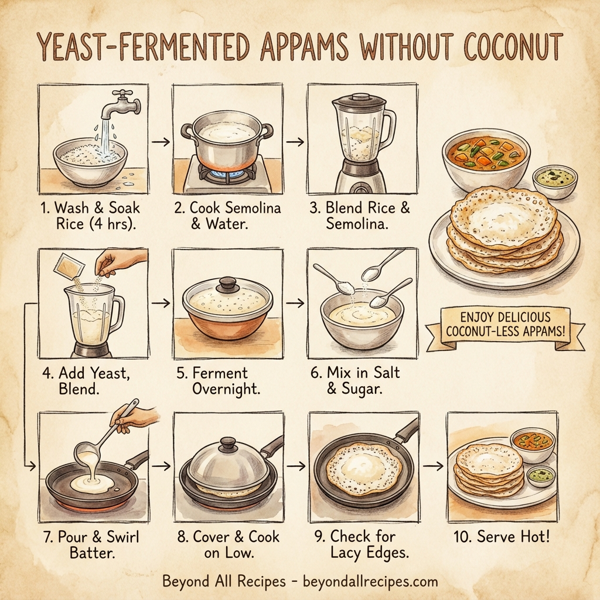
Begin by cleaning and thoroughly washing the raw rice to remove impurities.
2
Soak the cleaned rice in fresh water for 4 hours.
3
In a thick-bottomed pan, combine 1 1/2 cups of water with semolina and stir well. To ensure there are no lumps, consider blending this mixture in an electric blender for a smoother consistency.
4
Heat the semolina-water mixture over medium heat, cooking for about 5 minutes or until the semolina is soft and fully cooked. Remove from heat and let it cool.
5
In a mixer, combine the soaked rice with the cooled semolina mixture. If needed, add a little water to achieve a smooth consistency resembling dosa batter.
6
Add dry yeast to the rice and semolina mixture and blend again until well incorporated.
7
Cover the batter and allow it to ferment overnight at room temperature, which will enhance the flavor and texture.
8
The following morning, stir in salt and sugar to the fermented batter, ensuring everything is well-mixed.
9
Prepare to cook your appams! Heat a non-stick griddle (tava) over medium-high flame.
10
Pour a large spoonful of the batter onto the center of the heated tava, then gently swirl the pan to spread the batter into a thin layer, thicker in the center and thin on the edges.
11
Cover with a tight-fitting lid and let the appam cook on low flame for a few minutes. You’ll know it’s done when the appam has a soft, raised center with beautiful lacy edges.
12
Continue with the remaining batter, and serve hot with your choice of vegetable stew, chicken stew, sambar, or chutney for a delightful meal.
13
Enjoy your delicious Coconut-less Appams!
Nutrition Information
Frequently Asked Questions
Frequently Asked Questions
What are Yeast-Fermented Appams without Coconut?
They are a coconut-less variation of traditional South Indian appams, featuring classic lacy edges and a soft, fluffy center.
Who developed this specific appam recipe?
This innovative coconut-less recipe was created by Mercy Zachariah.
How long should I soak the raw rice?
The raw rice should be cleaned, washed, and then soaked in fresh water for 4 hours.
What is the substitute for coconut in this recipe?
This recipe uses a mixture of cooked semolina and water to achieve the desired texture without using coconut.
How much semolina is required?
The recipe calls for 1/4 cup of semolina.
How do I prepare the semolina for the batter?
Combine 1/4 cup of semolina with 1 1/2 cups of water and cook over medium heat for about 5 minutes until soft.
How can I prevent lumps in the semolina mixture?
To ensure a smooth consistency, you can blend the water and semolina mixture in an electric blender before cooking.
When should I blend the rice and semolina?
Blend the soaked rice with the semolina mixture once the cooked semolina has completely cooled.
What kind of consistency should the batter have?
The batter should have a smooth consistency resembling that of dosa batter.
How much yeast is used in this recipe?
Use 1/2 teaspoon of dry yeast to help the batter ferment.
When is the dry yeast added?
Add the dry yeast to the rice and semolina mixture during the blending process so it is well incorporated.
How long does the appam batter need to ferment?
The batter should be covered and allowed to ferment overnight at room temperature.
When do I add salt and sugar to the recipe?
Salt and sugar should be stirred into the batter the following morning after the fermentation process is complete.
What type of pan is best for cooking appams?
A non-stick griddle or tava is recommended for cooking the appams.
How do I create the signature appam shape?
Pour a spoonful of batter in the center of the heated pan, then gently swirl the pan to spread the batter into a thin layer with a thicker center.
Do I need to cover the pan while cooking?
Yes, cover the pan with a tight-fitting lid and cook on a low flame for a few minutes.
How do I know the appam is ready?
The appam is done when it has a soft, raised center and beautiful, lacy edges.
What are the recommended side dishes for these appams?
They are best served hot with vegetable stew, chicken stew, sambar, or chutney.
How many ingredients are in this recipe?
There are 5 main ingredients: raw rice, semolina, dry yeast, sugar, and salt.
Is this recipe considered a healthy breakfast option?
Yes, it is tagged as a healthy recipe and comfort food, suitable for those avoiding coconut.
Can I use any rice for this recipe?
The recipe specifically calls for raw rice.
What heat setting should be used for the tava?
Initially heat the tava on a medium-high flame, then reduce to a low flame once the appam is covered.
Does the recipe require coconut milk?
No, this is a coconut-less recipe that uses semolina and yeast for texture and fermentation.
Is the semolina cooked before being added to the rice?
Yes, the semolina must be cooked with water and cooled before blending it with the soaked rice.
How much sugar is added to the batter?
The recipe uses 1 teaspoon of sugar.
What are the primary flavor characteristics of these appams?
They retain authentic South Indian flavors with a soft texture despite the absence of coconut.
How do you achieve the lacy edges?
Swirling the pan after pouring the batter ensures the edges are thin, which creates the lacy texture during cooking.
Is this dish suitable for those with coconut allergies?
Yes, this recipe is designed specifically to be coconut-free.
Should I wash the rice before soaking?
Yes, you should clean and thoroughly wash the raw rice to remove impurities before the 4-hour soak.
Can I skip the fermentation step?
No, overnight fermentation is necessary to enhance the flavor and create the proper airy texture for the appams.