Wisconsin Sweet Corn & Bacon Chili
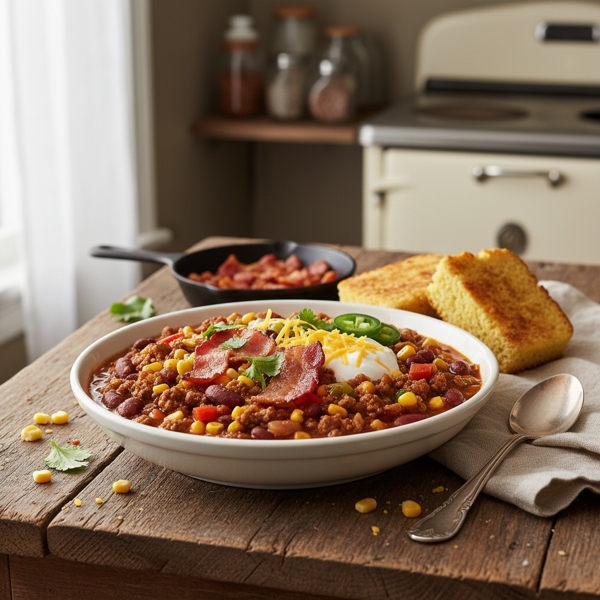
Experience the robust flavors of Wisconsin with this award-winning chili that's sure to be a crowd-pleaser! Crafted for competitive cook-offs and featuring a mouthwatering blend of local ingredients, this chili boasts 13 ears of sweet corn, smoky bacon, hearty ground pork, and an array of vibrant vegetables. The addition of brandy and dark beer brings depth to the flavor profile, while the sweet touch of maple syrup balances the heat from the hot sauce. Whether you're serving it at a community event or on a chilly night at home, this chili is designed to warm the soul and satisfy the appetite. Perfect for gatherings, fundraisers, or just because, it's a dish that celebrates Midwestern comfort food.
N/A
Servings
N/A
Calories
11
Ingredients
Ingredients
Ground ham or bacon
1 gallon (Ground)
Ground pork
3 lbs (Ground)
Bell peppers
1.5 gallons (Diced)
Tomatoes
2 gallons (Diced)
Tomato sauce
2 gallons (None)
Bloody Mary mix
1 quart (None)
Dark beer
12 ounces (None)
Brandy
1 cup (None)
Sweet corn
1 gallon (13 ears, husked and kernels removed)
Hot sauce
1 cup (None)
Maple syrup
2 cups (None)
Instructions
1
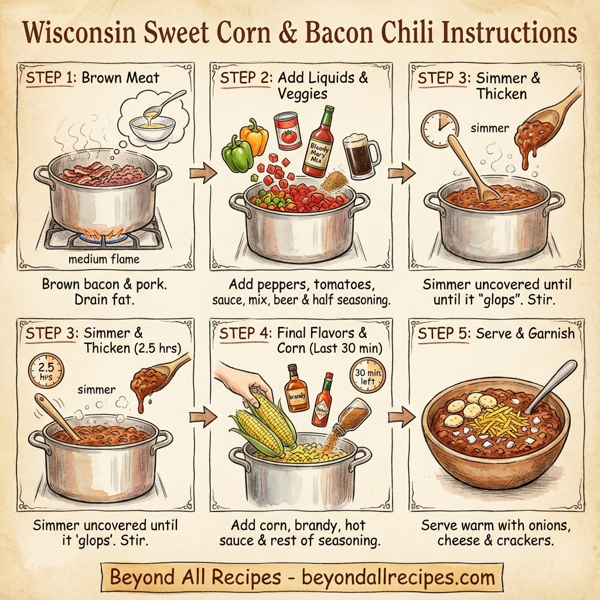
In a large stock pot, brown the ground ham or bacon and ground pork over medium heat until fully cooked. Drain any excess fat.
2
Add in the diced bell peppers, diced tomatoes, tomato sauce, bloody Mary mix, dark beer, and half of the seasoning blend to the pot. Stir well to combine.
3
Bring the mixture to a gentle simmer (about 9 bubbles on a simmer scale) and let cook uncovered for approximately 2.5 hours. Stir occasionally to prevent sticking, allowing the flavors to meld and the sauce to thicken until it 'glops' off the bottom of the pot.
4
During the last 30 minutes of cooking, incorporate the sweet corn, brandy, hot sauce, and remaining seasoning. Adjust the spice level to taste.
5
Once done, serve the chili warm, garnished with chopped white onions, a sprinkle of mild cheddar cheese, and a handful of oyster crackers for added texture.
Nutrition Information
Frequently Asked Questions
Frequently Asked Questions
What is Wisconsin Sweet Corn & Bacon Chili?
It is an award-winning, robust chili featuring Midwestern flavors like sweet corn, smoky bacon, ground pork, brandy, and dark beer.
What makes this chili recipe unique?
This recipe is unique for its use of 13 ears of sweet corn, Bloody Mary mix, brandy, and maple syrup to balance heat and depth.
What meats are used in this recipe?
The recipe calls for one gallon of ground ham or bacon and three pounds of ground pork.
How much sweet corn is required?
You will need one gallon of sweet corn, which is approximately 13 ears with the kernels removed.
Is there alcohol in the Wisconsin Sweet Corn & Bacon Chili?
Yes, the recipe includes 12 ounces of dark beer and one cup of brandy to add depth to the flavor profile.
How long does it take to cook this chili?
The chili requires a long simmer of approximately 2.5 hours, plus an additional 30 minutes after adding the final ingredients.
What type of beer is best for this recipe?
A dark beer is recommended to provide a rich, hearty flavor that complements the smoky bacon and pork.
When should I add the sweet corn?
The sweet corn should be incorporated during the last 30 minutes of cooking to maintain its texture.
Why is maple syrup used in the chili?
Two cups of maple syrup are added to provide a sweet touch that balances the heat from the hot sauce.
What is the first step in preparing this chili?
The first step is to brown the ground ham or bacon and ground pork in a large stock pot over medium heat and drain the fat.
What vegetables are included in the base?
The base includes 1.5 gallons of diced bell peppers and 2 gallons of diced tomatoes.
How much tomato sauce is needed?
The recipe requires 2 gallons of tomato sauce.
What is the purpose of the Bloody Mary mix?
One quart of Bloody Mary mix is added to provide a pre-seasoned, savory, and tangy liquid base.
Should the chili be covered while simmering?
No, the instructions specify to cook the mixture uncovered for 2.5 hours to allow the sauce to thicken.
How do I know when the chili has thickened enough?
The sauce is ready when it 'glops' off the bottom of the pot after the initial 2.5-hour simmer.
When should I add the brandy?
Add the brandy during the last 30 minutes of cooking along with the corn and hot sauce.
How much hot sauce does this recipe call for?
The recipe uses one cup of hot sauce, which can be adjusted to taste.
What are the recommended garnishes for this chili?
Serve the chili garnished with chopped white onions, mild cheddar cheese, and oyster crackers.
Can I substitute ground ham for bacon?
Yes, the recipe allows for either one gallon of ground ham or ground bacon depending on your preference.
How many gallons of tomatoes are used?
This large-batch recipe uses 2 gallons of diced tomatoes.
Is this recipe suitable for a crowd?
Yes, given the large quantities like gallons of ingredients, it is perfect for fundraisers, community events, or large gatherings.
What kind of cheese should I use for topping?
A sprinkle of mild cheddar cheese is recommended for the best flavor pairing.
What is the heat level of this chili?
The chili is described as spicy but balanced; the heat level can be adjusted by the amount of hot sauce used.
What texture should the bell peppers have?
The bell peppers should be diced before being added to the pot.
What is a 'simmer scale'?
The recipe suggests a simmer level of 'about 9 bubbles' to maintain a gentle, consistent heat.
How much ground pork is needed?
The recipe calls for 3 pounds of ground pork.
Are there any specific crackers suggested for serving?
Oyster crackers are recommended for adding extra texture to the dish.
What type of onions are used for garnish?
Chopped white onions are the preferred garnish for this specific chili.
When do I add the seasoning blend?
Half of the seasoning blend is added at the start of the simmer, and the remaining half is added during the final 30 minutes.
What is the primary flavor profile of this dish?
The flavor profile is smoky, sweet, and hearty, celebrating Midwestern comfort food traditions.