Wasabi-Infused Japanese Crab Balls
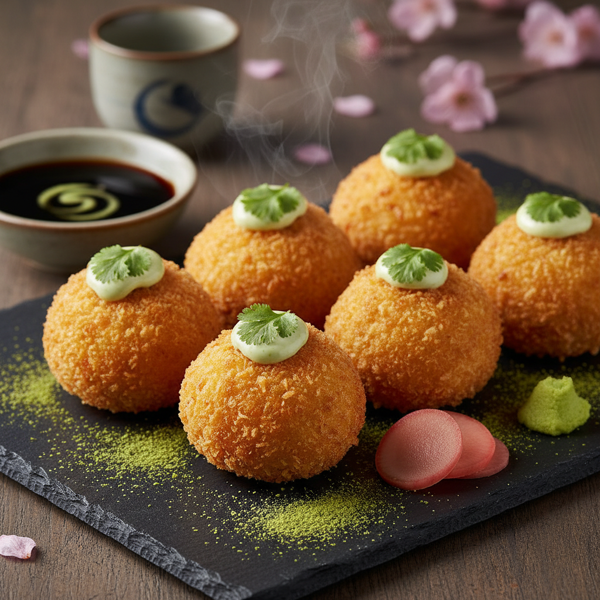
Experience a fusion of flavors with these Wasabi-Infused Japanese Crab Balls. Perfect as a tantalizing appetizer or a light main course, this recipe combines the delicate sweetness of crab with the kick of wasabi in a crispy, golden-brown ball. Complemented by the subtle tang of rice vinegar and the umami depth of soy sauce, these crab balls are a unique twist on traditional crab cakes. Served with fresh lime wedges, they bring together Asian-inspired ingredients with a modern flair. Ideal for seafood lovers looking to spice up their culinary repertoire.
2
Servings
360
Calories
9
Ingredients
Ingredients
spring onions
4 (chopped)
garlic clove
1 (quartered)
white crabmeat
500 g (1 lb. 2 oz.) (picked through)
japanese wasabi
3 teaspoons
rice vinegar
2 teaspoons
tamari soy sauce or Japanese soy sauce
2 teaspoons
brown rice flour
100 g (4 oz.)
peanut oil or vegetable oil
as needed (for frying)
lime
1 (sliced into wedges)
Instructions
1
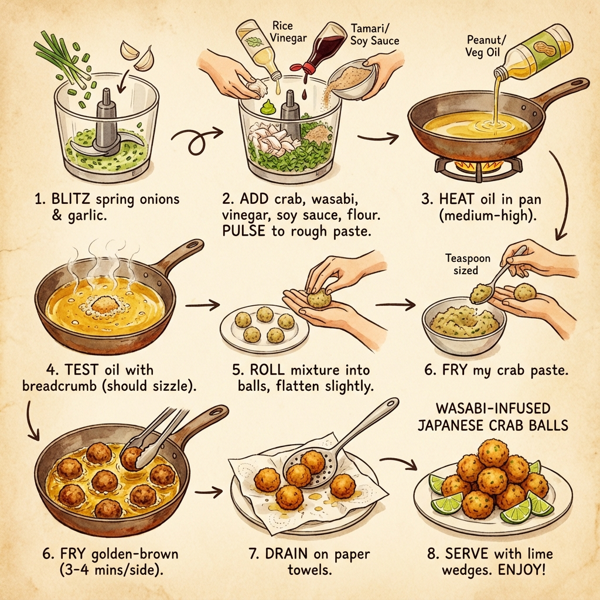
Begin by placing the chopped spring onions and quartered garlic clove into the bowl of a food processor. Blitz until finely chopped.
2
Add the white crabmeat, wasabi, rice vinegar, tamari or Japanese soy sauce, and brown rice flour into the processor. Pulse to create a well-integrated, yet rough paste.
3
In a large frying pan, pour enough peanut or vegetable oil to cover the bottom to a depth of 0.5 cm (1/4 inch). Heat the oil over medium-high heat.
4
Test the temperature by adding a small breadcrumb; it should sizzle and turn golden-brown. Exercise caution with hot oil and never leave it unattended.
5
Scoop teaspoon-sized portions of the crab mixture and roll them into balls using your hands. Lightly flatten each ball.
6
Carefully place 8-10 crab balls into the hot oil, avoiding overcrowding. Fry until they are a rich golden-brown on both sides and cooked through, approximately 3-4 minutes per side. Adjust the oil temperature as needed to maintain a steady sizzle.
7
Remove the crab balls and drain excess oil by placing them on paper towels.
8
Arrange the crab balls on a serving plate and garnish with lime wedges on the side for a refreshing citrus touch.
Nutrition Information
27g
Carbs
1.5g
Fiber
1.5g
Sugar
Frequently Asked Questions
Frequently Asked Questions
What are Wasabi-Infused Japanese Crab Balls?
They are a fusion appetizer combining the sweetness of crab with the spicy kick of wasabi, fried into crispy golden-brown balls.
How many servings does this recipe yield?
This recipe is designed to provide 2 servings.
What is the calorie count per serving?
Each serving contains approximately 360 calories.
How much crabmeat is required for this dish?
You will need 500 grams (1 lb. 2 oz.) of white crabmeat, picked through for shells.
What gives these crab balls their spicy flavor?
The spicy element comes from 3 teaspoons of Japanese wasabi included in the mixture.
What type of flour is used as a binder?
The recipe uses 100 grams (4 oz.) of brown rice flour to help form the paste.
Is this recipe gluten-free?
Since it uses brown rice flour and tamari, it can be gluten-free if you ensure the specific brands used are certified gluten-free.
What kind of oil should I use for frying?
Peanut oil or vegetable oil is recommended for frying these crab balls.
How do I prepare the spring onions and garlic?
The spring onions should be chopped and the garlic quartered before being finely chopped in a food processor.
How long do the crab balls need to fry?
They should be fried for approximately 3-4 minutes per side until they are rich golden-brown.
How do I know if the oil is at the right temperature?
Test the oil by adding a small breadcrumb; it should sizzle and turn golden-brown immediately.
What is the suggested garnish for this dish?
The crab balls should be served with fresh lime wedges for a refreshing citrus touch.
How do I form the crab balls?
Scoop teaspoon-sized portions of the mixture, roll them into balls by hand, and then lightly flatten them.
What is the carbohydrate content per serving?
There are 27 grams of carbohydrates in each serving.
Can I use regular soy sauce instead of tamari?
Yes, you can use either tamari or Japanese soy sauce as they both provide the necessary umami depth.
How much fiber is in the recipe?
Each serving provides 1.5 grams of fiber.
What is the sugar content of this dish?
The recipe contains 1.5 grams of sugar per serving.
What should the consistency of the mixture be before frying?
The mixture should be pulsed in a food processor to create a well-integrated, yet rough paste.
How much oil is needed for frying?
You should pour enough oil to cover the bottom of the pan to a depth of 0.5 cm (1/4 inch).
How many crab balls should be fried at a time?
It is recommended to fry 8-10 balls at a time to avoid overcrowding the pan.
What is the primary flavor profile of this recipe?
The flavor profile is a mix of delicate sweet crab, pungent wasabi, tangy rice vinegar, and savory soy sauce.
How do I remove excess oil from the crab balls?
After frying, place the crab balls on paper towels to drain any excess oil.
Is rice vinegar essential for this recipe?
Yes, 2 teaspoons of rice vinegar are used to add a subtle tang that complements the seafood.
Can I use a food processor for this recipe?
Yes, a food processor is used to chop the aromatics and integrate the ingredients into a paste.
What category of food does this recipe fall under?
This dish is primarily categorized as an appetizer or a light main course.
What type of crabmeat is best for this recipe?
White crabmeat is specified for its delicate sweetness and texture.
How many spring onions are used?
The recipe calls for 4 chopped spring onions.
Can I adjust the frying temperature?
Yes, you should adjust the heat as needed during the process to maintain a steady sizzle.
What are the key tags for this recipe?
Key tags include Japanese, crab balls, wasabi, appetizer, seafood, fusion, and crispy.
Is this a modern or traditional recipe?
It is a modern fusion twist on traditional crab cakes using Asian-inspired ingredients.