Vietnamese Sweet and Tangy Pickled Carrots and Radishes

This classic Vietnamese pickled carrot and radish dish, known as Đồ Chua, is a vibrant and flavorful condiment that adds a delightful crunch and tangy flavor to a variety of dishes. Perfect as a topping for banh mi sandwiches, a zesty accompaniment to rice dishes, or simply served as a refreshing side, this pickled medley brightens up any meal. The balance of sugar and vinegar creates a sweet-and-sour profile that is both nostalgic and invigorating. Preparing this staple condiment is easy and quick, making it a wonderful way to elevate your culinary creations.
N/A
Servings
N/A
Calories
5
Ingredients
Ingredients
Carrot
1 cup (grated)
Daikon Radish
1 cup (grated)
Salt
1 tablespoon (for brining)
Sugar
2 tablespoons (to sweeten)
White Wine Vinegar
1/4 cup (or rice vinegar)
Instructions
1
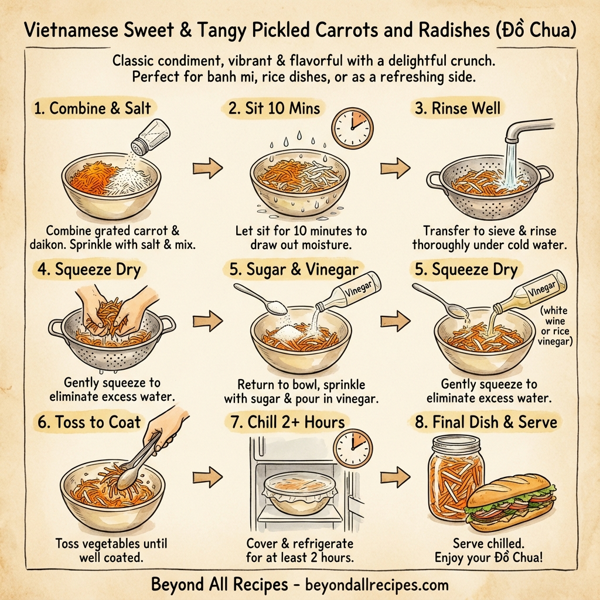
In a medium bowl, combine the grated carrot and daikon radish. Sprinkle with salt, and mix gently to combine.
2
Allow the mixture to sit for 10 minutes to draw out excess moisture.
3
After 10 minutes, transfer the mixture to a sieve or colander and rinse thoroughly under cold water to remove excess salt.
4
Gently squeeze the mixture to eliminate excess water, ensuring the vegetables remain crisp.
5
Return the drained carrots and radish to a clean medium bowl, and sprinkle with sugar and pour in the white wine vinegar (or rice vinegar).
6
Toss the vegetables until well coated with the sugar and vinegar.
7
Cover the bowl and refrigerate for at least 2 hours to allow the flavors to develop; the pickled vegetables are best served chilled.
Nutrition Information
Frequently Asked Questions
Frequently Asked Questions
What is Đồ Chua?
Đồ Chua is a classic Vietnamese condiment made of sweet and tangy pickled carrots and daikon radishes.
What are the primary ingredients in this recipe?
The main ingredients are grated carrot, grated daikon radish, salt, sugar, and white wine vinegar or rice vinegar.
How should the vegetables be prepared?
Both the carrots and the daikon radish should be grated before starting the pickling process.
Why is salt used in the preparation?
Salt is used to draw out excess moisture from the vegetables, which helps them stay crisp.
How long should the vegetables sit with salt?
The vegetable mixture should sit for 10 minutes to allow the moisture to be drawn out.
Do I need to rinse the vegetables?
Yes, after 10 minutes of salting, you must rinse the vegetables thoroughly under cold water to remove the excess salt.
Why is it important to squeeze the vegetables?
Squeezing the vegetables helps eliminate excess water so they remain crisp and don't dilute the pickling liquid.
What type of vinegar can I use?
You can use either white wine vinegar or rice vinegar for this recipe.
How much sugar is required?
The recipe calls for 2 tablespoons of sugar to sweeten the pickles.
How long does the pickling process take?
After mixing with sugar and vinegar, the vegetables should refrigerate for at least 2 hours.
What is the best way to serve these pickles?
They are best served chilled as a condiment, side dish, or topping.
Can I use these pickles on Banh Mi?
Yes, these pickled carrots and radishes are a perfect and traditional topping for Banh Mi sandwiches.
Is this recipe vegetarian?
Yes, this recipe is entirely vegetarian.
Is this recipe vegan?
Yes, this recipe is vegan-friendly as it contains no animal products.
Is this recipe gluten-free?
Yes, the ingredients listed are naturally gluten-free.
How much carrot do I need?
You will need 1 cup of grated carrot.
How much daikon radish is used?
The recipe requires 1 cup of grated daikon radish.
What is the flavor profile of Đồ Chua?
It has a sweet-and-sour profile that is both vibrant and invigorating.
Is this a quick pickle recipe?
Yes, it is considered a quick pickle because it does not require long-term fermentation.
Can I serve this with rice dishes?
Yes, it makes a zesty and refreshing accompaniment to various rice dishes.
What category does this dish fall under?
It is categorized as a condiment, salad, or pickled vegetable side dish.
How much vinegar is used?
The recipe uses 1/4 cup of white wine vinegar or rice vinegar.
Is there any fat in this recipe?
No, this recipe does not contain any added fats or oils.
Is this dish healthy?
Yes, it is a healthy, low-calorie side dish made from fresh vegetables.
Can I use regular radishes instead of daikon?
While daikon is traditional, you can substitute other radishes, though the flavor and texture may vary slightly.
Does this recipe contain cholesterol?
No, these pickled vegetables are cholesterol-free.
Is this recipe easy to make?
Yes, it is described as an easy and quick way to elevate your culinary creations.
What does the salt do to the texture?
The salting and rinsing process ensures the vegetables remain crunchy rather than soggy.
How many ingredients are in this recipe?
There are 5 simple ingredients: carrot, daikon, salt, sugar, and vinegar.
Can I store leftovers in the fridge?
Yes, you should keep the pickled vegetables covered and refrigerated.