Victorian Spiced Silverside
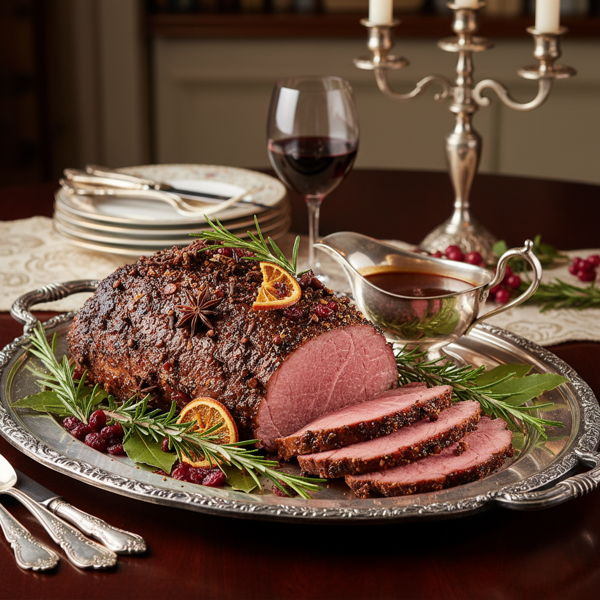
Transport your taste buds to the Victorian era with this exquisite Spiced Silverside. This captivating dish is a true centerpiece for any festive table, especially during the holiday season. Slow-cured with a robust mix of spices, this beef joint delivers a delightful blend of sweetness and aromatic flavors that enhances the rich, savory notes of the meat. Served cold, it pairs beautifully with tangy mustard or pickled vegetables. Perfect for a cold supper buffet or as an elegant addition to your charcuterie spread, this recipe embraces tradition while offering a delectable eating experience.
12
Servings
N/A
Calories
7
Ingredients
Ingredients
Joint of beef (silverside or topside)
6 lbs (None)
Light brown sugar
3 ounces (None)
Black peppercorns
1 ounce (Crushed)
Juniper berries
1 ounce (Crushed)
Allspice berry
1 ounce (Crushed)
Sea salt
4 ounces (None)
Saltpeter
1/4 ounce (None)
Instructions
1
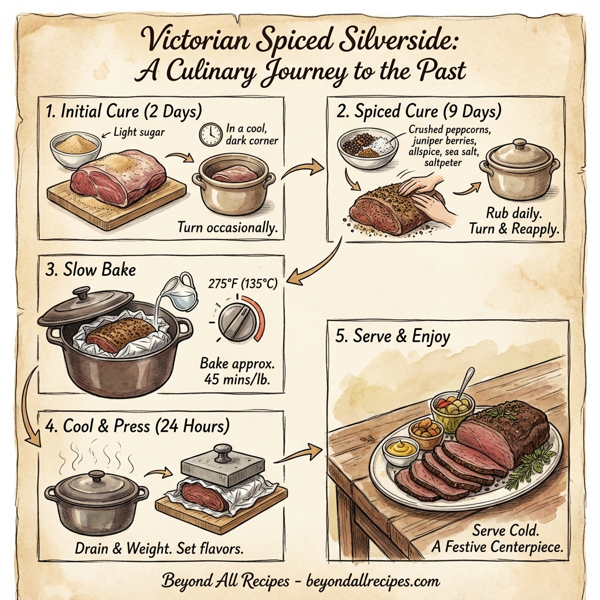
To start the curing process, rub the joint of beef all over with the light brown sugar. Place the beef in a pot with a lid and leave it in a cool place for 2 days, turning it occasionally to ensure even curing with the sticky liquor that develops.
2
After the initial 2 days, combine the crushed black peppercorns, juniper berries, and allspice with the sea salt and saltpeter in a mixing bowl.
3
Generously rub this spice mixture into the meat, ensuring all surfaces are covered. Return the meat to the pot and allow it to cure for 9 additional days. Make sure to turn the beef and reapply the spice mixture daily.
4
Once the curing period is complete, carefully remove the beef from the pot and rub off any excess spices without rinsing it.
5
Wrap the meat tightly in cooking foil (or alternatively, suet as used traditionally) and place it in a large ovenproof pot. Add about 10 fl oz of water to the pot, cover it with a double layer of foil, and secure the lid tightly.
6
Preheat your oven to 275°F (135°C). Bake the wrapped meat slowly in the oven for approximately 45 minutes per pound, ensuring it remains moist and flavorful.
7
After the baking time, remove the pot from the oven and allow it to cool completely before unwrapping the meat. Drain off any excess liquid.
8
Place the beef on a cutting board, cover it with foil, and set a weight on top. Leave it for at least 24 hours to set the flavors.
9
When ready to serve, carve the spiced beef into thin slices and present it adorned with your choice of accompaniments, such as sharp mustard or pickled kumquats.
Nutrition Information
Frequently Asked Questions
Frequently Asked Questions
What is Victorian Spiced Silverside?
It is a traditional Victorian-era dish featuring beef slow-cured with a robust mix of sugar and spices, typically served cold.
What cut of beef should I use?
Silverside or topside cuts are ideal for this preparation.
How long does the total curing process take?
The total curing process takes 11 days: 2 days in sugar and 9 days in the spice mixture.
Why rub the beef with sugar first?
Light brown sugar helps start the curing process and develops a sticky liquor that flavors the meat.
What spices are in the spice mixture?
The mixture contains crushed black peppercorns, juniper berries, and allspice.
Is saltpeter necessary for this recipe?
Saltpeter is a traditional curing agent used for preservation and maintaining the meat's red color, common in historical recipes.
What is the baking temperature?
The oven should be preheated to 275 degrees Fahrenheit (135 degrees Celsius).
How long should I bake the beef?
Bake the wrapped meat slowly for approximately 45 minutes per pound.
Should I rinse the beef after curing?
No, you should rub off any excess spices but do not rinse the meat before cooking.
Why must the beef be pressed after cooking?
Pressing the beef with a weight helps set the flavors and creates a better texture for thin slicing.
How should this dish be served?
It is traditionally served cold, carved into thin slices.
Can I use suet instead of foil?
Yes, wrapping the beef in suet is the traditional Victorian method, though foil is a modern alternative.
How many people does this recipe serve?
A 6 pound joint prepared this way yields approximately 12 servings.
What are some traditional accompaniments?
Sharp mustard, pickled vegetables, or pickled kumquats are excellent choices.
How often should the beef be turned while curing?
The beef should be turned occasionally during the first 2 days and daily during the remaining 9 days.
Where should the beef be stored while curing?
It should be kept in a cool place in a pot with a lid.
Can I use topside instead of silverside?
Yes, topside is a suitable alternative cut of beef for this recipe.
What is the role of juniper berries in this recipe?
Juniper berries provide a distinct, aromatic, and slightly piney flavor typical of spiced beef.
Why add water to the pot before baking?
Adding 10 fl oz of water creates steam to keep the meat moist during its long, slow bake.
How long should the beef be pressed with a weight?
The beef should be left under a weight for at least 24 hours.
Is this a holiday recipe?
Yes, it is often served as a centerpiece for festive tables and during the holiday season.
What happens to the sugar during the first 2 days?
The sugar dissolves and forms a sticky liquor that penetrates the meat.
Why is sea salt used in the spice rub?
Sea salt acts as the primary curing agent to preserve the meat and enhance flavor.
How thin should the beef be sliced?
The beef should be carved into thin slices for the best presentation and eating experience.
Can I use this for a charcuterie board?
Absolutely, it makes an elegant and traditional addition to any charcuterie spread.
What does the spice mixture do for the meat?
It delivers a blend of sweetness and aromatic flavors that enhance the rich, savory notes of the beef.
Why do I need to cool the beef completely before unwrapping?
Cooling in the pot helps the meat retain its juices and moisture.
Can I make this recipe in advance?
Yes, because it requires 11 days of curing and 24 hours of pressing, it must be planned well ahead.
What type of pot should I use for curing?
A large pot with a lid that can comfortably hold the beef joint is required.
How is the flavor of Victorian Spiced Silverside described?
It is described as a delightful blend of sweetness and aromatic spices that complement the savory beef.