Vibrant Edible Glitter: Colorful Flavored Salt & Sugar
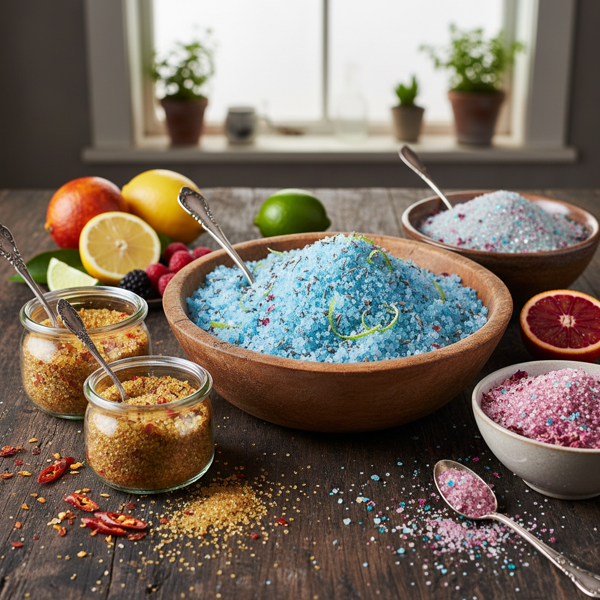
Add a sprinkle of magic to your celebrations and crafts with this homemade edible glitter! Perfect for adorning cocktail rims, enhancing desserts, or encouraging creativity during art projects, this vibrant concoction is as versatile as it is fun. My kids had a blast creating pink and green hues for a bridal shower, and now it's your turn to explore a rainbow of colors! This recipe is an excellent opportunity to engage little ones in the kitchen while teaching them about colors and measurements. Try varying the granularity from fine to coarse for different textures, and experiment with mixing different food coloring for custom shades. Ideal for festive gatherings like baby showers, birthday celebrations, or even spontaneous crafting on a rainy day. Plus, it's an economical and creative way to bring joy to any occasion. Get ready to sprinkle some sparkle into your life with this delightful edible glitter recipe!
5
Servings
N/A
Calories
2
Ingredients

Ingredients
Coarse Salt (non-iodized) or Granulated Sugar
1/2 cup (Measure and place into a clear jar)
Food Coloring
2-10 drops (Add one drop at a time, adjusting for desired color)
Instructions
1
Begin by measuring out 1/2 cup of coarse salt (non-iodized) or granulated sugar into a clear jar with a tight-fitting lid.
2
Add 2 to 10 drops of food coloring, one drop at a time. Secure the lid tightly and shake the jar vigorously to combine ingredients.
3
After each addition of food coloring, check the hue and adjust by adding more until you achieve your desired color.
4
For best results, once the desired color is reached, spread the colored salt or sugar in a thin layer on a baking sheet and allow it to air dry for about an hour.
5
Alternatively, you can microwave it in 30-second intervals, checking and stirring after each interval until it is dry (usually 1-2 minutes in total).
6
To store, transfer the colored glitter into a clear salt shaker or keep it in the jar. To use, simply sprinkle, dip, or shake onto your desired food or craft project. Dip the wet rim of a glass in the glitter for a stunning presentation!
Nutrition Information
Frequently Asked Questions
Frequently Asked Questions
What is edible glitter?
Edible glitter is a vibrant, colorful topping made from coarse salt or granulated sugar mixed with food coloring, used for decorating food and crafts.
What are the primary ingredients needed for this recipe?
The recipe requires 1/2 cup of coarse non-iodized salt or granulated sugar and 2 to 10 drops of food coloring.
How do you mix the food coloring with the salt or sugar?
Place the salt or sugar in a jar, add food coloring one drop at a time, secure the lid, and shake vigorously until combined.
Can I use iodized salt for this recipe?
It is recommended to use non-iodized coarse salt for the best texture and appearance.
How many drops of food coloring should I use?
You should use between 2 to 10 drops, depending on how vibrant you want the color to be.
What is the best way to dry the edible glitter?
You can spread it in a thin layer on a baking sheet to air dry for an hour or microwave it in 30-second intervals.
How long does it take to dry in the microwave?
It typically takes 1 to 2 minutes in total, checking and stirring every 30 seconds.
Is this recipe safe for kids?
Yes, it is a fun and educational activity for children to help with measuring and color mixing.
What are some common uses for edible glitter?
It is perfect for cocktail rims, dessert decorations, and various art or craft projects.
How do I use it on a cocktail glass?
Dip the wet rim of a glass into the glitter for a stunning and festive presentation.
Can I store the glitter for later use?
Yes, you can store it in a clear jar or a salt shaker for easy application later.
How many servings does this recipe provide?
This recipe yields approximately 5 servings.
Can I make custom colors?
Yes, you can experiment by mixing different food coloring drops to create unique shades.
Can I use granulated sugar instead of salt?
Yes, granulated sugar is a great alternative, especially for sweet treats and desserts.
What occasions is this glitter suitable for?
It is ideal for bridal showers, baby showers, birthdays, and holiday celebrations.
Can I change the texture of the glitter?
Yes, you can vary the granularity from fine to coarse depending on your preference.
Is this an economical recipe?
Yes, it is a very cost-effective way to create your own colorful decorations at home.
What type of jar should I use for mixing?
A clear jar with a tight-fitting lid is best so you can see the color change as you shake.
Does the salt need to be coarse?
Coarse salt is recommended for a glitter-like appearance, but you can experiment with different textures.
How do I ensure the color is even?
Shaking the jar vigorously after adding each drop of food coloring ensures even distribution.
Can I use this for school art projects?
Yes, it is a safe and creative material for various art projects and sensory play.
What happens if I add too much food coloring?
Adding too much might make the mixture too wet; ensure you dry it thoroughly in the microwave or air dry.
Can I make pink and green glitter?
Yes, pink and green are popular choices mentioned in the recipe for events like bridal showers.
How do I apply the glitter to food?
You can sprinkle it directly onto food, shake it from a shaker, or dip items into a bowl of glitter.
Is the glitter entirely edible?
Yes, since it is made from food-grade salt or sugar and food coloring, it is completely safe to eat.
Can I use natural food dyes?
Yes, natural food dyes can be used, though the vibrance and drying time might vary.
How do I prevent the glitter from clumping?
Ensuring it is completely dry before storing it in an airtight container will prevent clumping.
Can this be used on cupcakes?
Yes, it makes an excellent and sparkly topping for cupcakes and other baked goods.
Is it better to air dry or microwave?
Air drying is simpler but takes longer, while microwaving is much faster for immediate use.
Can I add flavor to the salt or sugar?
While the recipe focuses on color, the base of salt or sugar provides its own distinct flavor profile.