Versatile Thai Fusion Curry
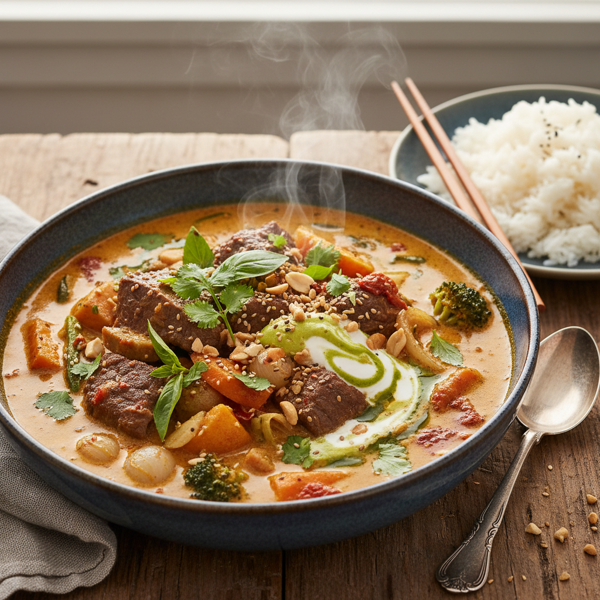
Embark on a culinary journey with our Versatile Thai Fusion Curry. Designed to capture the vibrant world of Thai cuisine yet adaptable for any kitchen, this dish blends aromatic curry paste, creamy coconut milk, and a choice of fresh proteins and vegetables. This recipe unfolds a tapestry of delicate, bold, and vibrant flavors with a freshness that is both exotic and accessible. Within 15 minutes, you'll create a versatile dish that’s easily customized to suit your palate and available ingredients. Perfect for any occasion, gather your loved ones and savor this Thai-inspired marvel.
4
Servings
300
Calories
21
Ingredients
Ingredients
coconut milk
1 can (14 ounces) (shaken or stirred)
curry paste
1/4 cup (yellow or panang)
chicken broth
1 cup (or vegetable broth, low sodium)
lime leaves
6 whole (fresh or thawed)
lime zest
zest of 1
ginger
1/2 inch (sliced thinly)
lemongrass
3 stalks (bruised)
white fish
1 lb (cut into bite-size pieces)
mushrooms
3 cups (stemmed and sliced)
pineapple
3 cups (cut into bite-size pieces)
brown sugar
2 tablespoons (or light palm sugar, more if needed)
fish sauce
1 teaspoon (or vegan fish sauce, more if needed)
basil leaves
3/4 cup (whole, Italian or Thai)
cilantro
1/4 cup (minced)
fresh lime leaves
1 tablespoon (sliced)
fresh cilantro
garnish
red chili pepper
garnish (cut into thin rings)
coconut milk
garnish (small drizzle)
basil leaf
garnish (whole)
lime wedge
garnish (squeezed)
cucumber
garnish (cut into strips and wedges)
Instructions
1
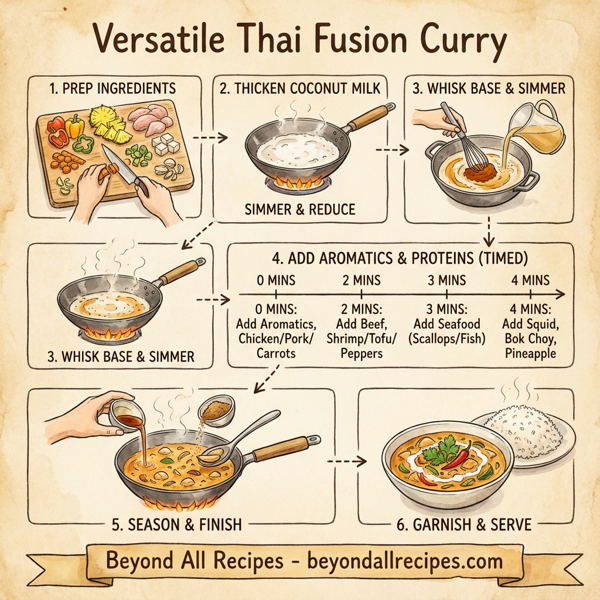
Step 1: Gather and prepare all your ingredients by reading through the method thoroughly. Ensure all your chosen proteins, vegetables, and fruits are cut into bite-sized pieces.
2
Step 2: Prepare the Curry Base. Start by shaking or stirring the can of coconut milk to achieve uniform consistency. Pour 1/2 cup of the coconut milk into a 3-4 qt saucepan or wok over medium heat. Allow it to simmer, stirring occasionally, until it is reduced by half and becomes thick and shiny, approximately 3-5 minutes.
3
Step 3: Whisk in your preferred curry paste and cook for 1 minute, continuing to whisk to ensure an even mixture. Add the chicken or vegetable broth and the remaining coconut milk. Increase the heat to medium-high and bring the mixture to a simmer.
4
Step 4: Aromatics and Simmering. Carefully add your selected aromatics along with the proteins, vegetables, and fruits—timing is crucial for even cooking. Watch the following steps for precise cooking time:
5
Step 5: Begin by adding aromatics and options such as chicken, pork, carrots, or kabocha squash to your simmering curry.
6
Step 6: Two minutes into simmering, add options including beef, large shrimp, tofu, mushrooms, or bell peppers.
7
Step 7: One minute later, add seafood choices like scallops and firm white fish.
8
Step 8: In the final minute, add squid, bok choy, or pineapple.
9
Step 9: Ensure all ingredients are cooked to their proper doneness—meats thoroughly cooked, and veggies tender-crisp.
10
Step 10: Seasoning and Serving. Remove from heat. Season with fish sauce and brown or palm sugar to taste. Discard large pieces of aromatics before serving, or instruct diners to eat around them.
11
Step 11: Present with garnishes such as fresh cilantro, basil leaves, red chili rings, and drizzles of coconut milk. Pair with hot, cooked rice for a complete meal.
Nutrition Information
12.5g
Fat
32.5g
Carbs
20g
Protein
Frequently Asked Questions
Frequently Asked Questions
What is Versatile Thai Fusion Curry?
It is a customizable dish that blends aromatic curry paste and creamy coconut milk with a variety of proteins and vegetables, capturing the flavors of Thai cuisine.
How long does it take to prepare this recipe?
The entire recipe can be completed within approximately 15 minutes once the ingredients are prepared.
What kind of curry paste is recommended?
The recipe suggests using yellow or panang curry paste, but you can choose your preferred variety.
Can I make this curry vegan?
Yes, use vegetable broth, tofu as the protein, and vegan fish sauce instead of traditional fish sauce.
What proteins can I use in this dish?
You can use chicken, pork, beef, shrimp, scallops, firm white fish, squid, or tofu.
How do I prepare the curry base?
Simmer 1/2 cup of coconut milk until reduced by half and thick, then whisk in the curry paste followed by broth and the rest of the milk.
When should I add carrots or squash?
Harder vegetables like carrots or kabocha squash should be added at the beginning of the simmering process.
When is the best time to add seafood like scallops?
Seafood choices like scallops and firm white fish should be added three minutes into the simmering process.
What aromatics are used in this curry?
The recipe uses lime leaves, lime zest, ginger, and bruised lemongrass for a fragrant base.
Can I use chicken broth for this recipe?
Yes, the recipe calls for 1 cup of low-sodium chicken or vegetable broth.
Is this Thai fusion curry spicy?
The spice level depends on the curry paste used and the optional red chili ring garnishes.
How many people does this recipe serve?
This recipe is designed to serve 4 people.
What should I serve with this curry?
It is best served with hot, cooked rice to complete the meal.
How do I season the finished dish?
Remove from heat and season with fish sauce and brown or palm sugar to taste.
What garnishes are recommended?
Garnish with fresh cilantro, basil leaves, red chili rings, and a drizzle of coconut milk.
Can I add fruit to this curry?
Yes, pineapple is a recommended fruit addition and should be added in the final minute of cooking.
How do I handle the lemongrass?
The lemongrass should be bruised before adding. Discard the large pieces before serving or instruct guests to eat around them.
What can be used as a substitute for palm sugar?
Brown sugar is an excellent and easily accessible substitute for palm sugar.
What are the nutritional facts per serving?
Each serving contains 300 calories, 12.5g of fat, 32.5g of carbohydrates, and 20g of protein.
Can I use light coconut milk?
While you can use it, full-fat canned coconut milk is recommended for the proper thick and creamy consistency.
When should I add mushrooms or bell peppers?
These should be added two minutes into the simmering process for ideal texture.
How do I ensure the seafood isn't overcooked?
Follow the staggered timing: scallops and fish go in at three minutes, and squid goes in at four minutes.
What type of fish works best?
Any firm white fish cut into bite-sized pieces works well in this curry.
Is this recipe gluten-free?
It is naturally gluten-free if you ensure your curry paste and broth are certified gluten-free.
How do I prepare the lime leaves?
The recipe uses 6 whole lime leaves for the simmer and 1 tablespoon of thinly sliced fresh lime leaves for the dish.
Can I use a regular saucepan?
Yes, a 3-4 qt saucepan or a wok is perfect for this recipe.
Do I need to peel the ginger?
The recipe calls for thinly sliced ginger; peeling is recommended before slicing.
How do I achieve a thick curry sauce?
Simmering a portion of the coconut milk until it reduces by half at the start is the key to a thick, shiny base.
Can I use frozen lime leaves?
Yes, the recipe specifically mentions that fresh or thawed frozen lime leaves can be used.
When should I add bok choy?
Bok choy should be added in the final minute of simmering to keep it tender-crisp.