Versatile Simple Syrup: A Homemade Corn Syrup Alternative
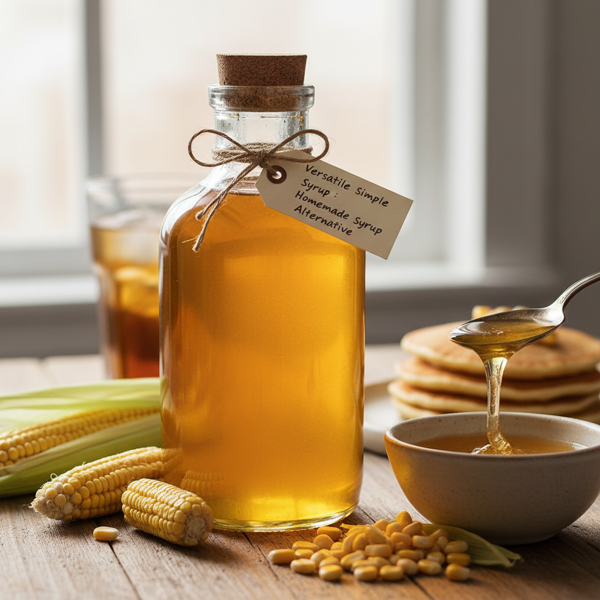
Create a versatile and sweet Homemade Corn Syrup Substitute with this simple syrup recipe. Perfect for recipes that call for corn syrup, this homemade version can be easily made in just a few steps with basic kitchen ingredients. Use it to sweeten beverages, drizzle over desserts, or incorporate into your favorite recipes requiring a sweetener. Plus, this syrup is a low protein option, making it ideal for various diets. With a shelf life of up to two months, you can enjoy its sweet goodness without the worries of additives and preservatives found in store-bought options.
2
Servings
N/A
Calories
4
Ingredients
Ingredients
white sugar
2 cups (none)
water
3/4 cup (none)
cream of tartar
1/4 teaspoon (none)
salt
1 pinch (none)
Instructions
1
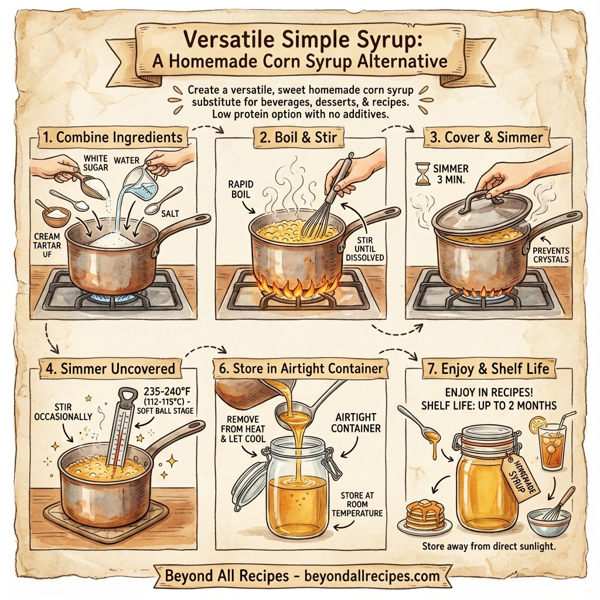
In a large saucepan, combine the white sugar, water, cream of tartar, and salt.
2
Turn the heat to medium-high and bring the mixture to a rapid boil, stirring constantly until the sugar is fully dissolved.
3
Once boiling, reduce the heat to low and cover the saucepan. Allow it to simmer for about 3 minutes, which will help prevent sugar crystals from forming on the sides.
4
After 3 minutes, remove the cover and continue to simmer the syrup. Stir occasionally until the syrup reaches the soft ball stage, approximately 235-240°F (112-115°C) on a candy thermometer.
5
Carefully remove the saucepan from heat and let the syrup cool completely.
6
Once cooled, transfer the syrup to a clean, airtight container. Store at room temperature away from direct sunlight.
7
This syrup is best used within two months but can usually last longer if stored properly.
Nutrition Information
Frequently Asked Questions
Frequently Asked Questions
What is this Homemade Corn Syrup Alternative?
It is a versatile simple syrup recipe designed to be a homemade substitute for corn syrup, using basic kitchen ingredients.
What ingredients do I need for this simple syrup?
You will need 2 cups of white sugar, 3/4 cup of water, 1/4 teaspoon of cream of tartar, and a pinch of salt.
How long does this homemade syrup last?
This syrup is best used within two months, though it can often last longer if stored properly in an airtight container.
Is this syrup suitable for low protein diets?
Yes, this recipe is specifically categorized as a low protein option, making it ideal for various restricted diets.
What is the purpose of cream of tartar in this recipe?
Cream of tartar is used to help prevent sugar crystals from forming, ensuring a smooth syrup texture.
At what temperature is the syrup finished?
The syrup should reach the 'soft ball stage,' which is approximately 235-240°F (112-115°C) on a candy thermometer.
Why do I need to cover the saucepan for 3 minutes while simmering?
Covering the pan allows steam to build up, which helps wash down and prevent sugar crystals from forming on the sides of the saucepan.
How should I store the finished syrup?
Transfer the cooled syrup to a clean, airtight container and store it at room temperature away from direct sunlight.
Can I use this syrup in drinks?
Absolutely! It is perfect for sweetening beverages as well as drizzling over desserts.
How many servings does this recipe yield?
This recipe is calculated to provide approximately 2 servings depending on your usage requirements.
Is there any salt in this recipe?
Yes, the recipe calls for one pinch of salt to balance the sweetness.
Do I need to stir the mixture constantly?
You should stir constantly at the beginning while bringing the mixture to a boil until the sugar is fully dissolved.
What heat setting should I use initially?
Start by turning the heat to medium-high to bring the mixture to a rapid boil.
Can I use this as a replacement for store-bought corn syrup?
Yes, it is specifically designed as a homemade alternative to corn syrup for recipes that require a liquid sweetener.
Does this syrup contain preservatives?
No, one of the benefits of this homemade version is that it lacks the additives and preservatives found in store-bought options.
What type of saucepan is recommended?
A large saucepan is recommended to combine the ingredients and allow for the mixture to boil safely.
How much white sugar is required?
The recipe requires 2 cups of white sugar.
How much water do I need to add?
You need 3/4 cup of water for this recipe.
Should I refrigerate the syrup?
The instructions recommend storing it at room temperature in an airtight container.
What is the 'soft ball stage'?
It is a specific concentration of sugar syrup reached at 235-240°F, where a drop of syrup in cold water forms a soft, flexible ball.
Is this recipe difficult to make?
No, it is considered an easy recipe that can be made in just a few steps with common kitchen items.
How many ingredients are in this recipe?
There are 4 main ingredients: sugar, water, cream of tartar, and salt.
Can I use this syrup for desserts?
Yes, it is excellent for drizzling over desserts or incorporating into dessert recipes.
What should I do if sugar crystals form on the sides of the pan?
Covering the pan for 3 minutes during the boiling process helps resolve this by using steam to dissolve the crystals.
Does the syrup need to cool before storage?
Yes, you should let the syrup cool completely before transferring it to a storage container.
Is this recipe vegan?
Based on the ingredients (sugar, water, cream of tartar, salt), it is typically considered vegan-friendly.
What is the total number of tags associated with this recipe?
There are 8 tags including simple syrup, corn syrup substitute, and low protein.
What tool should I use to measure the temperature?
A candy thermometer is the best tool to ensure the syrup reaches the correct temperature.
Can this syrup be used in recipes that call for sweetener?
Yes, it is a versatile sweetener that can be incorporated into any recipe requiring a liquid sweetener.
What is the main benefit of making this at home?
The main benefit is having a simple, additive-free, and low-protein alternative to commercial corn syrup.