Unlocking Perfect Easy-Peel Hard-Boiled Eggs
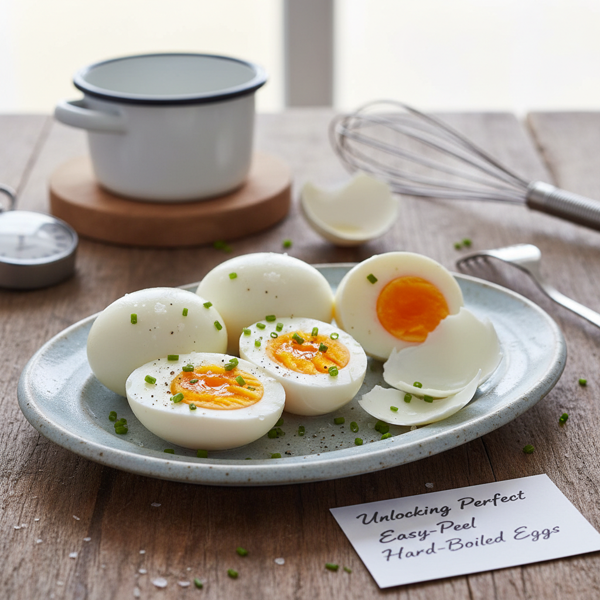
Discover the secret to achieving perfectly cooked and easy-to-peel hard-boiled eggs with this foolproof method. This technique guarantees bright yellow yolks nestled within pure white egg whites, thanks to the addition of vinegar. A must-try for egg lovers and anyone needing to prepare deviled eggs, salad toppings, or a convenient snack. Not only does this no-fail approach simplify the peeling process, but it also ensures that your eggs are evenly cooked every time. Remember to use eggs that are at least 2 weeks old for the best peeling results. Enjoy perfectly prepared hard-boiled eggs that will elevate any breakfast spread or appetizer platter.
N/A
Servings
N/A
Calories
5
Ingredients
Ingredients
large eggs
6 (none)
white vinegar
2 teaspoons (none)
salt
1 pinch (none)
water
to cover (none)
ice cubes
3 cups (none)
Instructions
1
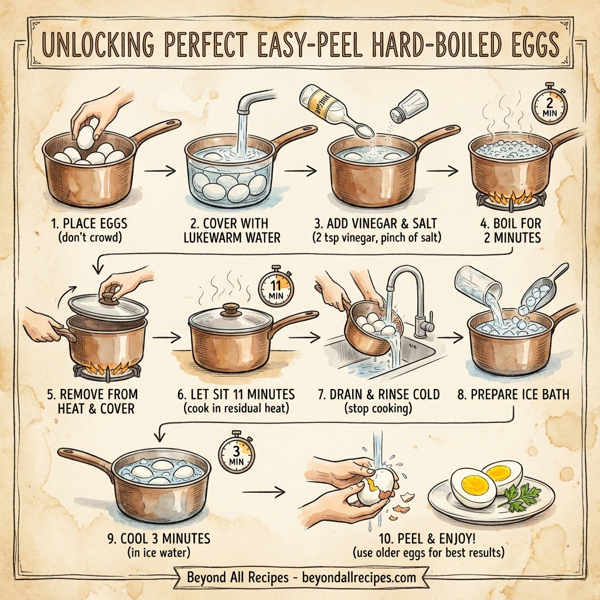
Start by placing your eggs in a spacious saucepan, ensuring they're not crowded.
2
Cover the eggs with lukewarm water, making sure the water completely submerges them.
3
Add in approximately 2 teaspoons of white vinegar and a pinch of salt to the water.
4
Bring the water to a full rolling boil over medium heat. Once boiling, set your timer for 2 minutes.
5
After 2 minutes, promptly remove the saucepan from heat and cover it with a tight-fitting lid.
6
Let the eggs sit, covered, for 11 minutes to allow them to finish cooking gently in the residual heat.
7
Once the time is up, drain the hot water from the saucepan and immediately rinse the eggs under very cold running water to stop the cooking process.
8
Fill the saucepan with cold water and add enough ice cubes to create an ice bath.
9
Carefully place the eggs in the ice water and let them sit for about 3 minutes to cool completely.
10
Finally, drain the ice water and peel the eggs under a little running water, if necessary, to ease the shell removal.
Nutrition Information
Frequently Asked Questions
Frequently Asked Questions
What is the secret to easy-peel hard-boiled eggs?
The secret is using vinegar in the water and starting with eggs that are at least 2 weeks old.
Why should I add white vinegar to the boiling water?
Vinegar helps ensure bright yellow yolks and makes the eggs significantly easier to peel.
How long do the eggs need to boil?
The eggs should be brought to a full rolling boil and then cooked for exactly 2 minutes.
How long should the eggs sit off the heat?
After boiling for 2 minutes, remove from heat and let the eggs sit covered for 11 minutes.
What is the recommended age for eggs to ensure easy peeling?
It is best to use eggs that are at least 2 weeks old for the best peeling results.
How much vinegar should I use for 6 eggs?
You should use approximately 2 teaspoons of white vinegar.
What type of water should I use to start the process?
Cover the eggs with lukewarm water to begin.
Is an ice bath necessary for this recipe?
Yes, an ice bath is essential to stop the cooking process and cool the eggs completely.
How long should the eggs stay in the ice bath?
The eggs should sit in the ice water for about 3 minutes.
Why is salt added to the water?
A pinch of salt is added along with vinegar to the water to assist in the cooking process.
How much ice is needed for the ice bath?
This recipe calls for 3 cups of ice cubes to create the ice bath.
What heat setting should be used to bring water to a boil?
The water should be brought to a boil over medium heat.
Should the saucepan be covered while the eggs sit?
Yes, use a tight-fitting lid to cover the saucepan after removing it from the heat.
What is the best way to peel the eggs?
Peel the eggs under a little running water if necessary to ease the shell removal after the ice bath.
What should the egg yolks look like when finished?
The yolks should be a bright yellow color.
What can these hard-boiled eggs be used for?
They are perfect for deviled eggs, salad toppings, snacks, or breakfast spreads.
How much water should I use?
Use enough water to completely submerge the eggs in the saucepan.
Does the saucepan size matter?
Yes, use a spacious saucepan to ensure the eggs are not crowded.
What is the first step after the 11-minute sitting time?
Drain the hot water and immediately rinse the eggs under very cold running water.
Can I use fresh eggs?
While you can use fresh eggs, eggs that are 2 weeks old provide the best results for peeling.
What size eggs does this recipe specify?
The recipe is designed for 6 large eggs.
Does the recipe use white or apple cider vinegar?
The recipe specifically calls for white vinegar.
How do I stop the eggs from overcooking?
Rinse them under cold running water immediately after the sitting time and then place them in an ice bath.
Is this method considered foolproof?
Yes, it is described as a no-fail, foolproof approach to perfect eggs.
How long is the total preparation and cooking time?
The active time includes bringing to a boil, 2 minutes of boiling, 11 minutes of sitting, and a 3-minute ice bath.
Why does the water need to be lukewarm initially?
The recipe specifies lukewarm water to ensure even heating as it brought to a boil.
What is the benefit of the residual heat method?
It allows the eggs to finish cooking gently, preventing rubbery whites or green rings.
How many ingredients are required?
There are 5 ingredients: large eggs, white vinegar, salt, water, and ice cubes.
Should I peel them while they are still hot?
No, you should wait until they have cooled completely in the ice bath before peeling.
Does the recipe mention any specific tags for categorization?
Yes, tags include breakfast, deviled eggs, snacks, and foolproof eggs.