Umami Shiitake Dashi Broth
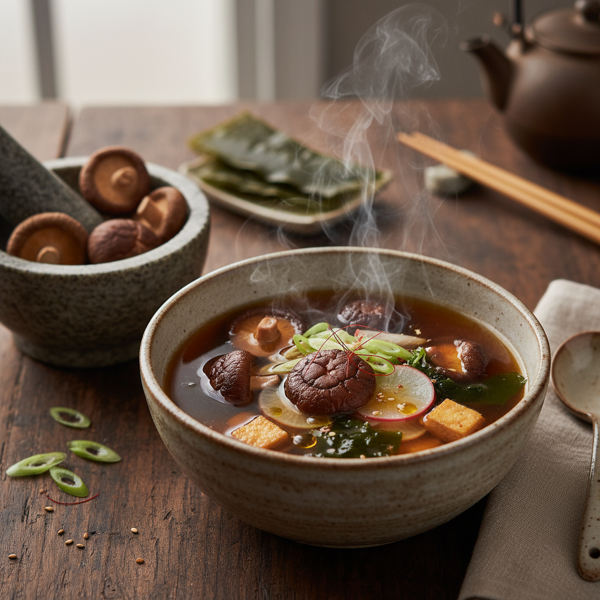
Experience the rich umami flavor of this vegetarian dashi, crafted with kombu seaweed and dried shiitake mushrooms. This versatile broth adds depth to countless soups and stews, offering a perfect base for your culinary creations. Simple to prepare, it’s not only nourishing but also brimming with natural flavor. Elevate your dishes with this nutritious broth that brings a touch of Japanese cuisine to your table.
N/A
Servings
5
Calories
6
Ingredients
Ingredients
Water
6 1/2 cups (Clean and fresh)
Kombu seaweed
4 slices (4 inches long) (No preparation needed; just rinse lightly)
Dried shiitake mushrooms
5 (No preparation needed)
Light soy sauce
1 tablespoon (Optional for added flavor)
Sea salt
1 pinch (Optional, adjust to taste)
Green onion
1 (Sliced for garnish)
Instructions
1
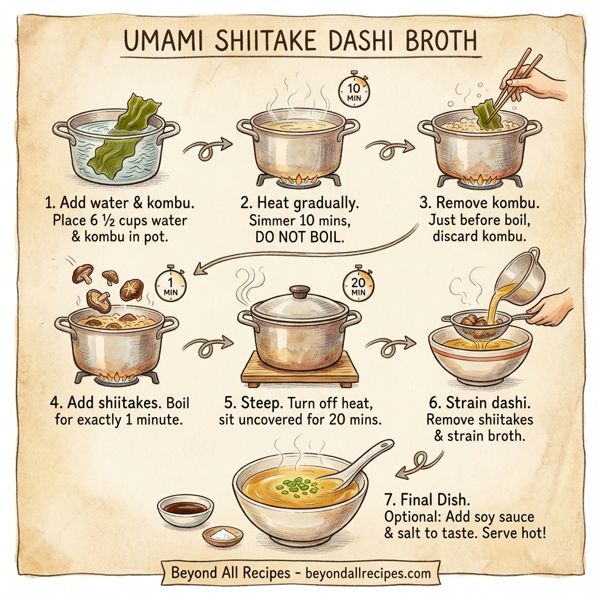
In a medium pot, place the 6 1/2 cups of water and add the kombu seaweed.
2
Gradually heat the pot over medium-high heat until it reaches a gentle simmer, ensuring it does not boil. This process should take about 10 minutes.
3
Just before the water begins to boil, carefully remove the kombu and discard it.
4
Add the dried shiitake mushrooms to the pot, increase the heat, and bring the water to a boil for exactly 1 minute.
5
Once boiling, turn off the heat and let the broth sit uncovered for 20 minutes. This resting time allows the flavors to fully infuse into the water.
6
After steeping, remove the shiitake mushrooms and strain the dashi if desired.
7
For a simple soup, return the dashi to the stove and stir in the optional light soy sauce, adjusting the sea salt to taste. Serve hot, garnished with sliced green onion.
Nutrition Information
0g
Fat
1g
Carbs
0.5g
Protein
Frequently Asked Questions
Frequently Asked Questions
What is Umami Shiitake Dashi Broth?
Umami Shiitake Dashi Broth is a traditional Japanese-style vegetarian broth made using kombu seaweed and dried shiitake mushrooms to create a deep, savory flavor base.
Is this recipe vegetarian?
Yes, this broth is completely vegetarian as it uses seaweed and mushrooms instead of fish flakes.
Is this broth vegan?
Yes, all the primary ingredients listed are plant-based, making it suitable for a vegan diet.
What are the primary ingredients?
The main ingredients are water, kombu seaweed, and dried shiitake mushrooms, with optional soy sauce and sea salt.
What is kombu?
Kombu is a type of edible kelp widely used in East Asian cuisine to provide a rich source of umami flavor.
Can I use fresh mushrooms instead of dried?
Dried shiitake mushrooms are preferred for dashi because the drying process concentrates their flavor and creates a more intense umami profile.
Why should I not boil the kombu?
Boiling kombu can make the broth bitter and give it a slimy texture; it should be removed just before the water reaches a boil.
How long does it take to prepare?
The entire process takes approximately 35 to 40 minutes, including heating, boiling the mushrooms, and steeping.
Can I reuse the kombu and mushrooms?
Yes, the used kombu and shiitake can be sliced and simmered in soy sauce and sugar to make a side dish called tsukudani.
How many calories are in a serving?
This broth is very low in calories, containing approximately 5 calories per serving.
Is this recipe gluten-free?
The broth is gluten-free if you use a gluten-free tamari or skip the optional soy sauce.
What are some common uses for this dashi?
It serves as an excellent base for miso soup, ramen, clear soups, and various Japanese stews.
How should I store leftover broth?
Store the broth in an airtight container in the refrigerator to maintain its freshness.
Can I freeze this dashi?
Yes, dashi freezes well and can be stored in the freezer for up to three months.
How long will it stay fresh in the refrigerator?
The broth typically stays fresh for about 3 to 5 days when properly refrigerated.
What does umami mean?
Umami is one of the five basic tastes and is often described as a savory or meaty flavor found in seaweed and mushrooms.
Should I wash the kombu before use?
You should only rinse it lightly or wipe it with a damp cloth; do not scrub off the white powder, as that contains much of the flavor.
What kind of water is best for this recipe?
Clean, fresh filtered water is recommended to ensure the subtle flavors of the seaweed and mushrooms shine through.
Is the soy sauce mandatory?
No, the soy sauce is optional and can be added according to your personal taste preferences.
What is the best garnish for this broth?
Sliced green onions provide a fresh, sharp contrast to the deep earthy flavors of the dashi.
Why boil the shiitake for only one minute?
A short boil followed by a long steep extracts the flavor efficiently without making the broth cloudy.
What is light soy sauce?
Light soy sauce is thinner and saltier than dark soy sauce and is used to season without darkening the color of the broth.
Can I double the recipe ingredients?
Yes, the recipe can easily be doubled if you need a larger quantity of broth for soups or stews.
Is this broth low in fat?
Yes, the broth contains 0g of fat, making it a very light and healthy base.
Does the broth have a strong mushroom taste?
It has a noticeable earthy mushroom flavor, but it is balanced by the oceanic notes of the kombu.
What is the consistency of the broth?
The consistency is thin and clear, similar to a light tea or a consomme.
Can I add other vegetables to the steep?
While traditional dashi is simple, you can add ginger or garlic during the steeping phase for additional depth.
Is there any cholesterol in this recipe?
No, this plant-based broth is naturally cholesterol-free.
How much protein is in the broth?
The broth provides approximately 0.5g of protein per serving.
Is this recipe suitable for beginners?
Absolutely, the recipe is very simple and requires only basic boiling and steeping techniques.