Umami-Loaded Onigiri with Umeboshi
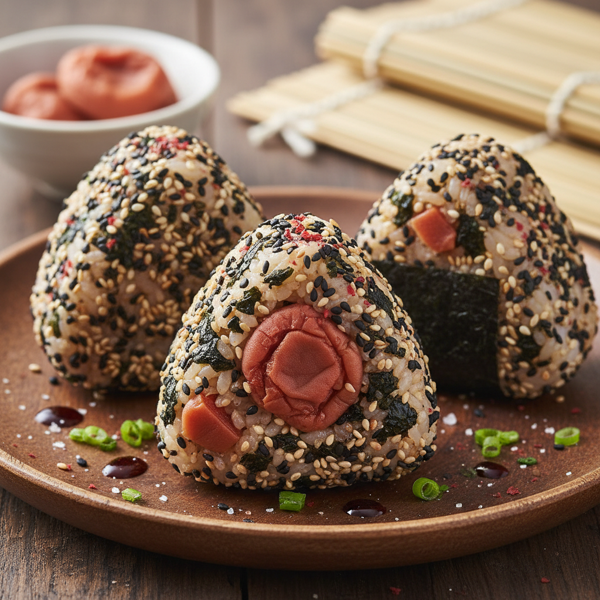
Discover the delightful fusion of flavors with our Umami-Loaded Onigiri, a quintessential Japanese comfort food. These bite-sized rice balls are crafted from plush short-grain rice, perfectly shaped into triangles, and filled with tangy umeboshi (dried plum) for a burst of flavor. Each piece is elegantly wrapped with nori (dried seaweed) and perfect for a lunchbox, picnic, or as a snack. Make a batch and enjoy the satisfying experience of sharing these beloved rice balls with friends and family, whether enjoyed fresh or saved for later.
N/A
Servings
N/A
Calories
4
Ingredients
Ingredients
Short-grain rice
1 lb (Rinsed and cooked.)
Umeboshi (dried plum)
8 (Whole.)
Nori (dried seaweed)
8 sheets (Cut into strips.)
Salt
To taste (For sprinkling on hands.)
Instructions
1
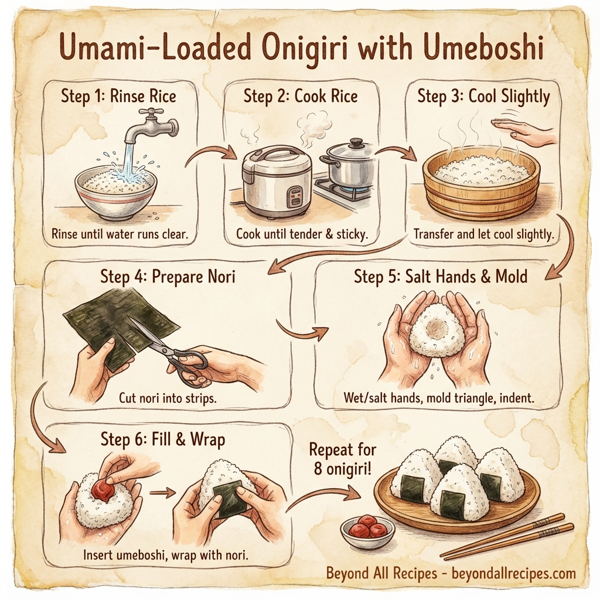
Begin by rinsing the short-grain rice under cold water until the water runs clear. This removes excess starch and helps achieve the perfect texture.
2
Cook the rice according to package instructions, either in a rice cooker or on the stovetop, until tender and slightly sticky.
3
Once cooked, transfer the rice to a large bowl and allow it to cool slightly while still being warm, so it is easy to handle but won't burn your hands.
4
While the rice cools, prepare the nori by cutting each sheet into 9 equal strips, setting them aside for wrapping.
5
Moisten your hands with water and sprinkle with salt to prevent the rice from sticking.
6
Take a handful of rice (about 2-3 tablespoons) and gently mold it into a triangular shape, creating a small indentation in the center.
7
Insert one umeboshi into the indentation, allowing its sweet, tangy flavor to become a delicious filling.
8
Carefully wrap the nori strip around the onigiri, ensuring that it holds the rice ball together without covering too much of the rice.
9
Repeat the process for the remaining rice and umeboshi until you have 8 delicious onigiri ready to serve.
10
Enjoy the onigiri immediately or pack them for later. If storing, wrap them tightly in plastic wrap to maintain freshness.
Nutrition Information
Frequently Asked Questions
Frequently Asked Questions
What is Umami-Loaded Onigiri?
Umami-Loaded Onigiri is a traditional Japanese comfort food consisting of triangular-shaped short-grain rice balls filled with tangy umeboshi and wrapped in nori.
What is umeboshi?
Umeboshi is a pickled, dried Japanese plum known for its intense saltiness and sour, tangy flavor.
Why must I use short-grain rice for onigiri?
Short-grain rice contains more starch than other varieties, making it sticky enough to hold its shape when molded into triangles.
How do I properly rinse the rice?
Rinse the rice under cold water repeatedly until the water runs clear to remove excess starch for the best texture.
Can I cook the rice in a rice cooker?
Yes, cooking the rice in a rice cooker according to package instructions is a perfectly acceptable and efficient method.
At what temperature should the rice be when shaping?
The rice should be slightly cooled but still warm to the touch so it is pliable and easy to handle without burning your hands.
How should I prepare the nori?
Each sheet of nori should be cut into 9 equal strips, which are then used to wrap the base of the rice balls.
Why is salt applied to the hands during preparation?
Salting your hands prevents the sticky rice from adhering to your skin and adds a light seasoning to the exterior of the onigiri.
How much rice is needed for one onigiri?
Use approximately 2 to 3 tablespoons of cooked rice for each rice ball.
Where do I place the umeboshi filling?
Create a small indentation in the center of the rice ball, insert the umeboshi, and then mold the rice around it.
How many onigiri does this recipe yield?
This specific recipe makes a batch of 8 delicious onigiri.
Is this recipe suitable for vegetarians?
Yes, these onigiri are entirely vegetarian as they contain no meat or fish products.
Are these rice balls vegan-friendly?
Yes, the ingredients used—rice, umeboshi, nori, and salt—are all plant-based and vegan.
Can I use long-grain rice instead?
No, long-grain rice is not sticky enough and the onigiri will likely crumble and fall apart.
How should I store leftover onigiri?
Wrap each onigiri tightly in plastic wrap to maintain freshness and prevent the rice from drying out.
Are onigiri served hot or cold?
Onigiri can be enjoyed fresh and warm or at room temperature, making them ideal for picnics and lunchboxes.
How can I prevent the rice from sticking to my hands?
In addition to salt, moisten your hands with a bit of water before handling the rice to keep it from sticking.
What type of seaweed is used for onigiri?
Nori, which is dried edible seaweed, is the standard wrapping used for onigiri.
Can I make these ahead of time?
Yes, you can make them several hours in advance; just ensure they are wrapped well to keep the rice soft.
Is this dish gluten-free?
Generally yes, but you should always check the label of your umeboshi to ensure no gluten-containing additives were used during pickling.
Why is it called Umami-Loaded?
The combination of the savory seaweed and the complex, tangy plum provides a rich flavor profile often associated with umami.
Can I use an onigiri mold?
Yes, if you find hand-shaping difficult, plastic onigiri molds can help you achieve a perfect triangle shape.
What if I cannot find umeboshi?
While umeboshi is the traditional filling for this recipe, you can experiment with other savory fillings like salted salmon or pickled ginger.
Do I need to pit the umeboshi?
If your umeboshi contains a pit, it is best to remove it before inserting it into the rice ball for easier eating.
Can I freeze onigiri?
While possible, the texture of the rice may change; it is generally recommended to enjoy them fresh or within a day.
How do I wrap the nori strip?
Wrap the nori strip around the base or center of the rice triangle so it acts as a handle while you eat.
Can I add sesame seeds to the rice?
Yes, many people enjoy mixing toasted sesame seeds into the rice for extra flavor and texture.
Is onigiri the same as sushi?
No, sushi rice is seasoned with vinegar, sugar, and salt, while onigiri rice is typically plain or lightly salted.
Are these good for travel?
Yes, onigiri are highly portable and designed to be eaten by hand, making them perfect for travel or hiking.
Can I dip onigiri in soy sauce?
While not traditional for this specific recipe, you can certainly dip them in soy sauce if you prefer extra saltiness.