Umami-Infused Okinawa Jaja Soba with Spicy Miso Pork
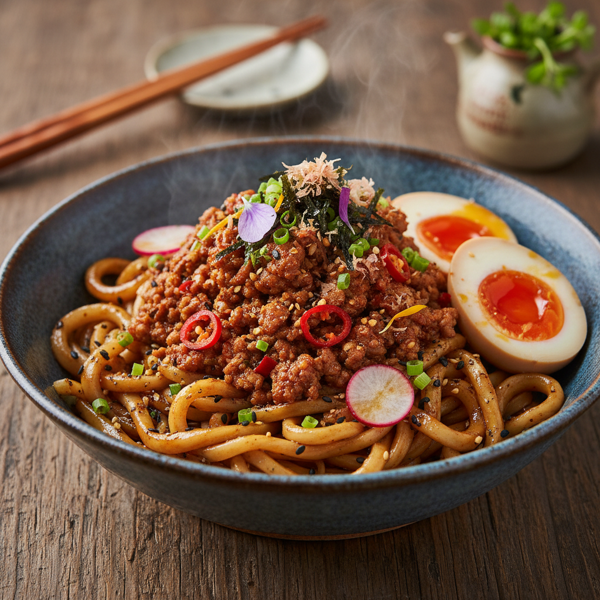
Experience the vibrant flavors of Okinawa with this Umami-Infused Jaja Soba. This dish marries the chewy texture of Okinawa soba noodles with a robust, savory miso-infused ground pork sauce, enriched by the distinct tang of fermented kimchi. Complemented by crisp, fresh vegetables like cucumber and bitter melon, each bite offers a delightful balance of heat, sweetness, and umami, making it a unique culinary adventure that’s both comforting and exciting.
N/A
Servings
N/A
Calories
17
Ingredients
Ingredients
Cucumber
1/2 piece (sliced into fine strips)
Scallion
1/3 piece (sliced into fine strips)
Carrot
1/3 piece (sliced into fine strips)
Bitter Melon
1/3 piece (sliced thinly)
Salt
1/2 teaspoon
Garlic
1 clove (grated)
Scallions
3 tablespoons (minced)
Miso
4 tablespoons
Awamori
2 tablespoons
Sugar
2 1/2 tablespoons
Sesame Oil
1 tablespoon
Ground Pork
250 g
Broad Chili Bean Paste (Doubanjiang)
2 teaspoons
Water
1/2 cup
Okinawa Soba Noodles
200 g
Sesame Oil
1/2 teaspoon
Chili Oil (Layu)
3 drops
Instructions
1
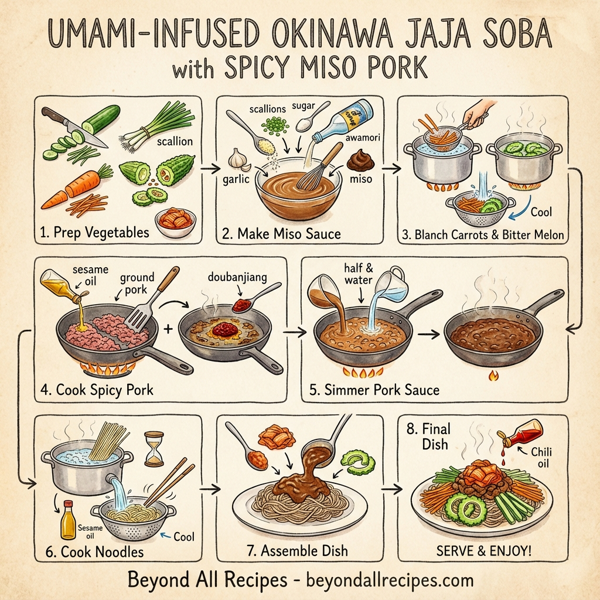
Begin by preparing all the vegetables: Thinly slice the cucumber, scallions, and carrot into fine strips. Cut the bitter melon in half and scoop out the white pith and seeds with a spoon. Slice the bitter melon into thin crosswise pieces.
2
Grate the garlic and mince the white parts of the scallions. In a mixing bowl, combine the grated garlic, minced scallions, sugar, awamori, and miso paste, mixing well to create a smooth sauce.
3
In a pot, bring water to a boil. Add the carrot strips and blanch them for about 2 minutes or until tender. Remove the carrots and rinse them under cold water to halt the cooking process.
4
In the same pot, bring fresh water to a boil, and add half a teaspoon of salt. Add the sliced bitter melon and boil for 2-3 minutes until tender yet still vibrant. Remove and cool under cold running water to preserve its bright green color.
5
In a large frying pan over medium heat, add a tablespoon of sesame oil. Once hot, add the ground pork, breaking it apart as it cooks, stirring frequently until browned and cooked through.
6
Create a well in the center of the pan and add the doubanjiang. Stir-fry it in the hot oil for about a minute before mixing it thoroughly with the meat.
7
Integrate the prepared miso sauce and pour in half a cup of water, stirring to combine. Bring the mixture to a boil, then reduce the heat to low. Let it simmer for about 20 minutes, or until most of the liquid has reduced, creating a thick sauce.
8
While the sauce simmers, cook the Okinawa soba noodles according to package instructions. Once done, drain and rinse them under cold water to cool, tossing them with half a tablespoon of sesame oil to prevent sticking.
9
To serve, place a portion of soba noodles on each plate. Top with a generous scoop of kimchi, followed by the rich miso pork sauce. Add a few slices of the blanched bitter melon and arrange the remaining vegetables artistically.
10
For an extra kick, drizzle a few drops of chili oil over the top before serving, if desired.
Nutrition Information
Frequently Asked Questions
Frequently Asked Questions
What is Umami-Infused Okinawa Jaja Soba with Spicy Miso Pork?
It is a traditional-inspired Okinawan dish featuring chewy soba noodles topped with a rich, savory miso-infused ground pork sauce and tangy fermented kimchi.
What are the primary vegetables used in this recipe?
The main vegetables are cucumber, scallions, carrots, and bitter melon.
How do I prepare the bitter melon for this dish?
Cut the bitter melon in half, scoop out the seeds and white pith with a spoon, slice it thinly, and boil it in salted water for 2-3 minutes.
How long should I blanch the carrots?
The carrots should be blanched for about 2 minutes or until they are tender.
What ingredients are in the miso sauce?
The sauce is a mixture of grated garlic, minced scallions, sugar, awamori, and miso paste.
What is Awamori and how is it used?
Awamori is an Okinawan alcoholic beverage included in the miso sauce to add a distinct depth of flavor.
How is the pork sauce made spicy?
The spiciness comes from adding two teaspoons of Doubanjiang (broad chili bean paste) to the browned ground pork.
How long should the pork sauce simmer?
The sauce should simmer on low heat for about 20 minutes until most of the liquid has reduced and it becomes thick.
How do I prepare the Okinawa soba noodles?
Cook them according to package instructions, drain, rinse under cold water, and toss with sesame oil to prevent sticking.
Why should I rinse the noodles in cold water?
Rinsing the noodles stops the cooking process and removes excess starch for a better texture.
What type of oil is used for cooking the pork?
The recipe uses one tablespoon of sesame oil to cook the ground pork.
How much ground pork is required for this recipe?
The recipe calls for 250 grams of ground pork.
What is the purpose of Doubanjiang in this recipe?
Doubanjiang, or broad chili bean paste, provides the heat and a savory fermented depth to the meat sauce.
How do I assemble the Jaja Soba?
Place noodles on a plate, top with a scoop of kimchi, then the miso pork sauce, and finish with blanched bitter melon and other vegetables.
Can I make this dish spicier?
Yes, you can drizzle a few drops of chili oil (Layu) over the top before serving for an extra kick.
What amount of miso is used?
The recipe requires 4 tablespoons of miso paste.
How much sugar is needed for the sauce?
The recipe uses 2.5 tablespoons of sugar.
What is the preparation for the garlic?
One clove of garlic should be grated for the sauce.
How many scallions do I need for the sauce?
The recipe specifies 3 tablespoons of minced scallions for the miso sauce.
How much water is added to the pork mixture?
Add half a cup of water to the meat and miso sauce before simmering.
What is the preparation for the cucumber?
Half a cucumber should be sliced into fine strips.
What is the role of kimchi in this dish?
Kimchi adds a distinct tang and fermented flavor that balances the savory and spicy pork.
How do I stop the carrots from cooking after blanching?
Rinse the carrots under cold water immediately after boiling to halt the cooking process.
What should I do with the white parts of the scallions?
The white parts of the scallions should be minced and included in the miso sauce.
How many grams of Okinawa soba noodles are used?
The recipe uses 200 grams of Okinawa soba noodles.
What is the texture of the final sauce?
The final sauce should be thick and robust after the 20-minute simmering period.
Is bitter melon mandatory for this recipe?
While it is a signature ingredient for Okinawan flavor, it can be adjusted based on personal preference for bitterness.
What kind of sesame oil is used for the noodles?
The recipe uses half a tablespoon of sesame oil to toss the cooked noodles.
How many drops of chili oil are suggested?
The recipe suggests 3 drops of Layu (chili oil) for extra spice.
What is the best way to handle the Doubanjiang while cooking?
Create a well in the center of the frying pan and stir-fry the Doubanjiang in the hot oil for a minute before mixing it with the meat.