Ultimate Sweet Dough Master Recipe
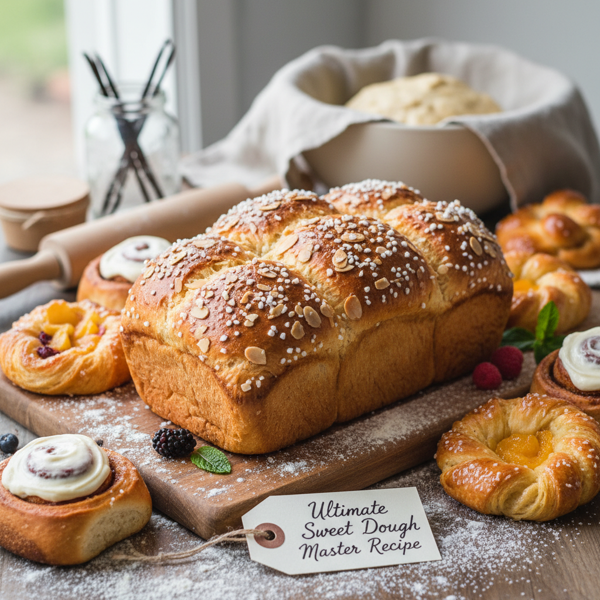
This Ultimate Sweet Dough Master Recipe has been cherished and perfected over the past three decades, making it the ideal base for any sweet dough creation. Whether you're crafting delicious cinnamon rolls, soft buns, or decadent pastries, this versatile dough adapts beautifully to various applications. The secret to its ideal texture lies in the balance of flour types, ensuring that baked goods are light, fluffy, and full of flavor. Perfectly sweetened and enriched with butter and milk, this dough will elevate your baking to new heights. For U.S. bakers, consider a blend of all-purpose and bread flour to achieve the perfect consistency.
N/A
Servings
N/A
Calories
9
Ingredients

Ingredients
Warm water
1/2 cup (warm)
Sugar
1 teaspoon (for proofing yeast)
Dry yeast
1 tablespoon (active, for proofing)
Full-fat milk
1 cup (heated)
Soft butter
1/3 cup (softened)
Salt
1 teaspoon (to taste)
White sugar
1/2 cup (to taste)
Egg
1 (room temperature)
All-purpose flour
5-6 cups (for kneading)
Instructions
1
Begin by preparing your heavy-duty stand mixer with a dough hook attachment.
2
To ensure your egg is at room temperature, place it in a bowl of warm (not hot) water for 6-7 minutes.
3
In a large Pyrex measuring cup or bowl, combine the milk, soft butter, salt, and white sugar. Heat in the microwave on HIGH for about 1 minute and 22 seconds, then stir until the butter has partially melted and the sugar and salt have dissolved. If the mixture feels cool, microwave for a few more seconds as needed, then cover and set aside.
4
In the stainless steel mixer bowl, add 4 cups of all-purpose flour and the egg.
5
In a small cup, proof the yeast by mixing it with 1/2 cup of warm water and 1 teaspoon sugar, allowing it to sit for 8-10 minutes until foamy.
6
Once the yeast is proofed, pour the milk mixture and yeast mixture into the bowl with flour and egg.
7
Start kneading the mixture on low speed, gradually incorporating additional flour to form a soft, semi-sticky dough that wraps around the kneading blade. Be cautious not to add too much flour to maintain a light texture.
8
Knead the dough for approximately 6-8 minutes until it is smooth and elastic.
9
Transfer the dough to a lightly floured surface and cover it with a clean tea towel. Allow it to rest for 5 minutes - don’t worry if it feels sticky; it will come together after resting.
10
After 5 minutes, gently knead the dough for about 30 seconds until it is smooth.
11
Grease a large bowl (you can use the same stainless steel mixer bowl) with oil.
12
Place the dough in the greased bowl and cover with a damp cloth, allowing it to rise until doubled in size - this should take approximately 1.5 hours, though times may vary.
13
Once risen, punch down the dough gently to release air. Shape it as desired, and let it rise for an additional 40 minutes, or until it has doubled again.
Nutrition Information
Frequently Asked Questions
Frequently Asked Questions
What is the Ultimate Sweet Dough Master Recipe?
This recipe is a versatile, cherished base for any sweet dough creation, perfected over three decades for items like cinnamon rolls and pastries.
What can I make using this sweet dough recipe?
It is ideal for crafting delicious cinnamon rolls, soft buns, or decadent pastries.
What is the secret to the dough's ideal texture?
The secret lies in the specific balance of flour types, ensuring the baked goods remain light, fluffy, and full of flavor.
What type of flour is recommended for U.S. bakers?
U.S. bakers should consider using a blend of all-purpose and bread flour to achieve the perfect consistency.
How do I bring an egg to room temperature quickly?
Place the egg in a bowl of warm (not hot) water for about 6 to 7 minutes.
How long should I microwave the milk and butter mixture?
Heat the milk, butter, salt, and sugar on HIGH for approximately 1 minute and 22 seconds.
How do I know if the butter mixture is ready?
The butter should be partially melted and the sugar and salt should be dissolved after stirring.
How do I proof the yeast for this recipe?
Mix 1 tablespoon of dry yeast with 1/2 cup of warm water and 1 teaspoon of sugar.
How long does it take for the yeast to proof?
Allow the yeast mixture to sit for 8 to 10 minutes until it becomes foamy.
What mixer attachment should be used?
Use a dough hook attachment on a heavy-duty stand mixer.
How much flour should I start with in the mixer?
Begin by adding 4 cups of all-purpose flour and the egg to the mixer bowl.
When should I add the liquid ingredients to the flour?
Add the milk mixture and the proofed yeast mixture once the yeast is foamy and the milk is prepared.
How should the dough look while kneading?
The dough should be soft and semi-sticky, wrapping itself around the kneading blade.
How long should I knead the dough in the mixer?
Knead the dough on low speed for approximately 6 to 8 minutes until it is smooth and elastic.
Why shouldn't I add too much flour?
Adding too much flour will prevent the dough from maintaining its intended light and fluffy texture.
How long should the dough rest after the initial kneading?
Transfer the dough to a floured surface, cover it, and let it rest for 5 minutes.
What if the dough feels sticky after the 5-minute rest?
Do not worry if it feels sticky; it will come together and become smooth after the final 30-second manual knead.
How long should I manually knead the dough after it rests?
Gently knead the dough for about 30 seconds until it achieves a smooth finish.
What type of bowl should I use for the rising process?
You can use a large greased bowl, such as the stainless steel mixer bowl used earlier.
How long is the first rise?
The first rise typically takes about 1.5 hours, or until the dough has doubled in size.
What should I cover the dough with while it rises?
Cover the bowl with a damp cloth to keep the dough from drying out.
What do I do once the dough has finished its first rise?
Gently punch down the dough to release the air and then shape it as desired.
How long is the second rise after shaping?
The second rise should last about 40 minutes, or until the shaped dough has doubled in size again.
What are the main liquid ingredients in this dough?
The liquids consist of warm water for proofing, full-fat milk, and an egg.
How much total flour is used in this recipe?
The recipe calls for a total of 5 to 6 cups of all-purpose flour.
Can I use this recipe for cinnamon rolls?
Yes, this dough is specifically highlighted as being ideal for cinnamon rolls.
What type of yeast is required?
The recipe uses 1 tablespoon of active dry yeast.
Is the milk supposed to be hot or warm?
The milk should be heated so it is warm enough to melt the butter but not so hot that it kills the yeast.
Should the butter be cold or soft?
The recipe requires 1/3 cup of soft butter.
What is the role of salt and sugar in the milk mixture?
They are added to the milk to dissolve and provide flavor and food for the yeast throughout the dough.