Ultimate Sushi Rice Mastery
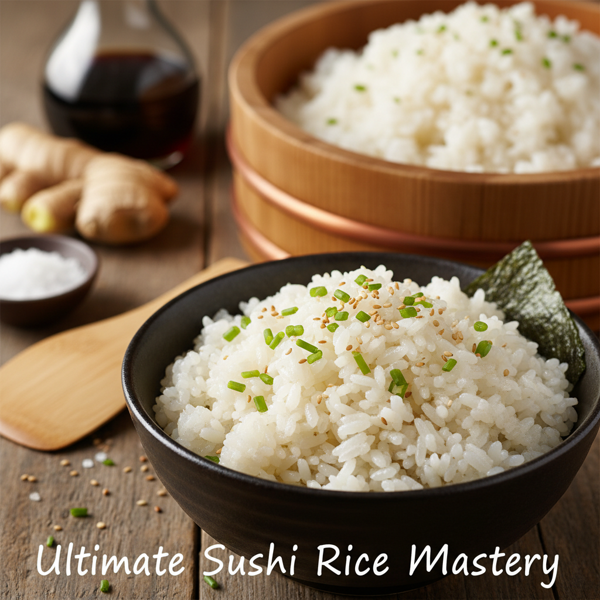
Elevate your sushi experience with this Ultimate Sushi Rice Mastery recipe! Perfectly seasoned and sticky short-grain rice is the cornerstone of any great sushi dish. This recipe guides you through creating the ideal rice for various sushi styles, ensuring each grain is bathed in the rich flavors of vinegar, sugar, and salt. Impress your friends and family with homemade sushi that rivals your favorite sushi restaurant! Ideal for crafting delicious Futomaki rolls, this rice will become your go-to for sushi nights.
5
Servings
N/A
Calories
6
Ingredients
Ingredients
short-grain calrose rice
3 cups (washed and drained)
konbu
4 inches (whole piece)
water
3 1/2 cups (for cooking)
sugar
3 tablespoons (granulated)
salt
1 1/2 teaspoons (kosher or sea salt)
Japanese vinegar
4 1/2 tablespoons (sushi vinegar preferred)
Instructions
1
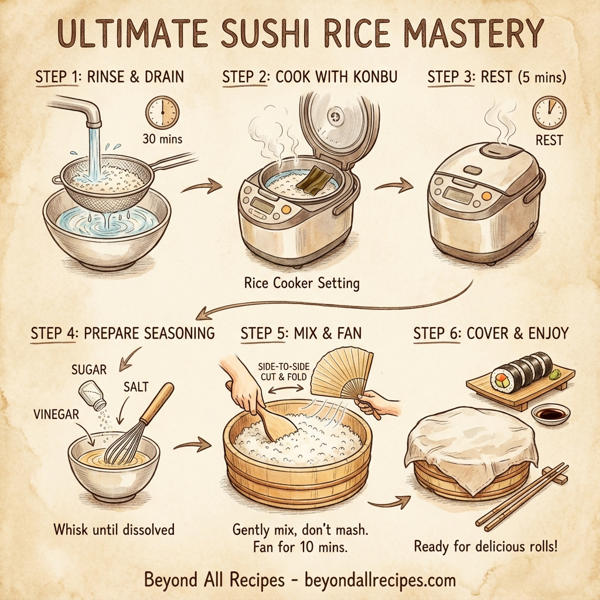
Begin by washing and draining the short-grain rice under cold water for about 30 minutes to remove excess starch. This step is crucial for achieving the desired texture.
2
Once rinsed, place the rice, water, and konbu into an electric rice cooker. Cook according to your rice cooker’s settings for sushi rice.
3
After the cooking cycle is complete, let the rice rest in the cooker for an additional 5 minutes without lifting the lid. This helps the rice steam and become perfectly fluffy.
4
While the rice is resting, prepare your sushi seasoning by combining vinegar, sugar, and salt in a bowl. Whisk the mixture until all sugar and salt have completely dissolved into the vinegar, creating a smooth, flavorful seasoning.
5
Transfer the hot rice into a large wooden hanigiri or a suitable bowl (while a wooden bowl is preferred for steaming, a regular bowl will also work). Gently sprinkle the sushi seasoning over the warm rice.
6
Using a rice paddle, delicately mix and fold the seasoning into the rice using a side-to-side cutting motion; avoid mashing the rice. Meanwhile, if possible, have someone fan the rice to help it cool and develop a nice sheen. Continue this process for about 10 minutes.
7
Once mixed, cover the hanigiri or bowl with a damp cloth to keep the rice moist while you prepare other sushi ingredients. Your sushi rice is now ready to be used in delicious rolls!
Nutrition Information
Frequently Asked Questions
Frequently Asked Questions
What is Ultimate Sushi Rice Mastery?
It is a recipe for perfectly seasoned and sticky short-grain rice, which serves as the cornerstone for various sushi styles like Futomaki.
What type of rice should I use for this recipe?
The recipe calls for 3 cups of short-grain Calrose rice.
Why is it important to wash the rice?
Washing and draining the rice for 30 minutes removes excess starch, which is crucial for achieving the desired sushi rice texture.
How much water is needed to cook the rice?
You should use 3 1/2 cups of water for 3 cups of short-grain rice.
What is konbu and how is it used here?
Konbu is a type of kelp; a 4-inch piece is added to the rice cooker with the rice and water to infuse flavor during cooking.
How long should the rice rest after cooking?
The rice should rest in the cooker for an additional 5 minutes without lifting the lid to help it steam and become fluffy.
What ingredients are in the sushi seasoning?
The seasoning consists of Japanese vinegar, sugar, and salt.
How much sugar is required for the seasoning?
The recipe requires 3 tablespoons of granulated sugar.
How much salt is needed for the seasoning?
You should use 1 1/2 teaspoons of kosher or sea salt.
How much Japanese vinegar should I use?
The recipe calls for 4 1/2 tablespoons of Japanese vinegar, preferably sushi vinegar.
How do I prepare the sushi seasoning?
Whisk the vinegar, sugar, and salt in a bowl until the sugar and salt have completely dissolved.
What is a hanigiri?
A hanigiri is a traditional large wooden bowl used for mixing and cooling sushi rice.
Can I use a regular bowl if I don't have a wooden one?
Yes, while a wooden bowl is preferred for steaming, a regular bowl will also work for mixing the rice.
When should the seasoning be added to the rice?
The sushi seasoning should be sprinkled over the rice while the rice is still warm after being transferred to a bowl.
What is the correct way to mix the seasoning into the rice?
Use a rice paddle to delicately mix and fold the seasoning using a side-to-side cutting motion.
Why should I avoid mashing the rice during mixing?
Avoiding mashing ensures that each grain of rice remains intact and maintains the proper texture.
Why is fanning the rice recommended?
Fanning the rice while mixing helps it cool down and develop a desirable shiny sheen.
How long does the mixing and fanning process take?
The process of mixing and fanning the rice should continue for about 10 minutes.
How should I store the rice while preparing other ingredients?
Cover the rice bowl with a damp cloth to keep the rice moist.
How many servings does this recipe provide?
This recipe makes approximately 5 servings.
What kind of dishes can I make with this sushi rice?
It is ideal for Futomaki rolls, sushi rolls, and other Japanese sushi styles.
Is this recipe suitable for lunch or snacks?
Yes, the recipe tags include both 'lunch' and 'snacks'.
What are the primary tags for this recipe?
Tags include sushi rice, sushi, futomaki, japanese cuisine, easy sushi rice, and homemade sushi.
Can I use long-grain rice instead?
No, short-grain rice is necessary for the specific sticky texture required for sushi.
How long is the initial rice washing step?
The rice should be washed and drained for 30 minutes.
Does the recipe specify a certain type of salt?
It recommends using 1 1/2 teaspoons of kosher or sea salt.
What tool is used to mix the seasoning?
A rice paddle is used to delicately fold the seasoning into the rice.
Is a rice cooker required?
The instructions recommend using an electric rice cooker set to the 'sushi rice' setting.
What should the texture of the finished rice be?
The rice should be perfectly seasoned, sticky, and fluffy.
What is the goal of the Ultimate Sushi Rice Mastery recipe?
The goal is to create restaurant-quality sushi rice at home for an elevated sushi experience.