Ultimate Stove-To-Oven Pan-Seared Ribeye Steak
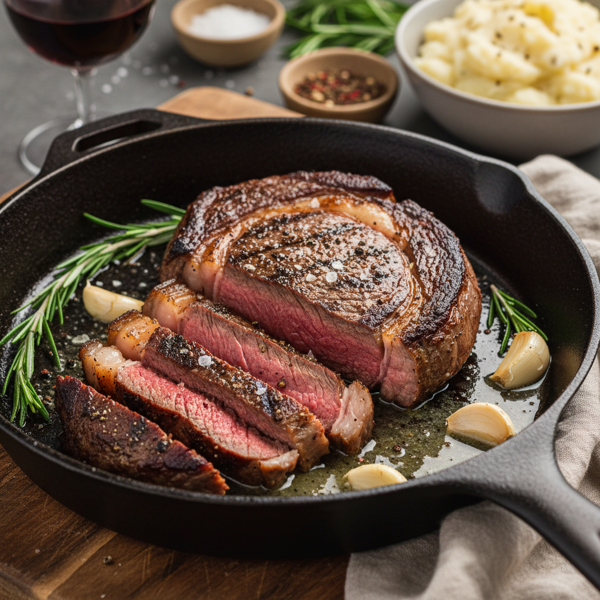
Indulge in a steakhouse-quality meal at home with this Ultimate Stove-To-Oven Pan-Seared Ribeye Steak recipe. Designed for perfect doneness every time, this method begins by creating a rich, dark crust in a hot skillet before transferring to the oven for a beautifully even cook. The key to achieving a tender and juicy steak lies in the proper preparation: let the steak rest at room temperature for at least 1.5 hours before cooking to relax the meat fibers, and use an instant-read thermometer for precise doneness. This recipe focuses on New York or rib-eye steaks cut to a generous 2-1/2 inches thick and is ideal for impressing guests or enjoying a decadent dinner date night at home. Remember, the golden rule is to add salt only after cooking to preserve the steak's juices!
N/A
Servings
N/A
Calories
6
Ingredients
Ingredients
Vegetable oil
1 - 1.5 tablespoons (for searing)
Boneless beef steak
1 (1-1/2 pounds, cut 2-1/2 inches thick) (preferably New York or rib-eye cut)
Garlic powder
to taste (optional)
Black pepper
to taste (freshly ground, cracked)
Butter
1 - 1.5 tablespoons (for topping after cooking)
Salt
to taste (used only after cooking)
Instructions
1
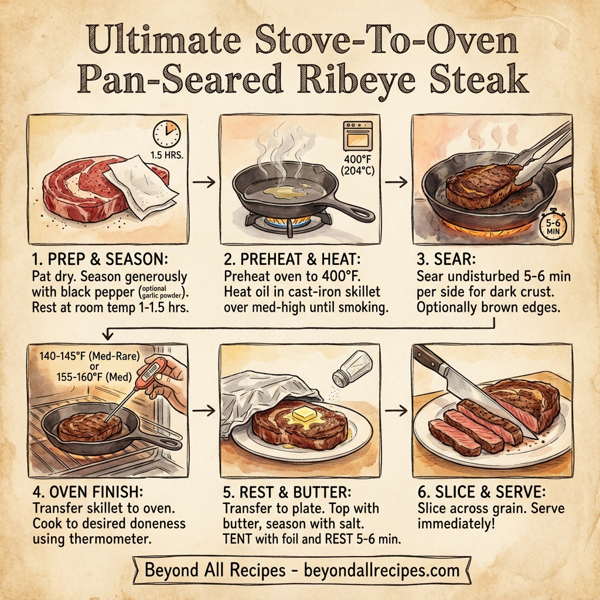
Begin by patting the beef steak dry using paper towels to ensure a good sear.
2
Generously season the steak with freshly cracked black pepper. Optionally, you may sprinkle garlic powder for added flavor. Allow the seasoned steak to sit at room temperature for 1 to 1-1/2 hours to enhance tenderness.
3
Preheat your oven to 400°F (204°C) while you prepare the skillet.
4
In a heavy oven-proof skillet (preferably cast-iron), heat the vegetable oil over medium-high heat until it begins to lightly smoke.
5
Carefully place the steak in the hot skillet and sear without moving it for about 5-6 minutes. Aim for a rich, dark crust. If the meat starts to brown too quickly, reduce the heat.
6
After the first side has seared, flip the steak to sear the other side for another 5-6 minutes. Optionally, you can lift the steak with tongs and brown the edges for an even more flavorful crust.
7
Once both sides have a beautiful sear, return the steak flat in the pan. Transfer the skillet to the preheated oven.
8
Cook the steak in the oven until your instant-read thermometer registers the desired doneness: for medium-rare, aim for 140-145°F (60-63°C), and for medium, 155-160°F (68-71°C). Be mindful that the steak continues to cook slightly after being pulled from the oven, so check the temperature a few degrees before your target.
9
Using tongs, transfer the steak to a plate, avoiding puncturing the meat to keep the juices trapped.
10
Spread butter on top of the hot steak and lightly season with salt to taste.
11
Cover the steak loosely with foil and allow it to rest for 5-6 minutes. This resting period allows the juices to redistribute, creating a succulent cut.
12
Finally, slice the steak across the grain into thick slices and serve immediately for a delectable dining experience.
Nutrition Information
Frequently Asked Questions
Frequently Asked Questions
What is the best method for cooking this ribeye steak?
The method involves a stove-to-oven approach: searing the steak in a hot skillet to create a crust, then finishing it in the oven for an even cook.
What cuts of beef are recommended for this recipe?
This recipe is designed for boneless beef steaks, specifically rib-eye or New York cuts.
How thick should the steak be?
The steak should be cut to a generous thickness of 2-1/2 inches.
Why should I pat the steak dry before cooking?
Patting the beef dry with paper towels is essential to ensure a high-quality sear.
When should I add salt to the steak?
According to the golden rule of this recipe, salt should only be added after cooking to preserve the juices.
How long should the steak sit at room temperature before cooking?
Allow the steak to sit at room temperature for 1 to 1.5 hours.
What is the benefit of letting the steak rest before cooking?
Resting at room temperature helps relax the meat fibers, leading to a more tender steak.
What temperature should I preheat my oven to?
Preheat your oven to 400 degrees Fahrenheit (204 degrees Celsius).
What type of skillet is best for this steak?
A heavy oven-proof skillet is required, with a cast-iron skillet being the preferred choice.
Which oil should be used for searing?
Vegetable oil is recommended because it can handle the medium-high heat required for searing.
How do I know when the skillet is ready for the steak?
The oil should be heated over medium-high heat until it begins to lightly smoke.
How long should I sear each side of the steak?
Sear each side for about 5 to 6 minutes to develop a rich, dark crust.
Should I move the steak while it is searing?
No, you should sear the steak without moving it to ensure the crust forms properly.
Can I brown the edges of the ribeye?
Yes, you can use tongs to lift the steak and brown the edges for a more flavorful crust.
What tool is necessary for checking the steak's doneness?
An instant-read thermometer is necessary for precise results.
What is the target temperature for a medium-rare steak?
For medium-rare, aim for an internal temperature of 140 to 145 degrees Fahrenheit (60 to 63 degrees Celsius).
What is the target temperature for a medium steak?
For medium doneness, aim for 155 to 160 degrees Fahrenheit (68 to 71 degrees Celsius).
Should I pull the steak out of the oven exactly at the target temperature?
No, pull the steak a few degrees before your target because it continues to cook slightly after being removed.
How should I move the steak from the pan to a plate?
Use tongs to transfer the steak to avoid puncturing the meat.
Why shouldn't I use a fork to move the steak?
Puncturing the meat allows the juices to escape, which can make the steak less succulent.
What should I put on the steak immediately after cooking?
Spread butter on top of the hot steak and season with salt to taste.
How long should the steak rest after it is finished cooking?
The steak should rest for 5 to 6 minutes before slicing.
Should I cover the steak while it rests?
Yes, cover the steak loosely with foil during the resting period.
What does the resting period do for the meat?
Resting allows the juices to redistribute throughout the steak, creating a juicy and succulent cut.
How should the steak be sliced?
Slice the steak across the grain into thick slices.
Is garlic powder required for this recipe?
Garlic powder is an optional seasoning used for added flavor.
What kind of pepper should I use?
Freshly cracked or freshly ground black pepper is recommended.
Can I use this recipe for meal prep?
Yes, the tags indicate this recipe is suitable for meal prep or a decadent dinner date night.
What if the meat browns too quickly in the skillet?
If the crust forms too fast or starts to burn, reduce the heat on the stove.
What makes this steak 'steakhouse quality'?
The combination of a long room-temperature rest, high-heat searing, oven finishing, and butter-basting creates professional results.