Ultimate Rib Eye Roast
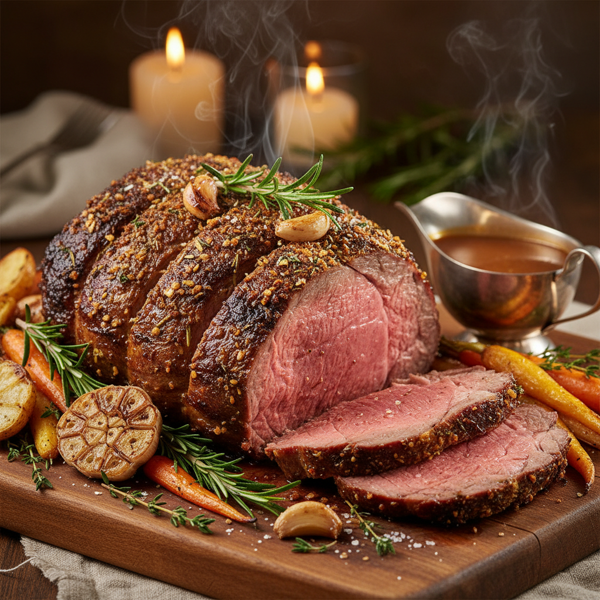
Indulge in the finest preparation of ribeye roast with this cherished family recipe, passed down from my mom’s aunt. This method transforms an already luxurious cut of meat into an unforgettable centerpiece for any gathering. Ideal for special occasions, this roast is seasoned simply with salt and pepper, allowing the natural flavors to shine. The roast is cooked using a two-phase technique that ensures it's perfectly medium-rare – warm and pink in the center, without any fuss over basting or complicated ingredients like butter or garlic. As you savor the succulent meat, you’ll appreciate how easy it is to whip up other side dishes, making it an excellent choice for dinner parties. With clear instructions and no need to check on it constantly, this recipe is perfect for both novice and experienced cooks looking to impress their guests.
N/A
Servings
N/A
Calories
3
Ingredients
Ingredients
Rib Eye Roast
4-6 lbs (trimmed and at room temperature)
Salt
to taste (coarse kosher or sea salt recommended)
Black Pepper
to taste (freshly ground)
Instructions
1
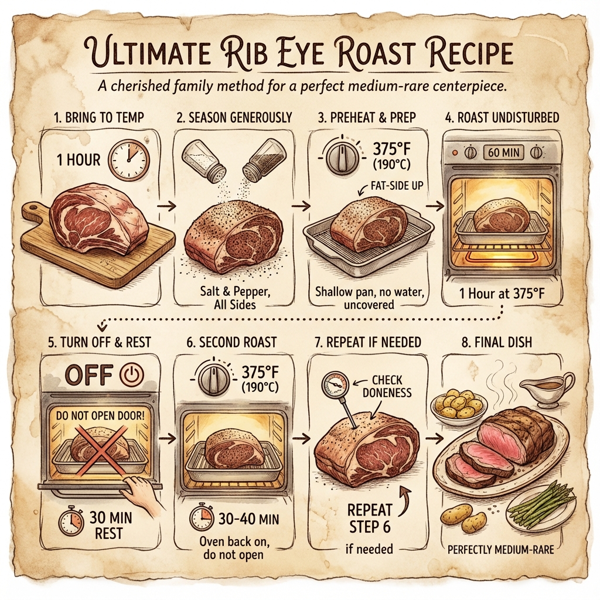
Remove the ribeye roast from the refrigerator and let it sit at room temperature for about 1 hour before cooking.
2
Generously season the roast with salt and pepper on all sides, ensuring the seasoning adheres well to the meat.
3
Preheat your oven to 375°F (190°C).
4
Place the seasoned ribeye roast fat-side up on a rack in a shallow roasting pan. Ensure it is not covered and do not add any water to the pan.
5
Roast the ribeye in the preheated oven for 1 hour undisturbed.
6
After 1 hour, turn off the oven but leave the roast inside. Do not open the oven door for any reason as the roast continues to cook gently while resting.
7
After 30 minutes of resting, turn the oven back on to 375°F (190°C) and cook the roast for an additional 30 to 40 minutes. Again, do not open the oven door during this time.
8
If the meat is not cooked to your desired doneness after this time, you may repeat the final cooking step.
Nutrition Information
Frequently Asked Questions
Frequently Asked Questions
What is the Ultimate Rib Eye Roast?
The Ultimate Rib Eye Roast is a cherished family recipe focused on simplicity and natural flavors to create a perfect medium-rare centerpiece for special occasions.
What cut of meat is required for this recipe?
This recipe specifically requires a ribeye roast, ideally weighing between 4 and 6 pounds.
How should the ribeye roast be prepared before cooking?
The roast should be trimmed and allowed to sit at room temperature for about 1 hour before you begin roasting.
What are the primary seasonings used?
The seasoning is kept simple using only salt and black pepper to allow the natural beef flavors to stand out.
What type of salt is recommended?
Coarse kosher or sea salt is recommended for the best texture and flavor profile.
What type of pepper should I use?
Freshly ground black pepper is recommended for seasoning the roast.
What temperature should the oven be preheated to?
Preheat your oven to 375°F (190°C) before placing the roast inside.
What kind of pan is best for this roast?
A shallow roasting pan equipped with a rack is ideal for this preparation.
Which way should the roast be placed in the pan?
The ribeye roast should be placed fat-side up on the roasting rack.
Should the roast be covered while in the oven?
No, the roast should remain uncovered throughout the entire cooking process.
Do I need to add water to the roasting pan?
No, do not add any water or liquid to the pan when roasting the meat.
How long is the initial roasting period?
The roast should be cooked undisturbed in the preheated oven for exactly 1 hour.
What do I do after the first hour of roasting?
Turn off the oven but leave the roast inside; do not open the oven door for any reason.
How long does the roast rest in the turned-off oven?
The roast must rest in the turned-off oven for 30 minutes with the door closed.
Why is it important not to open the oven door during the rest period?
Opening the door allows heat to escape, which interferes with the gentle cooking and resting process required for a perfect medium-rare finish.
What happens after the 30-minute rest period?
Turn the oven back on to 375°F (190°C) and cook the roast for an additional 30 to 40 minutes.
Can I check the meat during the final cooking phase?
The recipe advises keeping the oven door closed even during the final 30 to 40 minute cooking phase.
What if the roast isn't cooked to my desired doneness?
If the meat is not at your preferred doneness, you may repeat the final cooking step of 30-40 minutes at 375°F.
Does this recipe require basting?
No, there is no need for basting at any point during the cooking process.
Are there any complex ingredients like garlic or butter?
No, this recipe avoids extra ingredients like garlic or butter to keep the process simple and the flavor focused on the meat.
Is this recipe suitable for beginner cooks?
Yes, because it requires very little active work and has clear instructions, it is perfect for both novice and experienced cooks.
What is the typical result of this cooking method?
This method consistently produces a roast that is warm and pink in the center, which is the hallmark of a perfect medium-rare.
Is this a good dish for dinner parties?
Yes, since the roast doesn't require constant monitoring, it allows the host more time to focus on side dishes and guests.
Where did this recipe originate?
This is a family recipe that was passed down from the author's mom’s aunt.
How many ingredients are needed in total?
Only three ingredients are needed: the ribeye roast, salt, and black pepper.
Can I use a smaller or larger roast?
The timing provided is specifically optimized for a 4-6 lb roast; adjustments may be needed for other sizes.
What are some common tags for this recipe?
Common tags include holiday meal, special occasion, easy cooking, and roast beef.
Is nutritional information like calories or fat provided?
No, nutritional details such as calories, fat, and protein are not specified for this recipe.
How does the 'two-phase' technique work?
It involves an initial high-heat roasting phase, a resting period in a turned-off oven, and a final blast of heat to finish the cooking.
Is this recipe good for holiday meals?
Absolutely, its luxurious nature and impressive presentation make it an ideal choice for holiday gatherings.