Ultimate Juicy Brined Turkey
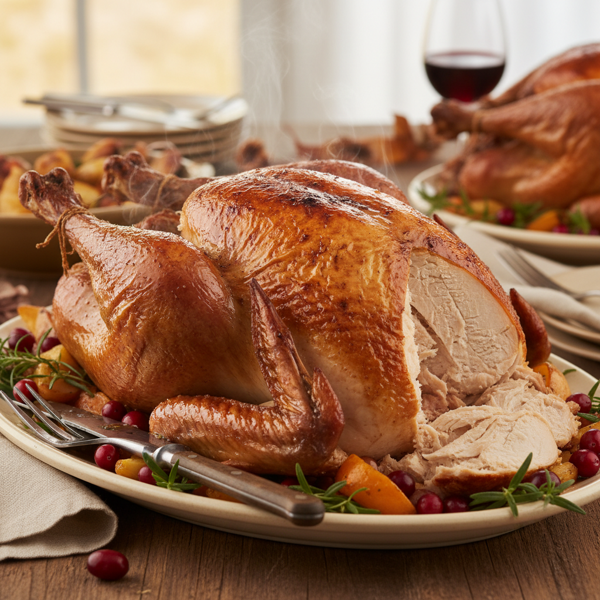
Experience the juiciest turkey you've ever tasted with this Ultimate Juicy Brined Turkey recipe. Perfected over three Thanksgivings, this succulent turkey not only impresses with its flavor but also offers a moist and tender bite that will leave your guests raving. Infused with aromatic herbs and sweetened with brown sugar, this turkey is brined to perfection, ensuring it remains juicy even after roasting. This is my first Thanksgiving hosting at home, and I'm thrilled to carry on this cherished family tradition that guarantees a mouth-watering centerpiece for the holiday feast.
22
Servings
175
Calories
11
Ingredients
Ingredients
Turkey
15 lbs (not self-basting or kosher, rinsed)
Table salt
2 cups (for brine)
Icy cold water
2 gallons (for brine)
Brown sugar
4 cups (for brine)
Dried rosemary
1/2 cup (for brine)
Dried thyme
1/2 cup (for brine)
Onion
1 small (peeled and quartered)
Carrot
1 (peeled and cut into 1-inch chunks)
Celery
1 stalk (cut into 1-inch chunks)
Unsalted butter
4-6 tablespoons (melted)
Fresh fruit
as needed (for garnish)
Instructions
1
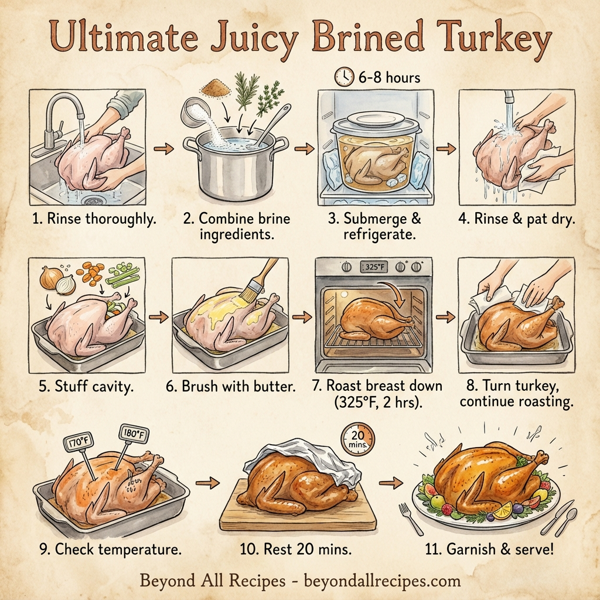
Begin by rinsing the turkey thoroughly in cool water to remove any residue.
2
In a very large non-corrosive container, such as stainless steel, glass, or food-grade plastic, combine the table salt and icy cold water, stirring until the salt has completely dissolved.
3
Next, add the brown sugar, dried rosemary, and dried thyme to the saltwater solution, mixing well until the sugar is fully dissolved.
4
Gently submerge the turkey in the brine, making sure it is fully covered. If necessary, weigh it down with a plate. Cover the container and refrigerate for at least 6 hours and up to 8 hours. Keep the turkey below 40°F throughout the brining process, using ice packs if necessary.
5
After brining, remove the turkey from the solution and discard the brine. Rinse the turkey thoroughly under a slow stream of cold water, both inside and out, to wash away excess salt and sugar. Pat the skin and cavities dry using paper towels.
6
Stuff the cavity of the turkey with the quartered onion, carrot pieces, and celery chunks for added flavor.
7
Brush the skin of the turkey generously with melted unsalted butter, ensuring an even coating.
8
Preheat your oven to 325°F. Roast the turkey breast side down for 2 hours. During this time, baste the legs and back periodically with the melted butter for a rich flavor and moisture.
9
Carefully turn the turkey breast side up, using paper towels for grip, and return it to the oven. Continue to roast, basting with the pan drippings every 30 minutes.
10
Monitor the internal temperature using a meat thermometer; the turkey is done when the breast reaches 170°F and the thigh reaches 180°F. Remember, a brined turkey cooks slightly faster, so check regularly.
11
Once cooked, remove the turkey from the oven and let it rest for 20 minutes before carving. This allows the juices to redistribute.
12
Transfer the turkey to a serving platter and garnish with fresh fruit for a beautiful presentation.
Nutrition Information
10g
Fat
5g
Carbs
13g
Protein
0g
Fiber
3g
Sugar
661mg
Sodium
Frequently Asked Questions
Frequently Asked Questions
What makes the Ultimate Juicy Brined Turkey unique?
The recipe uses a specific brine of salt, brown sugar, and aromatic herbs like rosemary and thyme to ensure the turkey stays succulent and moist even after roasting.
How many people does this turkey recipe serve?
This recipe is designed to provide approximately 22 servings.
What size turkey is recommended?
A 15 lb turkey that is not self-basting or kosher is recommended for this recipe.
How long should the turkey be brined?
The turkey should be submerged in the brine and refrigerated for at least 6 hours and up to 8 hours.
What ingredients are needed for the brine?
The brine consists of 2 cups of table salt, 2 gallons of icy cold water, 4 cups of brown sugar, 1/2 cup of dried rosemary, and 1/2 cup of dried thyme.
What type of container should I use for brining?
Use a very large non-corrosive container made of stainless steel, glass, or food-grade plastic.
What temperature should the brine be kept at?
The turkey must be kept below 40°F throughout the brining process, using ice packs if necessary.
Should I rinse the turkey after brining?
Yes, rinse the turkey thoroughly under a slow stream of cold water inside and out to remove excess salt and sugar.
What should I put inside the turkey cavity?
Stuff the cavity with a quartered small onion, 1-inch carrot chunks, and 1-inch celery chunks for flavor.
What is the oven temperature for roasting?
The oven should be preheated to 325°F.
Why do you roast the turkey breast side down first?
Roasting breast side down for the first 2 hours helps keep the breast meat moist and flavorful.
How do I prepare the skin before roasting?
Brush the skin generously with 4-6 tablespoons of melted unsalted butter.
How often should I baste the turkey?
Baste the turkey with pan drippings every 30 minutes after turning it breast side up.
What is the target internal temperature for the breast?
The breast is done when it reaches an internal temperature of 170°F.
What is the target internal temperature for the thigh?
The thigh should reach an internal temperature of 180°F.
Does brining affect the cooking time?
Yes, a brined turkey typically cooks slightly faster than an unbrined one, so check the temperature regularly.
How long should the turkey rest after roasting?
Let the turkey rest for 20 minutes before carving to allow juices to redistribute.
What are the calories per serving?
Each serving contains approximately 175 calories.
What is the fat content per serving?
There are 10g of fat per serving.
How much protein is in one serving?
Each serving provides 13g of protein.
How much sodium is in this recipe?
There is 661mg of sodium per serving.
What can I use to garnish the serving platter?
Fresh fruit is recommended as a garnish for a beautiful presentation.
Can I use kosher salt instead of table salt?
The recipe specifically calls for table salt; if using kosher salt, you may need to adjust the volume as grains differ in size.
What aromatic herbs are used?
The recipe uses dried rosemary and dried thyme for the brine.
How much brown sugar is used?
The recipe requires 4 cups of brown sugar for the brine.
Is this recipe suitable for holiday hosting?
Yes, it is described as a perfect centerpiece for Thanksgiving or holiday feasts.
What should I do if the turkey isn't fully submerged in brine?
You can weigh the turkey down with a heavy plate to ensure it stays fully covered by the liquid.
How do I dry the turkey after rinsing?
Pat the skin and the cavities dry using paper towels.
What total preparation is needed for the vegetables?
Peel and quarter the onion, and cut the carrot and celery into 1-inch chunks.
What should I use to flip the turkey mid-roast?
Use paper towels to get a firm grip when carefully turning the turkey breast side up.