Ultimate Japanese Sticky Sushi Rice
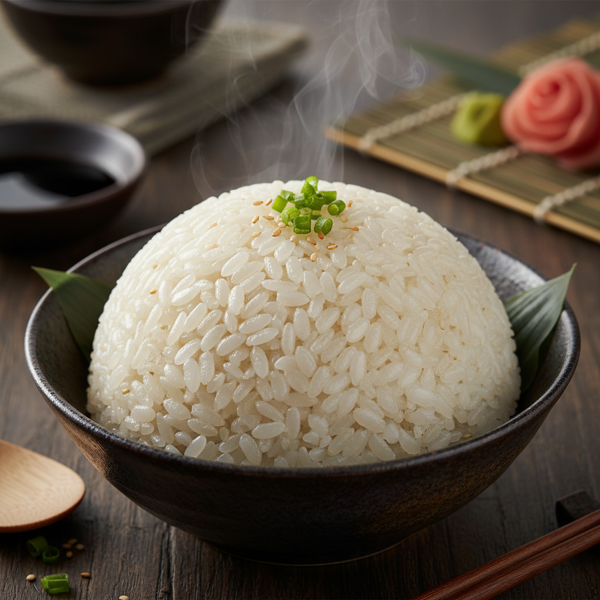
Elevate your sushi-making skills with this Ultimate Japanese Sticky Sushi Rice recipe, crafted by the expert Reiko Hashimoto. This perfectly seasoned, sticky rice serves as the ideal foundation for any sushi dish, capturing the essence of authentic Japanese cuisine. With an easy-to-follow, detailed process, this recipe guarantees delicious results that will impress your family and friends. Whether you're a sushi novice or a seasoned chef, mastering this sticky rice is essential for creating sushi that delights the palate. Don't be deceived by the length of the instructions; this technique is straightforward and achievable, making your sushi-making experience both enjoyable and rewarding.
75
Servings
N/A
Calories
6
Ingredients
Ingredients
sushi rice
3 cups (Rinsed)
water
3 1/3 cups (N/A)
rice vinegar
1/2 cup (N/A)
sugar
1/4 cup (N/A)
salt
1/2 teaspoon (N/A)
dashi, powdered fish stock
1 tablespoon (N/A)
Instructions
1
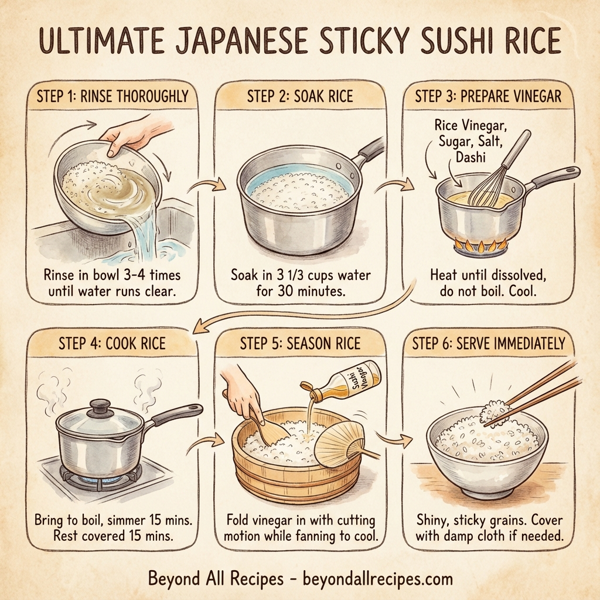
Step 1: Rinse the Sushi Rice Thoroughly: In a large bowl, add the sushi rice and fill with enough cold water to cover the rice by about an inch. Gently swirl the rice around, drain, and repeat this process 3-4 times until the water runs clear. This removes excess starch and helps achieve that perfect sticky texture.
2
Step 2: Soak the Rice: After rinsing, transfer the rice into a large saucepan. Add 3 1/3 cups of water. Allow the rice to soak for at least 30 minutes. This soaking period helps the grains absorb water, becoming plumper and whiter as the water clears.
3
Step 3: Prepare the Sushi Vinegar: In a small saucepan over low heat, combine 1/2 cup rice vinegar, 1/4 cup sugar, 1/2 teaspoon salt, and 1 tablespoon powdered dashi. Stir gently until the sugar and salt dissolve completely, making sure not to bring the mixture to a boil. Once dissolved, remove from heat and let it cool.
4
Step 4: Cook the Rice: Cover the saucepan with its lid and place it on the stove over high heat. Do not lift the lid during cooking. Once the rice begins to boil, reduce the heat to low and simmer for 15 minutes. After 15 minutes, turn off the heat and let the rice sit, covered, for an additional 15 minutes to allow it to finish cooking in its own steam.
5
Step 5: Season the Rice: Transfer the cooked rice into a large wooden or glass bowl. Drizzle the cooled sushi vinegar evenly over the rice. Using a flat spatula or rice paddle, gently fold the vinegar into the rice with a cutting motion, taking care not to mash the grains. While folding, fan the rice to help it cool to room temperature and achieve a glossy sheen.
6
Step 6: Serve Immediately: For the best texture and flavor, use the sushi rice immediately. Each grain should remain shiny, sticky, and separate. If not using right away, cover the bowl with a damp cloth to keep the rice moist and prevent hardening.
Nutrition Information
Frequently Asked Questions
Frequently Asked Questions
Who created the Ultimate Japanese Sticky Sushi Rice recipe?
The recipe was crafted by expert Reiko Hashimoto.
How many servings does this sushi rice recipe yield?
This recipe makes 75 servings.
What type of rice is used for this recipe?
The recipe calls for 3 cups of sushi rice.
Why is it important to rinse the sushi rice?
Rinsing removes excess starch, which helps achieve the perfect sticky texture.
How many times should the sushi rice be rinsed?
The rice should be rinsed 3 to 4 times until the water runs clear.
How long should the rice soak before cooking?
The rice should soak in water for at least 30 minutes.
What happens during the soaking period?
The soaking period allows the grains to absorb water, making them plumper and whiter.
What are the ingredients for the sushi vinegar?
The sushi vinegar consists of rice vinegar, sugar, salt, and powdered dashi.
How much rice vinegar is required?
You will need 1/2 cup of rice vinegar.
How much sugar is added to the sushi vinegar?
The recipe requires 1/4 cup of sugar.
Is dashi used in this recipe?
Yes, 1 tablespoon of powdered dashi fish stock is used in the seasoning.
Should the sushi vinegar mixture be boiled?
No, the mixture should be stirred over low heat until dissolved but not brought to a boil.
How much water is needed to cook the rice?
3 1/3 cups of water are used to cook the rice.
What is the first step in cooking the rice after soaking?
Place the saucepan over high heat with the lid on until it begins to boil.
Can I lift the lid while the rice is cooking?
No, you should not lift the lid during the cooking process.
How long does the rice simmer?
The rice should simmer on low heat for 15 minutes.
What should be done after the 15-minute simmer?
Turn off the heat and let the rice sit, covered, for an additional 15 minutes.
What is the purpose of letting the rice sit after cooking?
It allows the rice to finish cooking in its own steam.
What kind of bowl is recommended for seasoning the rice?
A large wooden or glass bowl is recommended.
How should the sushi vinegar be applied to the rice?
Drizzle the cooled vinegar evenly over the rice and fold it in using a cutting motion.
What tool is best for folding the vinegar into the rice?
A flat spatula or rice paddle should be used.
Why should you fan the rice while folding?
Fanning helps the rice cool to room temperature and gives it a glossy sheen.
What should the texture of the individual grains be?
Each grain should remain shiny, sticky, and separate.
When should the sushi rice be used?
For the best texture and flavor, the rice should be used immediately.
How can I prevent the rice from hardening if not used immediately?
Cover the bowl with a damp cloth to keep the rice moist.
What category of meal is this recipe?
It is categorized as a One Dish Meal.
Is this recipe suitable for beginners?
Yes, the technique is straightforward and achievable for sushi novices.
How much salt is used in the vinegar mixture?
The recipe calls for 1/2 teaspoon of salt.
What is the total preparation time for soaking and resting?
The rice requires at least 45 minutes of non-active time (30 min soak, 15 min rest).
What makes this rice recipe 'ultimate'?
It captures the essence of authentic Japanese cuisine with perfectly seasoned, glossy grains.