Ultimate Homemade Vegetable & Meat Stock
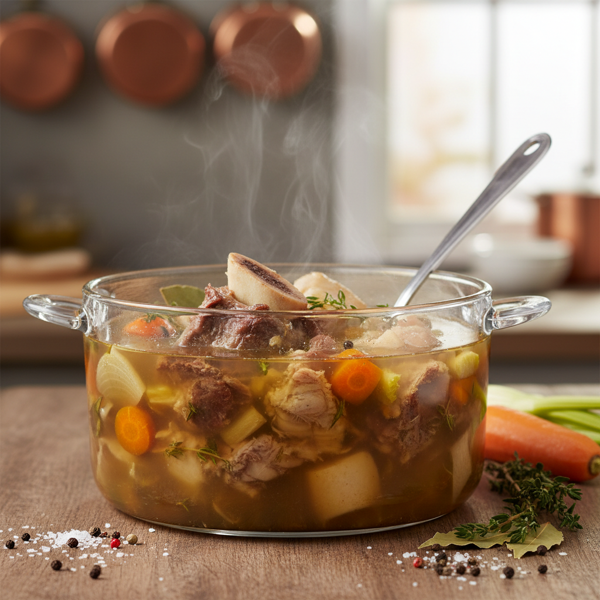
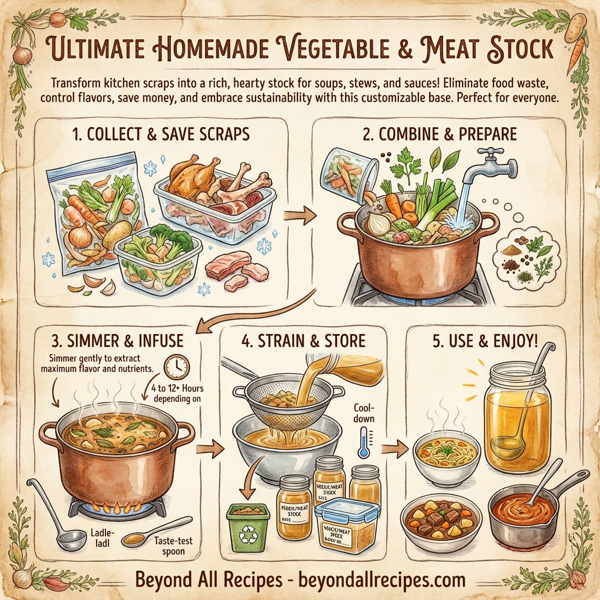
Transform your kitchen scraps into a rich, hearty stock that enhances your soups, stews, and sauces! By saving vegetable trimmings and meat remnants in your freezer, you'll not only eliminate food waste but also create a flavorful base for countless dishes. This customizable stock recipe empowers you to use all parts of the ingredients you buy, giving you control over the flavors and ingredients in your kitchen while saving you money on store-bought options. Perfect for both vegetarians and meat lovers alike, adjust the ingredients to suit your taste and make a large batch to keep on hand for whenever you need it. The result is a deeply satisfying stock packed with nutrients and flavor, showcasing not just your culinary skills, but also your commitment to sustainability.
N/A
Servings
N/A
Calories
23
Ingredients
Ingredients
water
1.5 gallons (none)
bay leaf
1 large (none)
peppercorns
2 tablespoons (none)
oregano
2 teaspoons (none)
thyme
2 teaspoons (none)
basil
2 teaspoons (none)
dill
2 teaspoons (none)
salt
to taste (none)
onion skins
1/2 cup (none)
carrot peels, ends and pieces
1/2 cup (none)
broccoli stems and pieces
1/2 cup (none)
spinach leaves
1/2 cup (none)
fresh parsley
1 bunch (none)
celery ends, leaves and pieces
1 cup (none)
green beans ends and pieces
1/2 cup (none)
tomatoes, pieces
1 (none)
mushroom stems and pieces
1/2 cup (none)
garlic cloves
3-4 (smashed)
shallot
1 (halved)
leek
1 (washed and sliced)
turnip
1 (peeled and chopped)
chicken pieces (optional)
1 cup (cut into parts)
beef pieces (optional)
1 cup (cut into parts)
Instructions
Nutrition Information
Frequently Asked Questions
Frequently Asked Questions
What is Ultimate Homemade Vegetable & Meat Stock?
It is a rich, hearty kitchen base made by transforming kitchen scraps and meat remnants into a flavorful stock for soups, stews, and sauces.
How does this recipe help reduce food waste?
This recipe encourages saving vegetable trimmings and meat pieces in your freezer, using all parts of the ingredients you buy instead of throwing them away.
Can I make this stock vegetarian?
Yes, the chicken and beef pieces are optional, so you can easily omit them to create a purely vegetable-based stock.
What vegetable scraps are recommended?
You can use onion skins, carrot peels, broccoli stems, celery ends, green bean pieces, mushroom stems, and spinach leaves.
How much water do I need for this recipe?
The recipe calls for 1.5 gallons of water to act as the base for the stock.
What herbs are included in this stock?
The recipe uses a blend of bay leaf, oregano, thyme, basil, dill, and fresh parsley.
Is this recipe economical?
Yes, it saves you money by utilizing scraps you already have and reducing the need to buy store-bought stock.
How should I prepare the garlic for the stock?
The 3-4 garlic cloves should be smashed before being added to the pot.
Can I use broccoli stems in the stock?
Yes, the recipe specifically suggests using 1/2 cup of broccoli stems and pieces.
Why are onion skins included?
Onion skins provide a deep, rich color and additional flavor to the final stock.
How much meat should I add if I want a meat-based stock?
The recipe suggests adding 1 cup of chicken pieces and/or 1 cup of beef pieces.
What should I do with the leek?
One leek should be washed and sliced before being added to the stock.
Are mushroom stems useful for stock?
Yes, mushroom stems and pieces add an earthy umami flavor to the broth.
Can I add salt to this recipe?
Yes, the recipe recommends adding salt to taste so you can control the sodium levels.
Is this stock suitable for meal prep?
Absolutely, it is designed for making large batches to keep on hand for various culinary needs.
How do I prepare the turnip?
The turnip should be peeled and chopped before being added to the mixture.
Can I use celery leaves?
Yes, the recipe specifically includes celery ends, leaves, and pieces.
What is the purpose of the peppercorns?
Two tablespoons of peppercorns provide a subtle heat and depth of spice to the stock.
Can I use carrot peels and ends?
Yes, the recipe calls for 1/2 cup of carrot peels, ends, and pieces.
Is this recipe customizable?
Yes, it empowers you to adjust the ingredients to suit your specific taste and the scraps you have available.
How many shallots are needed?
The recipe calls for one shallot, which should be halved.
Can I use fresh parsley?
Yes, one bunch of fresh parsley is included to add brightness to the flavor profile.
What type of tomatoes can I use?
The recipe suggests using one tomato, cut into pieces.
Does this stock contain nutrients?
Yes, the resulting stock is packed with nutrients extracted from the wide variety of vegetables and herbs.
Can I use green bean ends?
Yes, 1/2 cup of green bean ends and pieces are recommended.
Is this stock good for sauces?
Yes, it provides a flavorful base that enhances sauces, soups, and stews.
How should I store my scraps before making the stock?
You should save your vegetable trimmings and meat remnants in a container in your freezer.
Does this recipe promote sustainability?
Yes, it reflects a commitment to sustainability by reducing food waste through creative cooking.
Can I use dried herbs?
The recipe lists oregano, thyme, basil, and dill in teaspoon measurements, which usually implies dried forms for stock.
How much peppercorn is used?
The recipe calls for 2 tablespoons of peppercorns.