Ultimate Gluten-Free Pie Crust
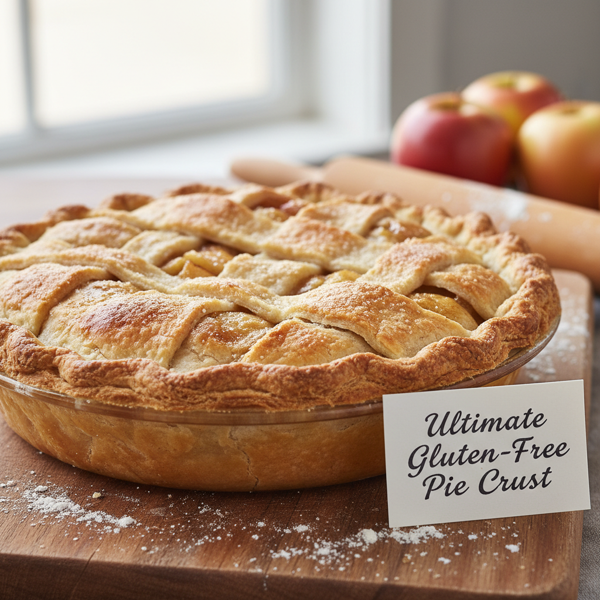
This Ultimate Gluten-Free Pie Crust is a game-changer for anyone struggling to find a delicious, flakey, and sturdy pie crust that accommodates gluten-free dietary needs. Developed by Mariann and inspired by a recipe from the AiA Gluten & Dairy Free Cookbook, this crust is not only gluten-free but also dairy-free and can easily be adapted to be soy-free. Whether you’re crafting a full pie or individual turnovers, this crust holds its shape beautifully and boasts a delightful taste. Perfect for your favorite pie fillings, this crust turns any dessert into a heavenly treat, reminiscent of traditional pies. Best of all, it’s made with easily accessible ingredients and can be prepped in advance, making it a staple in your gluten-free baking arsenal. Enjoy the ease and flavor of this pastry perfection, and share your creations with friends and family!
N/A
Servings
N/A
Calories
9
Ingredients
Ingredients
rice flour
1 cup (sifted)
tapioca flour
1/2 cup (sifted)
potato starch
1/4 cup (sifted)
salt
1/4 teaspoon (fine)
xanthan gum
2 teaspoons (n/a)
margarine or Spectrum Naturals Organic Shortening
4 ounces (cubed)
large egg or 1/4 cup ice water
1 (beaten (or use water if egg-free))
apple cider vinegar or water
1 teaspoon (n/a)
ice cold water
3 tablespoons (n/a)
Instructions
1
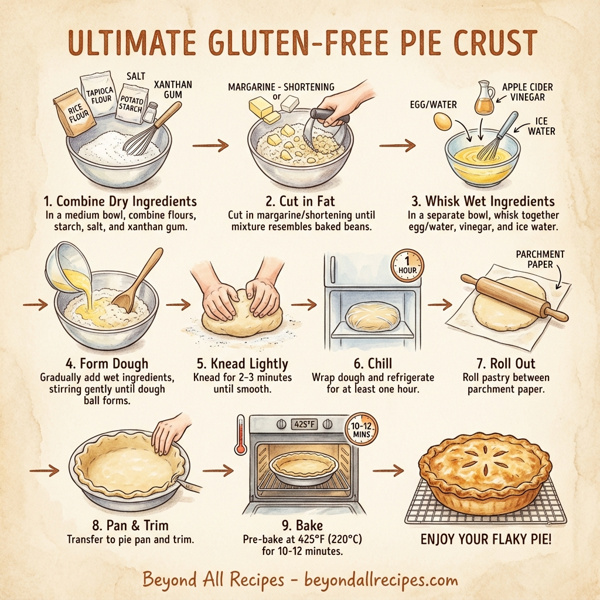
In a medium mixing bowl, combine the rice flour, tapioca flour, potato starch, salt, and xanthan gum. Stir well until evenly mixed.
2
Cut in the margarine (or Spectrum Naturals Organic Shortening for a soy-free option) using your fingers or a pastry cutter, until the mixture resembles baked beans rather than breadcrumbs.
3
In a separate bowl, whisk together the beaten egg (or water, if egg-free), apple cider vinegar (or water), and ice water until well combined.
4
Gradually add the wet ingredients to the dry mixture, stirring gently until a dough ball forms.
5
Lightly knead the pastry dough for 2-3 minutes on a surface lightly dusted with gluten-free flour if needed, until it comes together smoothly.
6
Wrap the dough in plastic wrap or parchment paper and refrigerate for at least one hour. This step allows the dough to firm up and is key for easy rolling.
7
Once chilled, if the dough feels too firm, knead it gently again to soften it slightly.
8
Roll out the pastry between two sheets of parchment paper to prevent sticking. Transfer to a pie pan and trim as necessary.
9
Follow your desired pie filling's baking instructions, or if pre-baking the crust, cook at 425°F (220°C) for 10-12 minutes until lightly golden.
10
If not using immediately, the unbaked pie crust can be frozen for later use. Simply thaw in the refrigerator before rolling out.
Nutrition Information
Frequently Asked Questions
Frequently Asked Questions
Is this pie crust gluten-free?
Yes, this recipe is specifically designed as an ultimate gluten-free pie crust using rice flour, tapioca flour, and potato starch.
Is the Ultimate Gluten-Free Pie Crust dairy-free?
Yes, the recipe uses margarine or shortening, making it dairy-free.
How can I make this recipe soy-free?
To make this recipe soy-free, use Spectrum Naturals Organic Shortening instead of margarine.
Can I make an egg-free version of this crust?
Yes, you can substitute the large egg with 1/4 cup of ice water to make it egg-free.
What flours are needed for this crust?
The recipe requires 1 cup of rice flour, 1/2 cup of tapioca flour, and 1/4 cup of potato starch.
Should the flours be prepared in any specific way?
Yes, the rice flour, tapioca flour, and potato starch should all be sifted before use.
What is the purpose of xanthan gum in this recipe?
Xanthan gum acts as a binding agent, providing the structure and elasticity that gluten usually provides in traditional doughs.
How much margarine or shortening is required?
The recipe calls for 4 ounces of cubed margarine or shortening.
How should I cut the fat into the flour?
Use your fingers or a pastry cutter until the mixture resembles the size of baked beans rather than fine breadcrumbs.
How long should I knead the pastry dough?
The dough should be lightly kneaded for 2 to 3 minutes on a surface dusted with gluten-free flour until it is smooth.
Does the dough need to be refrigerated?
Yes, you must wrap the dough and refrigerate it for at least one hour to allow it to firm up for easier rolling.
What should I do if the dough is too firm after chilling?
If the dough feels too firm after taking it out of the refrigerator, knead it gently again to soften it slightly.
What is the best way to roll out the gluten-free dough?
Roll the pastry between two sheets of parchment paper to prevent sticking and ensure a smooth transfer to the pie pan.
What are the instructions for pre-baking the crust?
To pre-bake the crust, cook it at 425°F (220°C) for 10-12 minutes until it is lightly golden.
Can this pie crust be frozen?
Yes, unbaked pie crust can be frozen. Simply thaw it in the refrigerator before rolling it out.
Who developed this recipe?
This recipe was developed by Mariann, inspired by the AiA Gluten & Dairy Free Cookbook.
How much salt is used in the recipe?
The recipe uses 1/4 teaspoon of fine salt.
What role does apple cider vinegar play?
Apple cider vinegar helps tenderize the crust; however, it can be replaced with water if preferred.
How much ice cold water is needed?
The recipe requires 3 tablespoons of ice cold water, in addition to any liquid used for egg substitution.
Can I use this dough for something other than pie?
Yes, this sturdy and flakey dough is also perfect for making individual turnovers.
Is this recipe suitable for vegans?
Yes, if you use the water-only egg substitute and shortening, the recipe is vegan-friendly.
What is the total count of ingredients?
There are 9 primary ingredients used in this recipe.
How many teaspoons of xanthan gum are needed?
The recipe requires 2 teaspoons of xanthan gum.
What temperature should the oven be for a pre-baked crust?
The oven should be set to 425°F (220°C).
How should the egg be prepared?
The egg should be beaten before being mixed with the other wet ingredients.
Can I use this for savory pies?
Yes, while often used for desserts, this flakey and sturdy crust works well for savory pie fillings too.
Is it necessary to use ice-cold water?
Yes, using ice-cold water helps keep the fat cold, which is essential for creating a flakey crust.
What should the mixture look like after adding wet ingredients?
The mixture should be stirred gently until a cohesive dough ball forms.
Does this crust hold its shape well?
Yes, it is described as a sturdy crust that holds its shape beautifully for both full pies and turnovers.
What is the texture of the finished crust?
The finished crust is described as being both flakey and sturdy, similar to traditional gluten-based pies.