Ultimate Gluten-Free Four Flour Pie Crust
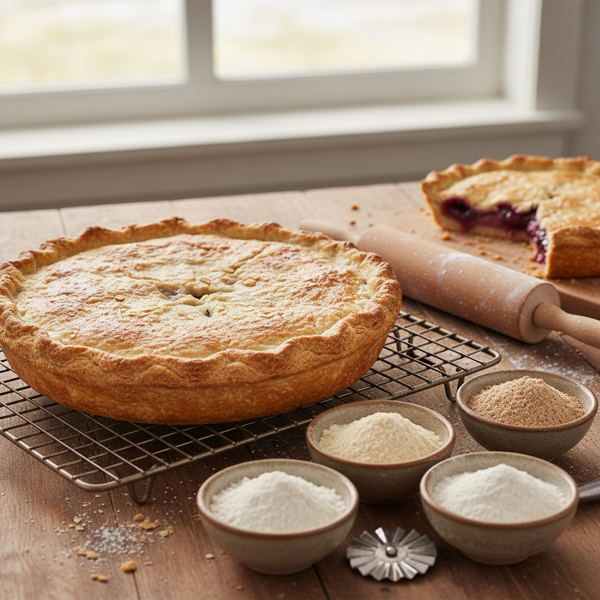
When I was diagnosed with Celiac Disease, I feared that my pie-baking days were over. Enter Bette Hagman's Four Flour Pastry recipe, which has become a staple in my kitchen. Not only does this gluten-free crust hold its own against traditional pastry, but it's also received rave reviews from friends and family, including my husband who claims he loves it even more than the old family recipes! This recipe has been refined with additional water for the perfect consistency and detailed steps to guide those who may be new to gluten-free baking. While the process may feel a bit tricky initially, trust me—once you get the hang of it, you'll find this rich and flaky pie crust is a breeze to prepare, allowing you to indulge in your favorite sweet and savory pies without any dietary restrictions. Enjoy the satisfaction of creating an excellent pie crust that's gluten-free and delicious!
N/A
Servings
125
Calories
11
Ingredients
Ingredients
Four Flour Bean Mix
2 cups (combined flours (includes garfava bean flour, sorghum flour, cornstarch, and tapioca flour))
Sweet Rice Flour
1/4 cup (for dough and rolling)
Xanthan Gum
1 teaspoon (add with dry ingredients)
Baking Powder
1 teaspoon (add with dry ingredients)
Salt
1/2 teaspoon (add with dry ingredients)
Sugar
2 teaspoons (add with dry ingredients)
Margarine or Butter
1/3 cup (cut into flour mixture)
Butter Flavor Crisco
1/3 cup (cut into flour mixture)
Liquid Egg Substitute
3 tablespoons (or use one small egg)
Vinegar
1 tablespoon (add to egg mixture)
Ice Water
6-8 tablespoons (divided and cold for dough)
Instructions
1
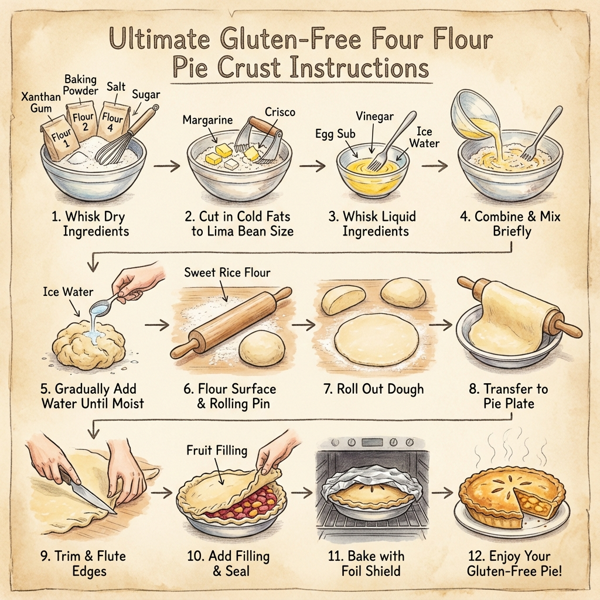
In a medium mixing bowl, whisk together the flours, xanthan gum, baking powder, salt, and sugar until well combined. This blend creates a stable base for your crust.
2
Using a pastry cutter or two knives, cut in the margarine and Crisco until the mixture resembles small lima beans. Avoid overmixing; the pieces should remain chunky.
3
In a separate bowl, combine the liquid egg substitute (or egg), vinegar, and 3 tablespoons of ice water. Beat together with a fork until combined.
4
Pour the egg mixture into the dry ingredients and mix with a fork for about 20-30 seconds until just combined.
5
Gradually add more ice water, one tablespoon at a time, stirring after each addition. Continue adding water until there are no dry crumbs at the bottom of the bowl; this usually takes about 2 more tablespoons.
6
Prepare a clean surface by generously sprinkling it with sweet rice flour. Make sure to coat your rolling pin with flour as well to prevent sticking.
7
Divide the dough into two equal halves. Roll out one half to about 1/4 inch thick, using your rolling pin. Ensure your dough does not stick by adding more flour as needed.
8
To transfer the rolled dough, lift one edge of the pastry cloth and roll the dough over the rolling pin. Move the rolling pin to your pie plate. Carefully let the dough unroll into the plate, ensuring it fits without stretching.
9
Trim the edges, leaving a 1-inch overhang. Fold the overhanging crust under itself so that the rim of the pie plate is visible all around.
10
Add your desired pie filling. Roll out the second half of the dough and either cover the filling with it or use for another pie. Pinch the edges with your thumb and pointer finger to seal the pie, creating a decorative finish.
11
Bake according to your pie filling instructions. To keep the crust from over-browning, shield the edges with aluminum foil for the first 15 minutes. For a pre-baked crust, pierce the bottom and sides with a fork and bake in a preheated oven at 425°F for 12-14 minutes. Let it cool before filling.
12
This recipe yields enough for one two-crust pie or two single shells.
Nutrition Information
5.6g
Fat
17.5g
Carbs
1.9g
Protein
Frequently Asked Questions
Frequently Asked Questions
What is the name of this gluten-free pie crust recipe?
This recipe is called the Ultimate Gluten-Free Four Flour Pie Crust.
Who is the original creator of the Four Flour Pastry recipe that inspired this version?
The recipe is based on Bette Hagman's Four Flour Pastry recipe.
Is this pie crust suitable for people with Celiac Disease?
Yes, it was specifically designed and refined for those with Celiac Disease or gluten sensitivities.
What flours are included in the Four Flour Bean Mix?
The mix includes garfava bean flour, sorghum flour, cornstarch, and tapioca flour.
What is the purpose of adding xanthan gum to the dough?
Xanthan gum is used as a binding agent to provide stability and structure to the gluten-free crust.
Can I use butter instead of margarine in this recipe?
Yes, you can use either margarine or butter depending on your preference.
What type of shortening is recommended for the best flavor?
The recipe suggests using Butter Flavor Crisco for its specific taste and texture contribution.
What can I use if I do not have liquid egg substitute?
You can use one small egg as a replacement for the 3 tablespoons of liquid egg substitute.
Why is vinegar added to the wet ingredients?
Vinegar is used in the egg mixture to help improve the texture and tenderness of the gluten-free pastry.
How much ice water is typically needed for the dough?
The recipe calls for 6 to 8 tablespoons of ice water, added gradually until the right consistency is reached.
What should the fat-and-flour mixture look like before adding liquids?
The mixture should resemble small lima beans; it is important not to overmix so the pieces remain chunky.
What is used to flour the rolling surface and rolling pin?
Sweet rice flour is used to generously coat the surface and rolling pin to prevent the dough from sticking.
How thick should the dough be when rolled out?
The dough should be rolled out to a thickness of approximately 1/4 inch.
What is the best way to transfer the rolled dough to the pie plate?
You can lift one edge of the pastry cloth and roll the dough over the rolling pin, then carefully unroll it into the plate.
How much dough does this recipe produce?
This recipe yields enough dough for one two-crust pie or two single-shell pies.
How do you finish the edges of the pie crust?
Fold the 1-inch overhang under itself and pinch the edges with your thumb and pointer finger to create a decorative seal.
How can I prevent the edges of the crust from burning during baking?
Shield the edges of the crust with aluminum foil for the first 15 minutes of baking.
What are the instructions for a pre-baked crust?
Pierce the bottom and sides with a fork and bake in a preheated oven at 425°F for 12-14 minutes.
Does this crust work for savory pies?
Yes, this versatile crust is suitable for both sweet and savory pie fillings.
How many calories are in a serving of this pie crust?
There are approximately 125 calories per serving.
What is the fat content per serving?
The fat content is 5.6g per serving.
How many carbohydrates are in a serving?
Each serving contains approximately 17.5g of carbohydrates.
What is the protein content per serving?
There is 1.9g of protein per serving.
Is sugar included in the dough recipe?
Yes, 2 teaspoons of sugar are whisked into the dry ingredients.
Why is it important to use ice water specifically?
Ice water helps keep the fats (margarine/Crisco) cold, which is essential for creating a flaky pastry texture.
Should the crust be cooled before adding filling to a pre-baked shell?
Yes, for a pre-baked crust, you should let it cool completely before adding your filling.
How long should you mix the egg mixture with the dry ingredients?
You should mix them with a fork for about 20-30 seconds until just combined.
What is the total number of ingredients used in this recipe?
There are 11 ingredients required for this recipe.
What tags describe this recipe's category?
Tags include gluten-free, pie crust, pastry, baking, celiac-friendly, and dessert.
How should I add the additional ice water?
Add it one tablespoon at a time, stirring after each addition until there are no dry crumbs left.